
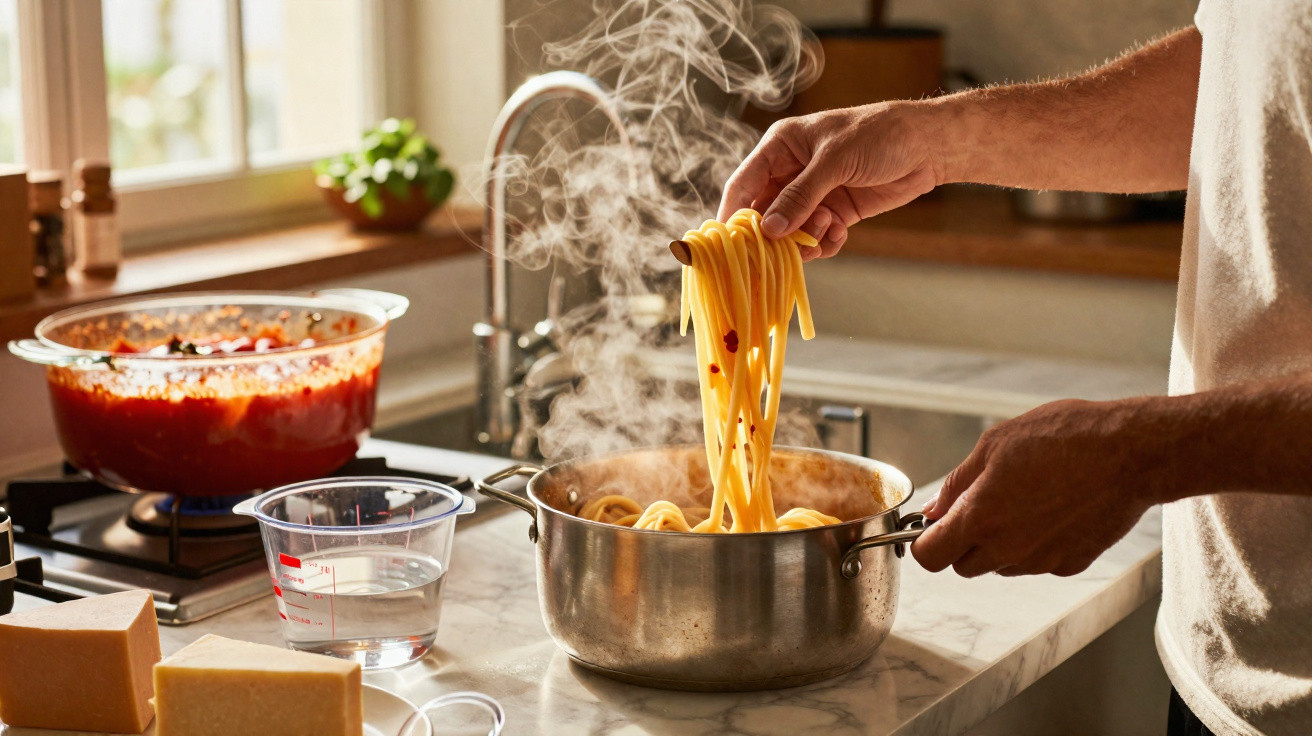
Draining pasta thoroughly is a small step that can transform the finished dish. If pasta is added to the sauce carrying too much water, the result loses body, flavour and gloss. The right approach is to remove the water promptly, without rinsing the pasta or leaving it sitting for too long before combining it with the sauce.
Why does poorly drained pasta make the sauce watery?
Water trapped between strands or inside short pasta shapes thins the sauce as soon as everything is combined. This is especially noticeable with creamier sauces, tomato sauces or cheese-based sauces, which need to coat the pasta without losing their concentration.
The issue becomes worse when the pasta is tipped into the pan while it is still dripping. Within seconds, the sauce turns looser, takes longer to thicken and may lose its balance of salt, acidity and seasoning.
What is the right way to drain pasta quickly?
Have the colander ready before the pasta reaches the right texture. Once cooking is complete, turn off the heat, carefully carry the pan to the sink and pour its contents into the colander, giving it a gentle shake to remove excess water.
- Choose a large colander: the pasta needs enough room for water to drain away quickly.
- Drain straight away: do not leave the pasta standing in the hot water.
- Shake gently: move the colander carefully without breaking the pasta.
- Do not rinse the pasta: cold water removes starch and prevents the sauce from clinging properly.
- Add it directly to the sauce: combine it while the pasta is still hot.
How can you stop pasta drying out after draining?
Once drained, pasta should not be left waiting in the sink. Without water or sauce, it will start to stick together, lose heat and dry out on the surface. The sauce should therefore be ready before the pasta is drained.
- Make the sauce while the pasta cooks.
- Set aside half a ladle of the cooking water before draining.
- Move the pasta into the hot sauce pan.
- Stir for 1 to 2 minutes so the sauce coats it more effectively.
- Add only a little of the reserved water if the sauce is too thick.
Why does keeping some pasta cooking water help?
Pasta cooking water contains starch released during cooking. Used in a small amount, it helps bind the sauce, gives it a silkier texture and allows the ingredients to combine more smoothly in the pan.
The key is quantity. Add the reserved water gradually, by the tablespoon or half a ladle at a time, only when the sauce needs adjusting. Adding soaked pasta to the sauce is not the same as using cooking water in a controlled way.
How do you achieve a thick, balanced pasta sauce?
The best result depends on the right sequence: cook the pasta al dente, drain it well, add it immediately to the hot sauce and finish cooking everything together for a few moments. This final contact lets the pasta take on flavour without becoming heavy or watery.
Using a wide pan to coat the pasta more evenly also helps, as does adjusting the salt only after mixing and serving straight away. With quick draining, a ready sauce and only a small amount of water added deliberately, the dish will be creamier, more flavoursome and more polished.





Comments
No comments yet. Be the first to comment!
Leave a Comment