
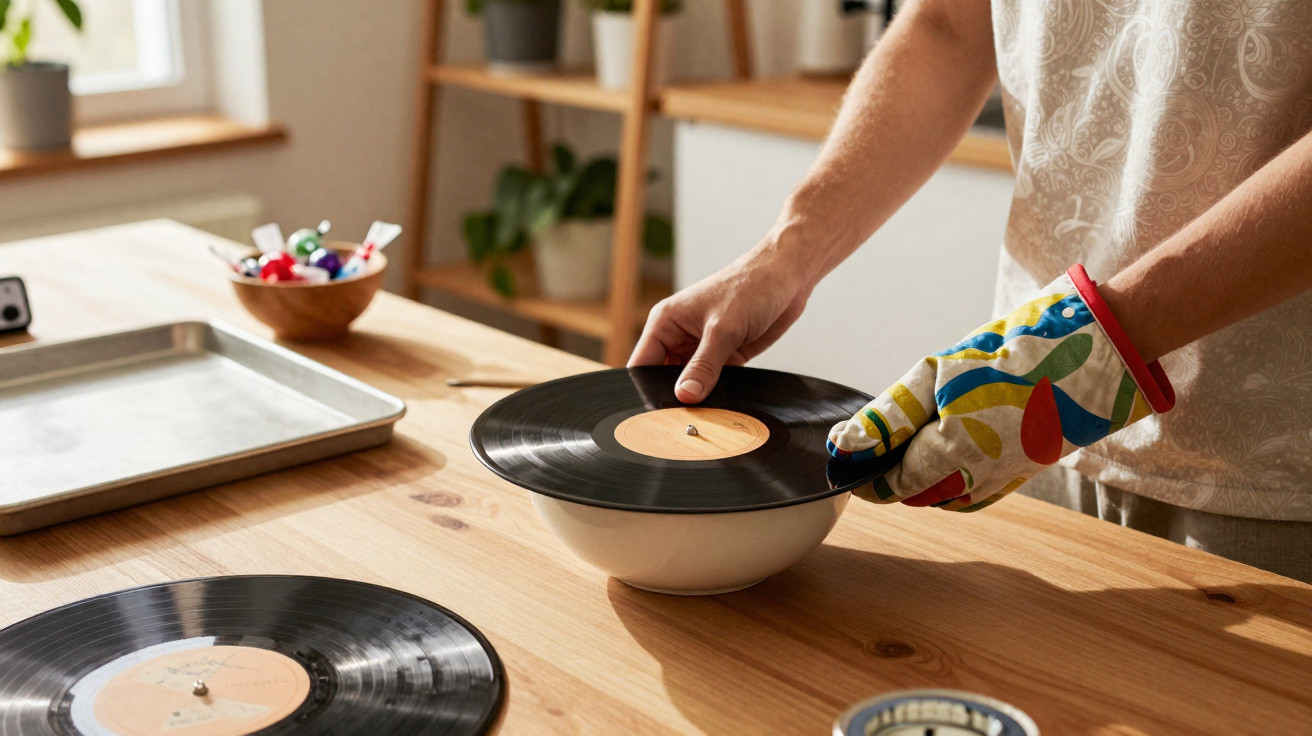
With a little heat, they can become striking decorative pieces.
Many homes have a pile of old records sitting somewhere, no longer played. They may be too scratched, too damaged or simply musically out of date. What many people do not realise is that these discarded records can be turned into stylish home accessories in just a few minutes - using an ordinary oven and a little care.
Why old vinyl records are ideal for upcycling
Vinyl records are made from PVC, a thermoplastic material. It responds to heat very differently from materials such as glass or ceramic. When PVC is heated moderately, it softens and can be shaped without immediately melting.
“At around 100 to 120 degrees Celsius, a vinyl record can be deliberately reshaped within minutes - and it will permanently retain its new form once cooled.”
This narrow temperature range is crucial. At this point, the following happens:
- The record becomes pliable without losing its shape completely.
- Its surface remains visible, including the grooves and label.
- Once cool, the material becomes hard and sturdy again.
That is precisely why old vinyl discs are so well suited to quick DIY projects. No specialist tools or advanced craft skills are required, only a little attention to prevent overheating.
Step by step: turn a record into a designer bowl in 5 minutes
The most popular option is a decorative bowl that can resemble a retro designer piece. Here is how to make one in a standard household oven.
Preparation: oven, lining and mould
For a successful result, a few basic steps need to be followed. Use this quick checklist:
- Preheat the oven to about 110 degrees Celsius; conventional top and bottom heat is sufficient.
- Line a baking tray with baking paper to prevent anything sticking.
- Place a heatproof glass or ceramic bowl, or a small saucepan, upside down in the centre of the tray - this will act as the mould.
- Position an old, scratched vinyl record centrally over the base of the upturned bowl.
Try to align the record as accurately as possible. This allows the edges to hang down evenly, creating a balanced shape later on.
In the oven: the crucial three minutes
Once everything is in place, put the baking tray into the oven. Stay nearby and watch it carefully rather than leaving the room.
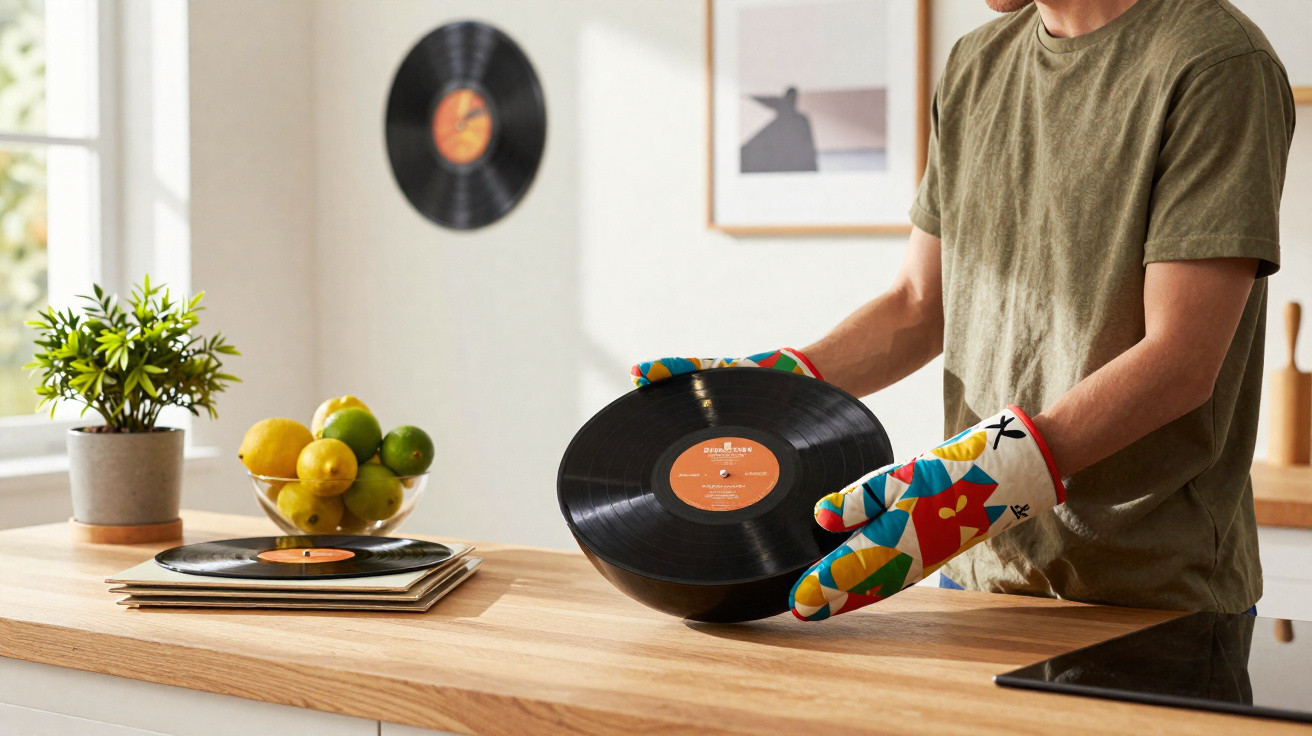
After roughly three minutes, the edge of the record will appear to “melt”. In reality, the material is only softening. The disc will begin to drop at the sides and mould itself around the bowl.
As soon as this happens, remove the tray from the oven straight away. Oven gloves are essential, as both the record and bowl will be extremely hot.
Shaping by hand: every vinyl bowl is unique
This is where the creative part begins. While the vinyl remains soft, use gloved hands to shape its edges:
- Press the sides slightly inwards to create a deeper bowl.
- Scrunch the rim into waves for a playful, organic appearance.
- Keep it relatively flat to make a wide, shallow dish.
After only a few seconds, the material will start to harden again, so work quickly. Then leave the bowl to rest for around ten minutes until it has cooled fully. Only then should it be lifted off the mould.
“A scratched record can become an individual bowl - perfect as a hallway tray for keys, headphones or other small items.”
Ideas for using your new vinyl bowl
The finished piece is not merely an eye-catching item for a shelf. Many people use these new creations in everyday life:
- Pocket-emptying tray by the entrance for keys, loose change and ID cards.
- Storage for remote controls, game controllers or charging cables in the living room.
- Retro basket for wrapped snacks or sweets during a film night.
- Accessory bowl for sunglasses, jewellery or watches in the bedroom.
With a little more depth, a record can also be shaped into a vintage-style fruit bowl. Plant lovers can even turn one into a plant pot cover with a simple adjustment: seal the centre hole with epoxy putty or a suitably sized cork, allow it to set briefly, then place a smaller plant pot inside.
Vinyl record bowls: safety and health considerations
Although the method is straightforward, several precautions are important. Vinyl is not a food-safe material, particularly after it has been heated in an oven.
- Keep the oven temperature below 120 degrees Celsius.
- Open a window slightly or switch on the extractor fan so that any odours can disperse.
- Use baking paper to stop residue getting onto the baking tray.
- Always use heat protection and keep children away.
The reshaped material is not intended for direct contact with food. If you want to serve snacks in the bowl, place an additional glass bowl or small plate inside it, or use it only for packaged items.
“Vinyl remains a plastic that was never designed to be tableware - it is best used decoratively, with glass or porcelain inserts for food.”
Check first: could the record be a collector’s item?
Before putting an old collection into the oven, inspect the labels carefully. Some pressings can be surprisingly sought after, even if they look slightly played.
A practical guide for choosing records:
| Type of record | Recommendation |
|---|---|
| Heavily scratched, unplayable | Ideal for decorative projects |
| Well-known band, first pressing | Research it first; do not heat it |
| Unknown compilations, worn sleeves | Good candidates for reshaping |
| Sentimental keepsakes | Best left untouched or repurposed differently |
If you are unsure, quickly check individual titles online. Rare editions can sometimes have unexpectedly high market values - and you would not want to reshape those in the oven.
Alternative projects: more than vinyl bowls
Anyone who likes the bowl idea can continue using the same material for other projects. Here are a few simple options:
- Wall clock: use the centre hole, fit an inexpensive clock mechanism and hands, then hang it on the wall.
- Framed record: mount a visually interesting label in a picture frame to create wall art.
- Mobile or hanging decoration: attach several singles to strings, for example above a sideboard.
Old discs that are still playable can also be given away or sold. Car boot sales, classified advert platforms and record shops may still take well-preserved copies, even if their music is no longer to your taste.
Why this upcycling project is more than a decorative gimmick
There is a practical idea behind this quick method: many everyday materials are thrown away far too early, even though they can be made into useful or decorative objects. Vinyl is one of those materials that is difficult to dispose of as a single-material waste stream, yet it is technically very durable.
Turning old records into bowls, plant pot covers or clocks avoids buying new decorative items from shops. It also creates an object with a story - perhaps bearing the label of a favourite band that has not been played for decades but can still bring pleasure as an object.
For beginners, the oven method offers an easy introduction to the idea of turning old into new. It demonstrates how materials respond, how shapes are formed and how little it takes to transform something seemingly worthless into something useful. Once you have tried it, you may look at that dusty stack in the record cabinet very differently.


Comments
No comments yet. Be the first to comment!
Leave a Comment