
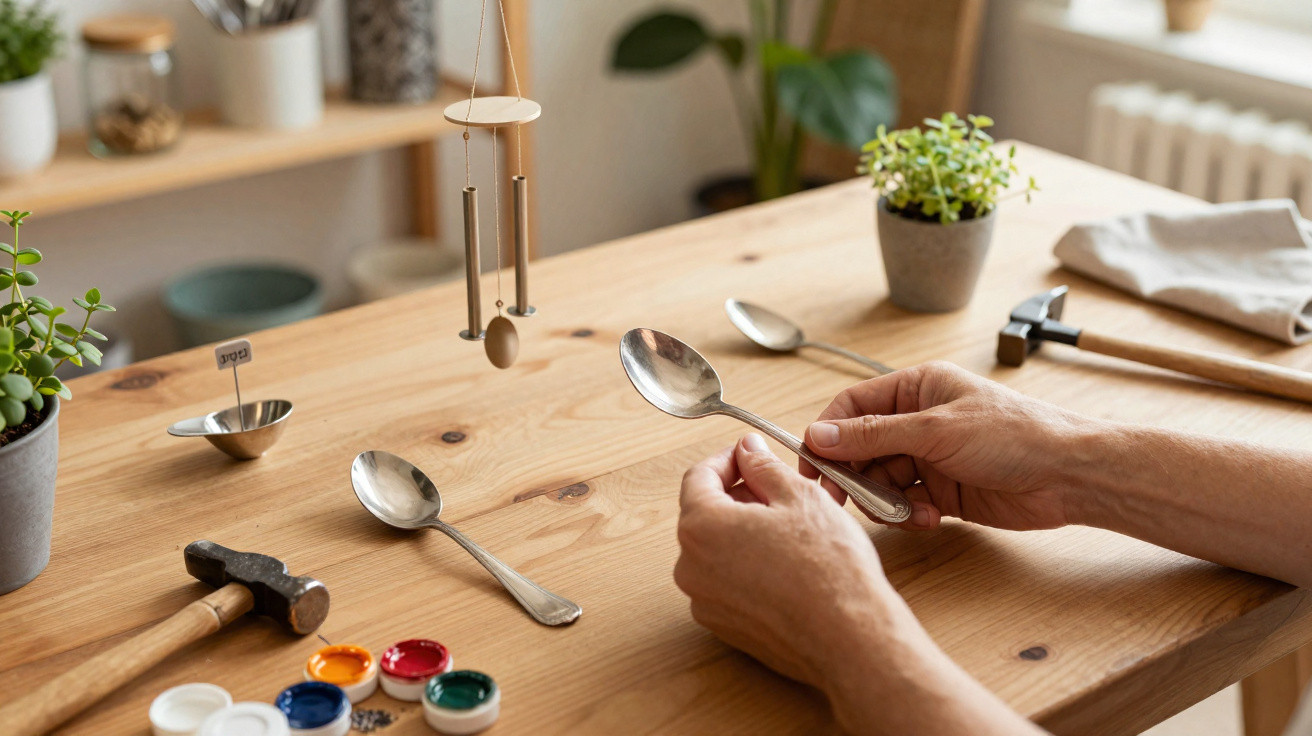
With a few simple techniques, they can become surprisingly elegant decorative pieces.
Anyone who enjoys making things, wants to save money and is tired of mass-produced furniture-shop items can uncover a small treasure trove in a box of old cutlery. Whether they are silver-coloured, stainless steel or wooden, discarded spoons can be turned into stylish home furnishings, practical storage and even jewellery with only a few tools and a little patience – all for next to nothing.
Why old spoons are suddenly worth picking up
Boxes packed with cutlery often turn up in charity shops, at car boot sales and during house clearances. Shoppers usually choose the plates or glasses, leaving the spoons behind. That is precisely where the opportunity lies: metal is hard-wearing, the shapes are clean and the handles are often ornate, making them an ideal starting point for creative projects.
With a few pence spent on old spoons and a little imagination, you can create individual home décor that nobody else will have hanging in their living room.
Rather than buying new hooks, signs or decorative items, plenty can be made from materials already to hand. This is kinder to your budget and cuts down on waste. Upcycling – repurposing objects to create something of greater value – is particularly popular right now.
Choosing and preparing old spoons correctly
Which material suits which purpose?
Not every spoon is suitable for every project. A quick check before buying will prevent disappointment later.
- Sterling silver or silver-plated: excellent for rings, pendants and delicate jewellery, as the metal is soft and bends easily.
- Stainless steel: highly durable and ideal for wall hooks, handles and garden pieces.
- Wooden spoons: particularly suited to painted kitchen decorations or parts of wind chimes.
A simple magnet test is useful: if the magnet grips firmly, the spoon is generally steel or an alloy rather than solid silver. Softer material is easier to work with when making jewellery.
Clean, smooth and secure them
Before making the first strike with a hammer, give each spoon a thorough start:
- Soak the spoons in warm, soapy water.
- Use a soft brush to remove residue and dirt.
- Rinse with clean water and dry them completely to prevent rust marks later.
If you need to flatten a spoon bowl for stamping or engraving, place it on a firm surface and tap it carefully with a rubber mallet, or use a small hammer with a cloth in between. A hacksaw is suitable for cuts, while a drill and appropriate metal drill bits will make holes. Safety glasses, gloves and secure clamping are essential, as metal pieces can fly off unexpectedly.
Twelve DIY ideas that turn spoons into real statement pieces
Once your tools are ready, it is time for the creative work. Old spoons can become remarkably versatile projects for the home and garden.
1. Wall hooks made from bent spoons
A classic option is to warm the spoon slightly along its handle – useful with stainless steel – bend the handle forwards and screw the bowl to a board. This creates a coat rack for jackets, bags or coffee mugs.
2. Tray with spoon handles
All you need is a plain wooden board, some sandpaper and two long spoons. Bend the spoon handles into grips and screw them to either side. You then have a vintage-style serving tray.
3. Bird feeding station
Use a jar or small pot, a wooden spoon and some wire. Fill the container, position the spoon so that food sits in its bowl, and hang the arrangement from a tree. Birds can perch comfortably on the handle.
4. Wind chime from spoon bowls
Saw off several spoon bowls, drill them and suspend them on strings. Combined with glass beads, they create a wind chime that gently tinkles with every gust.
5. Plant labels for beds and balconies
Use letter stamps or a metal marker to add herb or vegetable names to flattened spoon bowls. Pushed into the soil, they easily withstand rain and remain legible for years.
6. Colourful wooden spoons for the kitchen
Wooden spoons can be decorated with acrylic paint, patterns or lettering. A coat of clear varnish protects them from moisture. Displayed in a glass, they resemble a small artistic bouquet.
7. Spoon handles with a new look
Those who want to combine metal and colour can mask off the shafts, paint the handles in bright shades and seal them with epoxy resin. The result is sturdy, colourful detailing for drawers or cupboards.
8. Pendants made from spoon bowls
For necklaces, saw off the bowls, hammer them flat and, if desired, curve their edges slightly. Add a drilled hole and a chain to create a one-off piece of jewellery that also makes a thoughtful gift.
9. Rings from spoon handles
Longer handles can be shaped around a ring mandrel or round rod. Such a “spoon ring” quickly puts 30 to 50 grams of metal back into everyday use – and makes an eye-catching accessory.
10. Decorative pull chains for lamps and fans
On ceiling fans or retro lamps with pull chains, ornate spoons can replace the usual plastic balls. Simply drill a hole and attach the spoon to the chain for an original focal point.
11. Jewellery holder from an old spoon display board
Small wooden shelves for souvenir spoons once featured in many living rooms. With fresh paint, a few extra hooks and drilled holes, these pieces can be transformed into useful jewellery holders.
12. Personal place cards for the dining table
For special occasions, use flattened spoons stamped with guests’ first names. Place them on the plates to mark each setting, then let guests take them home as a keepsake.
How to hunt down the best old spoons
When browsing, it pays not to take the first set you see. Mixed collections containing different shapes and sizes are the better choice. Ornate handles work well for jewellery, while plain, long designs are suitable as handles or hooks.
A quick bend test on the spot will reveal whether a spoon is still sturdy. If its handle bends too easily or already has visible cracks, leave it behind. Mixed cutlery sold by weight is generally cheaper than sorted sets.
Anyone who specifically asks a second-hand dealer for “incomplete cutlery sets” can often get exactly the pieces nobody else wants at a low price.
Safety, tools and useful extras for spoon DIY projects
Metalworking is less complicated than it sounds. Once bought, a small basic kit is usually enough:
- Rubber mallet or a small hammer with a cloth
- Hacksaw or side cutters for thinner pieces
- Drill with metal drill bits
- Sandpaper or a file for smooth edges
- Safety glasses and work gloves
Sawing and drilling in particular create sharp burrs. Smooth these carefully so that nobody catches themselves on the coat rack or cuts a finger while putting on a ring.
What else you can make from the leftovers
Even the smallest pieces of metal do not need to go in the bin. Cut-off handle sections can become mini pendants, small labels for seed boxes or extra sound-making elements for wind chimes. Wooden offcuts are useful as test pieces for trying new colour combinations.
Once you start incorporating spoons into projects, you will view boxes of second-hand odds and ends very differently. Much of what initially looks like scrap turns out to be the basis for original, durable everyday objects. Less metal ends up in a skip, while a piece of history moves into your home – in a new form.




Comments
No comments yet. Be the first to comment!
Leave a Comment