
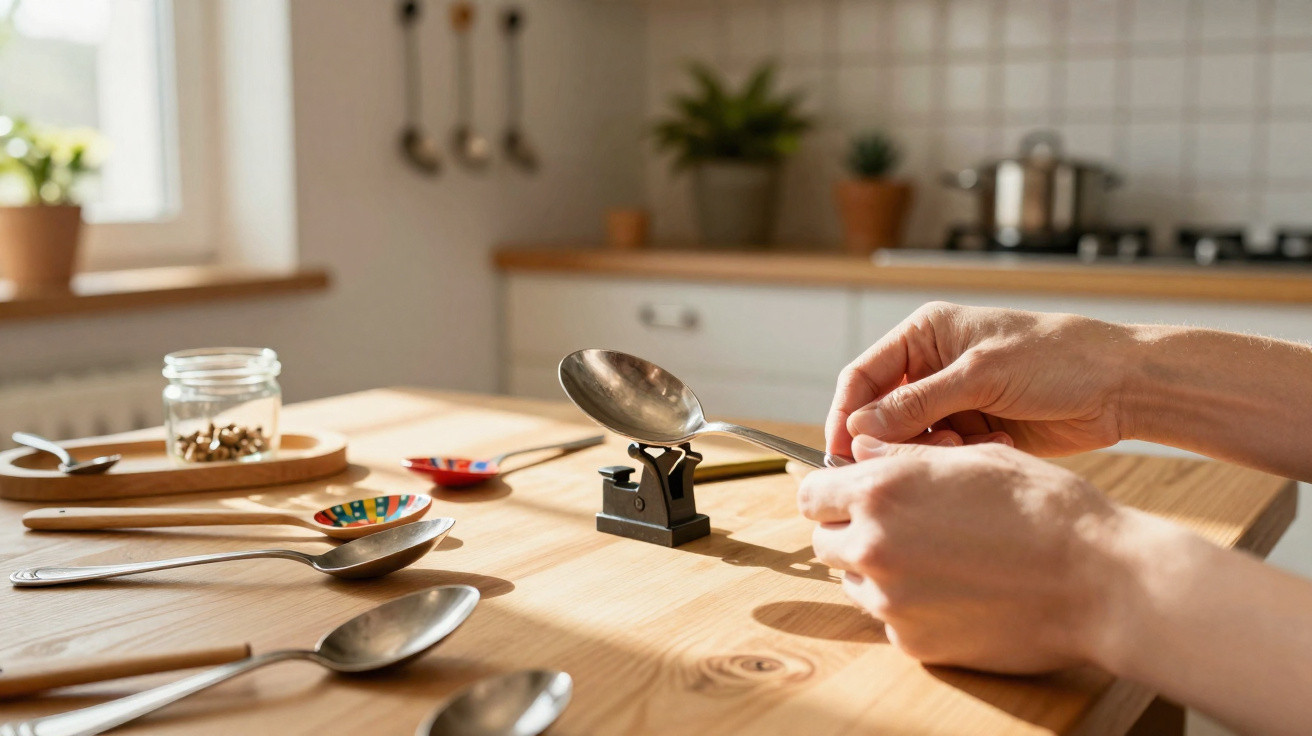
Browsing past the cutlery basket in a charity shop means missing out on serious creative potential. Second-hand metal or wooden spoons cost only pennies, are easy to work with and can be turned into sturdy hooks, thoughtful gifts or weatherproof garden features using just a few tools. The possibilities range from rustic country-house style to clean, contemporary minimalism.
Why charity-shop spoons are decorative gold
Used spoons are piled high in bric-a-brac shops, charity furniture stores and house-clearance sales. Many sets are incomplete, look dated and quickly end up on the bargain shelf. That is precisely where the opportunity lies for creative people: these pieces cost next to nothing, are often made from quality metal and already have character of their own, including ornamentation, engravings and relief details.
“Ordinary everyday spoons can become durable hooks, distinctive jewellery and long-lasting garden labels – without using any new raw materials.”
For anyone who enjoys making things and values sustainability, second-hand spoons save more than money: they also avoid packaging waste and newly manufactured products. Rather than buying decorations from a furniture shop, you can make one-off pieces that nobody else will have hanging on their wall.
Choosing the right material: not all spoons are the same
Before starting your first project, inspect the material carefully. Three types appear particularly often:
- Silver spoons or silver-plated versions: Softer and easy to shape, making them ideal for rings, pendants and stamped labels.
- Stainless steel: Extremely robust, so it is well suited to hooks, handles and coat racks.
- Wooden spoons: Easy to paint and perfect for colourful kitchen or children’s-bedroom decorations.
A quick magnet test is useful: if the magnet sticks firmly, the spoon is usually steel or an alloy rather than solid silver. Softer metals are more comfortable for jewellery, whereas wall hooks intended to take weight can be much harder.
Cleaning, smoothing and preparation
Give your find some basic care before turning it into a design feature:
- Soak the spoon in warm washing-up water.
- Use a soft brush to remove dirt and old grease.
- Rinse with clean water and dry thoroughly.
If you plan to stamp, paint or glue the spoon, an extra preparation step is worthwhile. Place the bowl of the spoon on a hard surface and gently flatten it with a rubber mallet. This creates an attractive area for lettering, patterns or epoxy resin.
Twelve DIY ideas: everything spoons can become
Once your tools are ready – a hammer, drill, hacksaw or sturdy pliers – the creative work can begin. These twelve projects offer inspiration for the home and garden.
1. Wall hooks made from bent spoons
This is the classic project: bend the handle forwards with a little force, screw the spoon to a board and your hook is ready. It is ideal for:
- Mugs and cups in the kitchen
- Keys and lightweight jackets in the hallway
- Towels in the bathroom
Mixing different spoons creates a charming, deliberately imperfect vintage look.
2. Serving tray with spoon handles
Take a simple wooden board, sand it down and oil it, then add two sturdy spoons on each side as handles. Bend the handles at right angles and screw them on from underneath. The result is an individual tray for breakfast in bed or a decorative feature on the coffee table.
3. Bird feeder made from a jar and wooden spoon
A small glass jar, a wooden spoon and some wire or twine are all it takes to hang a decorative feeding station in the garden. The spoon works as both a perch and feeding platform, while the container above gradually releases seeds. The whole piece can be coloured to match the rest of the garden décor.
4. Wind chime from spoon bowls
If you enjoy a little sound in the breeze, cut off the spoon bowls with a hacksaw, drill small holes in them and suspend them from a branch or ring using wire or string. Add glass beads or old keys to make a tinkling wind chime that easily withstands rain and sunshine.
5. Plant labels for beds and balconies
Flattened spoons make durable labels for herbs and vegetables. Use letter punches, a metal stamp or waterproof pen to add the plant name. Old silver spoons look especially elegant in herb pots on a windowsill.
6. Painted wooden spoons as kitchen décor
Wooden spoons can be decorated with acrylic paint, patterns and lettering. A bunch of painted spoons in a vase brings colour to the kitchen without needing to serve any practical purpose. If preferred, seal the handles with clear varnish so they can be wiped clean and resist water.
7. Spoon upgrade with paint and epoxy resin
Metal spoons can be decorated with nail varnish, spray paint or alcohol ink, then sealed beneath a thin layer of epoxy resin. The glossy finish looks surprisingly refined and works well for decorative dishes, key trays or wall art.
8. Pendants made from spoon bowls
To make a necklace pendant, remove the handle, reshape the spoon bowl if necessary and embellish it with stamps, engraving or small stones. A drilled hole along the upper edge is enough for a jump ring, through which the chain or leather cord can later pass.
9. Rings made from spoon handles
Curved handles can be transformed into substantial rings. Cut the handle to size, smooth its edges and form it around a round mandrel or pipe. Many older spoons have ornate handles that resemble delicate goldsmithing – except they are made from reclaimed metal.
10. Decorative pulls for lamps and fans
In homes with pull chains on ceiling fans or floor lamps, short spoon handles make an easy-to-grip and decorative extension. Drill a hole at the top, add a small carabiner or ring, and you have an original pull that is comfortable to hold.
11. Jewellery holder from an old spoon display stand
These wooden displays for collectors are often found dusty in old boxes. With sandpaper, fresh paint and a few extra holes, they become wall-mounted holders for necklaces, bracelets and earrings. What was once a dust collector turns into a tidy jewellery display.
12. Personal place cards for the dining table
For special occasions, flattened and labelled spoons make reusable place cards. Whether the name is engraved, stamped or handwritten is a matter of taste. Guests can take their spoon label home afterwards if they wish.
How to find the best spoons in charity shops
A focused search helps avoid frustration and unsuitable purchases. The most interesting finds are often hidden in mixed cutlery boxes. Look out in particular for:
- Larger spoons with substantial handles for hooks and grips
- Ornate handles for jewellery projects
- Completely scratched spoons for wind chimes or painted decorations
A quick bend test reveals how strong the metal is. If the handle cracks or feels brittle, it is best to leave that spoon behind. A spoon that has simply lost its shine, however, is an excellent candidate for a new use.
Safety and tools: stress-free spoon crafts
When sawing and drilling, protecting yourself from debris and injury matters. Safety glasses keep metal filings away from your eyes, while gloves protect against sharp edges. Clamp spoons securely while working so that nothing slips.
For drilling, a basic drill and metal drill bits are sufficient. Soft silver is easier to work than harder steel, which requires a little patience and a drop of oil for cooling. Anyone who works with cutlery regularly should buy a small file to remove burrs neatly from edges.
Benefits beyond decoration
Upcycling spoons does more than produce attractive objects; it also develops practical making skills. Children can help with safe tasks, such as painting wooden spoons or sorting the finds. It makes a shared project for rainy weekends.
Many of these ideas also work as personal gifts: a ring made from an old family spoon, a plant label bearing the name of a favourite herb, or a set of wall hooks to suit a new home. Those who enjoy the process can offer their best pieces at craft markets or through online platforms, turning apparent scrap into a modest source of income.



Comments
No comments yet. Be the first to comment!
Leave a Comment