
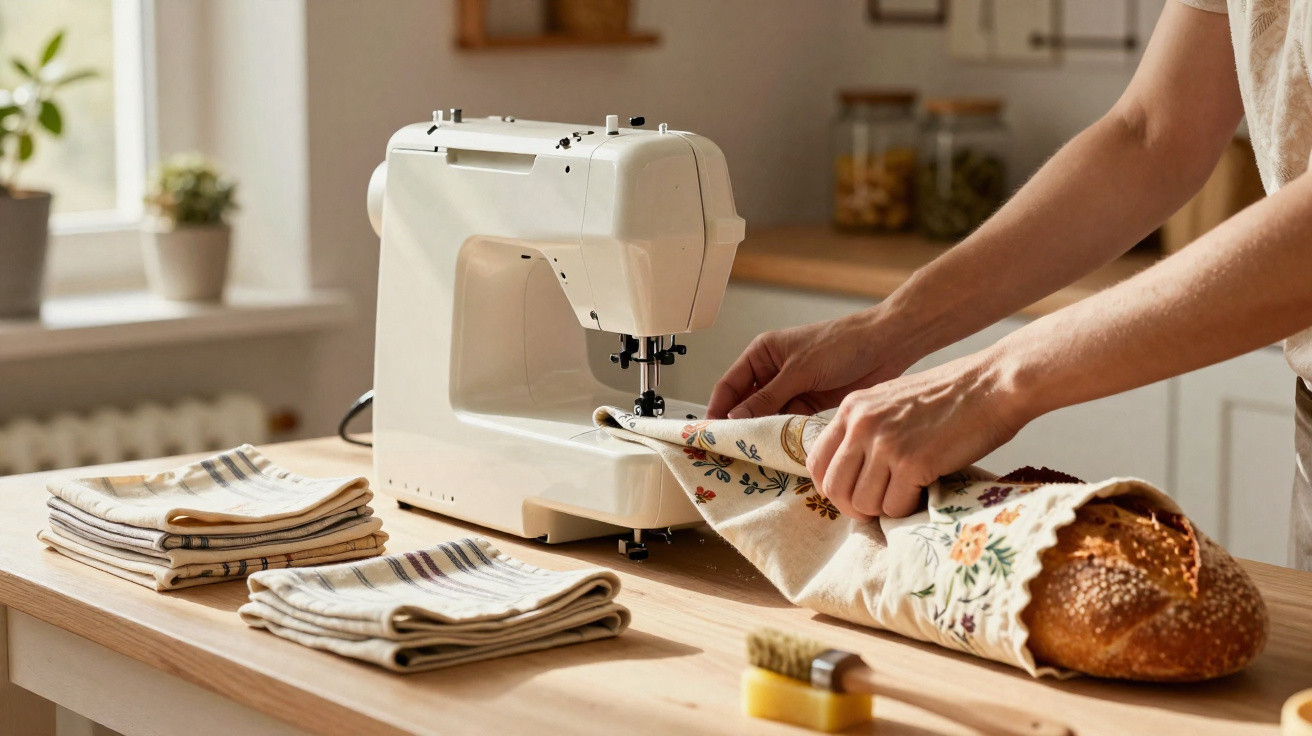
Rather than throwing them away, you can turn them into a surprisingly stylish accessory with country-house charm.
Many homes still have them: striped tea towels from Grandma’s era, a little worn but far too good for the bin. These are exactly the textiles that make an ideal reusable bread bag: one that looks attractive, keeps bread fresh for longer and cuts packaging waste.
Why old tea towels are suddenly so valuable
The familiar striped tea towels from past decades were often made from linen or a linen-cotton blend. These fabrics are known for being especially hard-wearing, durable and breathable. Having been washed for years, they are soft while remaining strong.
In many kitchens, these towels sit ignored in a drawer, even though they offer several benefits:
- high-quality natural fibres rather than cheap synthetics
- a softened, pre-washed texture that is ideal for sewing
- a classic striped pattern that is firmly back in fashion
- perfectly suited to waste-reducing projects
“Anyone who turns old tea towels into bread bags saves money and waste while creating a one-of-a-kind item with nostalgic charm.”
The sewing-room trend: a bread bag from an old tea towel
Handmade bread bags created from vintage tea towels are appearing increasingly often on social media. They replace paper and plastic bags from the bakery, look decorative and bring a distinctive country-house feel to the kitchen.
A shop-bought bread bag made with new linen can easily cost €15 to €20. Reusing an old towel may cost nothing at all, while giving fabric you already own a second life.
Turning an old tea towel into a bread bag: step by step
You do not need professional skills to start this sewing project. Straight seams are all that is required. A sewing machine is useful, although it can also be sewn by hand with a little more patience.
Prepare the fabric
Wash the tea towel, then allow it to dry. Give it a light iron to smooth the fibres and make the material easier to work with.Remove worn sections
Cut away any holes, thin patches or frayed areas. The finished bag looks particularly attractive if you retain the original woven edges alongside the stripes, as they create the characteristic vintage look.Plan the size
A long, narrow bag works well for a traditional baguette. For rolls or a round farmhouse loaf, choose a wider, shorter shape. In most cases, half to one full tea towel is enough for each bag.Sew with an “enclosed seam”
Place the fabric pieces together with the eventual outer sides facing inwards. Stitch along the sides, turn the bag the right way out, then topstitch close to the inner seams once more. This encloses the raw edges and makes the seams more durable.Add a drawstring at the top
Fold the upper edge inwards, stitch it in place and leave a channel. Thread through a cotton cord or fabric ribbon, and the drawstring fastening is complete.
“With just a few straight seams, a discarded tea towel becomes a bread bag that can be used every day.”
Why linen protects bread better than plastic
Linen and older linen blends have a close weave while still allowing air to pass through. They let air circulate but protect the crust from drying out too much. Plastic bags do not provide this balance: moisture becomes trapped, the crust turns soft and mould develops more quickly.
Natural fibres absorb excess moisture and release it again gradually. This helps bread retain its flavour without developing a “sweaty” surface. Linen is also sometimes credited with properties that make it less appealing to moths and small insects, which is another advantage when storing food in the kitchen.
Extra tip: finish the bread bag with beeswax
If you want to extend freshness even further, rub a little beeswax into the inside of the bag. This produces a flexible, lightly water-repellent layer that remains breathable.
- melt pure beeswax over a bain-marie
- use a brush to work a thin layer into the inside of the bread bag
- warm the fabric briefly in a low-temperature oven or with a hairdryer so the wax spreads evenly
- leave it to set until the bag no longer feels sticky
Bags treated in this way often keep bread fresh for noticeably longer. To clean one, lukewarm water and mild soap are sufficient; then simply leave the bread bag to air-dry.
Care, use and everyday tips
Before using the bread bag for the first time, wash it thoroughly. After that, a regular wash is enough, depending on use, every one to two weeks. If you store breads that shed lots of crumbs, shake out and air the bag between washes.
Fresh bread should be completely cool before it goes into the bag, otherwise condensation can form inside. Ideally, hang the bread bag from a hook or rail so air can circulate all around it. A spot directly beside the cooker or in strong sunlight is unsuitable, as heat and light shorten freshness.
| Storage method | Advantages | Disadvantages |
|---|---|---|
| Plastic bag | Keeps the crust soft for a short time | Mould develops quickly; bread becomes sweaty |
| Bakery paper bag | Breathable, inexpensive | Tears easily; a single-use product |
| Linen bread bag | Breathable, washable, reusable | Needs regular washing and airing |
What else you can make from the fabric offcuts
Strips and smaller pieces are usually left over after cutting out the bag. These scraps are ideal for further waste-free projects.
- Scented sachets for the wardrobe – Sew small bags, fill them with dried lavender flowers and hang them in wardrobes or place them in drawers.
- Bowl covers – Add elastic or a tie to round pieces of fabric and use them as reusable bowl covers instead of cling film.
- Bags for unpackaged food – Smaller versions of the bread bag are ideal for rice, pasta or pulses when shopping at a zero-waste store.
- Protection for cutlery or baking trays – Sew long pockets to store baking trays or special knives neatly and protect them from dust.
“One old tea towel can become a bread bag, a scented sachet and a bowl cover – that is waste prevention in practice.”
Why the effort is genuinely worthwhile
People who have sewn this kind of bread bag usually notice two things. First, their use of single-use packaging drops significantly. Second, everyday kitchen routines become a little more mindful. Taking your own bread bag to the bakery feels different from reaching for a paper bag.
Many people underestimate the true quality of old household linens. Towels and cloths from earlier decades are often made from better materials than inexpensive new alternatives. Using these resources saves money, conserves raw materials and preserves a piece of family history at the same time.
This is also an excellent project for sewing beginners. The seams are straight, mistakes are barely noticeable and the fabric is forgiving. Those with more confidence can make bread bags with lining fabric, several compartments or decorative appliqués from leftover fabric. Step by step, this creates an individual and sustainable collection for the kitchen and pantry.
Over the long term, every instance of reusing fabric reduces demand for new textiles. It is particularly worth looking through cupboards, cellars and lofts for old kitchen linens. Often, genuine treasures are waiting there to be transformed into a practical accessory with a story.




Comments
No comments yet. Be the first to comment!
Leave a Comment