
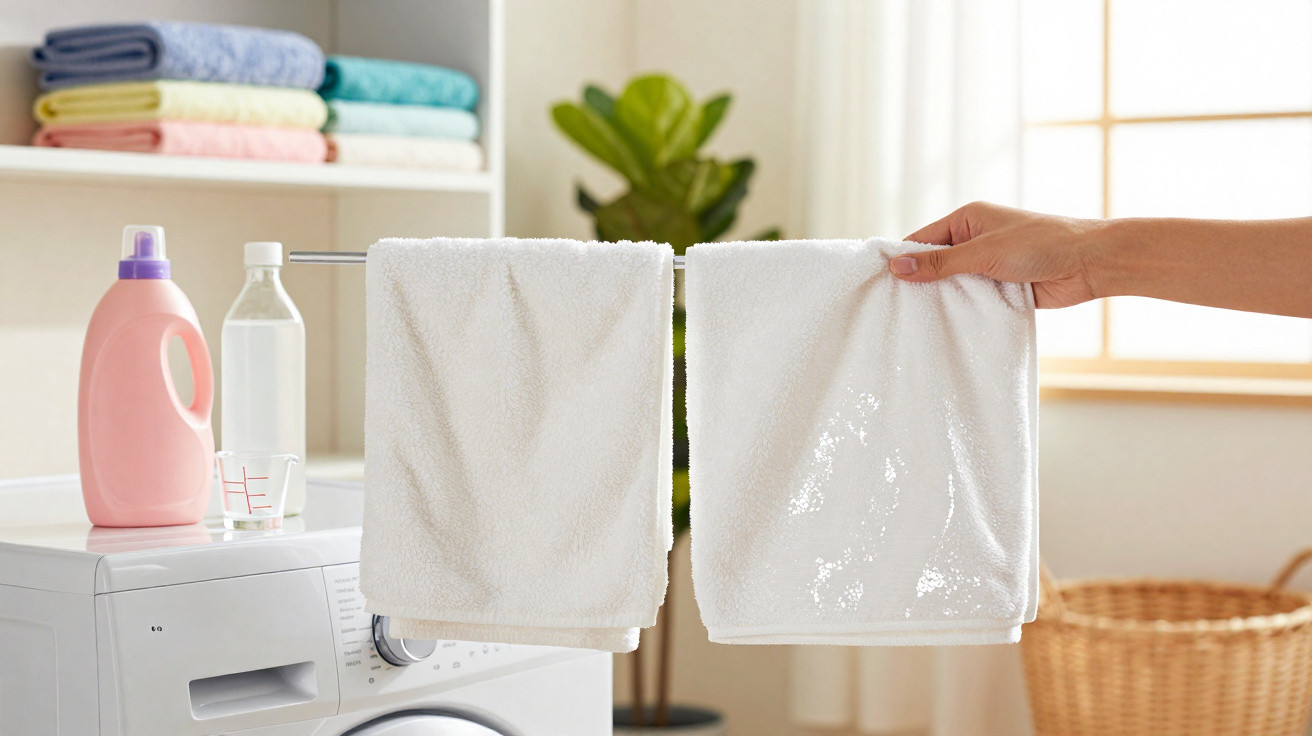
Using fabric conditioner on towels may seem like the obvious way to keep them soft, but repeated washing can produce the opposite result. Many fabric conditioners coat the fibres with lubricating compounds to create a smooth feel, and this build-up can reduce absorbency while making the fabric feel heavy. To keep towels fluffy, the amount of detergent used, the rinse and, above all, the drying process must also form part of the routine.
Why can fabric conditioner damage towels?
Cotton fibres need to take in water quickly when they touch the skin. Fabric conditioner works by laying substances over the fibre surface, initially making them feel softer and reducing static electricity. With towels, however, regular use can leave deposits that affect precisely this ability to absorb water.
This issue usually develops gradually rather than appearing after just one wash.
- Towel fibres may build up fabric conditioner residue;
- Their ability to absorb water can be reduced;
- The material may start to feel heavy or waxy;
- Residue can also prevent a thorough rinse;
- A strong fragrance may mask dampness or odours without tackling their cause.
Can too much detergent make towels stiff too?
Yes. Using more detergent than required does not mean the wash will be more effective. If the amount exceeds what the washing machine can rinse away, some of the product may remain within the fibres. Over several washes, this build-up can cause towels to feel rough and rigid, particularly in areas with water containing higher levels of minerals.
How should towels be washed to retain softness and absorbency?
Start by following the recommended detergent dosage and avoiding overfilling the drum. Towels need room to move, take in water and rinse properly. The temperature should also follow the care label instructions, as excessive heat can wear out certain fibres and finishes.
Where a significant amount of residue has built up, an extra rinse may be more useful than adding another fragranced product.
- Do not overfill the washing machine;
- Use only the required amount of detergent;
- Avoid fabric conditioner, or use it very sparingly;
- Select the programme suitable for the fabric;
- Run an extra rinse if there are signs of residue;
- Take the towels out of the machine as soon as the cycle has finished.
Can white vinegar replace fabric conditioner in every wash?
White vinegar is often suggested as a household alternative because its acidity may help loosen some mineral and detergent deposits in fabrics. A small amount used occasionally can be helpful in some circumstances, but it is not necessary to add it to every wash. The washing machine manufacturer's guidance should take priority, since frequent use of acidic substances may not be suitable for every component.
- Never mix vinegar directly with bleach;
- Use only small amounts when choosing this option;
- Check the machine guidance before using it regularly;
- Do not expect vinegar to restore fibres that are already heavily worn;
- First prioritise the correct detergent dosage and an effective rinse.
Drying towels can be just as important as what goes into the machine
Even a properly washed towel can become stiff if it dries slowly, is left in a heap or spends too long exposed to intense heat. Shaking each item before hanging it helps separate the fibres, while leaving space between towels promotes airflow. In a tumble dryer, the mechanical movement often helps create a fluffier texture, provided the temperature suits the fabric and the item is not left overheating once dry.
To maintain soft and absorbent towels, removing fabric conditioner is only one part of the answer. Using little detergent, rinsing thoroughly, allowing enough room in the washing machine and drying correctly prevent residue and compacted fibres from turning an originally soft towel into rough material. The aim is not to add more and more products to the wash, but to let the cotton complete the process clean, thoroughly rinsed and with fibres free to absorb water again.






Comments
No comments yet. Be the first to comment!
Leave a Comment