
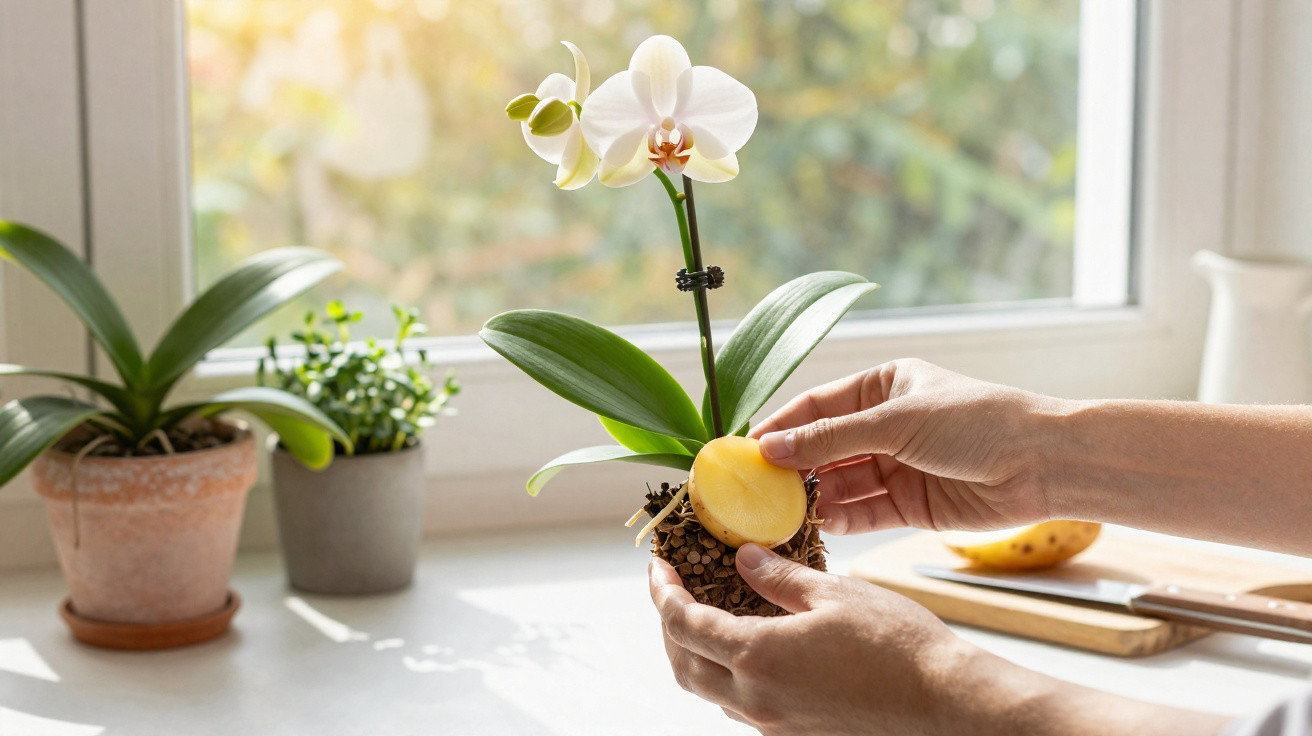
Many houseplant enthusiasts know the frustration: an orchid that was once magnificent is now drooping sadly in its pot. Nothing appears to make a difference: extra feed, a different position, a new watering routine. Yet the leaves remain limp and the base of the flower stem stays bare. A remarkably simple idea circulating among amateur gardeners tackles this exact problem – and it comes from the chopping board rather than the garden centre.
When your favourite orchid simply refuses to flower again
Phalaenopsis orchids in particular, widely available in DIY shops and garden centres, are generally considered hardy. They may flower for weeks, then suddenly come to a standstill. Their leaves lose firmness, becoming soft or wrinkled. Aerial roots that would normally look a rich green turn grey or brownish. Many owners immediately assume that the plant lacks nutrients.
The instinct is to use more fertiliser, increase the strength or feed at shorter intervals. However, experts such as the Royal Horticultural Society have pointed out for years that this can be precisely what causes the issue. Overfeeding puts further strain on already weakened plants, while salt residues in the growing medium prevent water uptake and cause roots to die. As a result, the orchid looks even more as though it is “at the end of its tether”.
“If you want to rescue your orchid, specialist fertiliser is not always necessary – a gentle, natural boost can often be far more helpful.”
This is the stage many amateur gardeners describe: they have moved the plant, adjusted its light and temperature, and softened the water, yet the orchid remains in a kind of prolonged dormancy. This is where the unusual method involving an ordinary vegetable comes in.
The surprising potato trick: kitchen rather than chemicals
It may sound like a joke at first, but forums and gardening blogs contain a surprising number of positive reports: placing a slice of raw potato on orchid growing medium is said to give a tired plant a renewed “push”.
The method is straightforward. Put a few wafer-thin slices of raw potato on top of the growing medium. Remove and discard them after a few hours. That is all there is to do initially. After several weeks, however, users report noticeable changes: leaves appear more upright, new root tips emerge and, in some cases, a fresh flower spike even develops.
The appeal of the idea is that it suits a sustainable, low-cost approach to houseplant care. There is no expensive specialist fertiliser or complicated feeding schedule – simply a basic food item that almost everyone already has at home.
Why potato? What the humble tuber actually provides
There is more behind this trick than superstition. Potatoes contain a range of nutrients that plants can use, albeit in a much weaker and gentler form than liquid fertiliser provides.
- Potassium: supports flower production and strengthens plant tissue
- Phosphorus: encourages root development and energy metabolism
- Magnesium: an essential component of chlorophyll that supports photosynthesis
- B vitamins: associated with reduced stress and plant vitality
- High water content: releases moisture slowly and very gently around the immediate root area
Agricultural research institutions regularly stress how important potassium and phosphorus are for flowering, roots and a plant’s overall resilience. The tuber supplies these elements in small amounts. Together with its moisture, it can briefly turn the surface of the growing medium into a kind of “natural power pack” – far gentler than a strong dose of fertiliser.
Its potential effect during periods of stress is also of interest. When days become shorter in autumn, or spring sunshine suddenly beats strongly onto a windowsill, many orchids can become unsettled. Magnesium and B vitamins may act as a small buffer, helping the plant to stabilise.
How to use the potato correctly
As with any household remedy, success or failure depends on how it is used. Leaving the tuber on the growing medium for weeks can lead to mould and rot – the complete opposite of the intended result.
Step-by-step guide to the potato treatment
- Choose a healthy potato that has not sprouted, ideally organically grown.
- Peel it or wash it thoroughly to remove any traces of dirt.
- Cut it into very thin slices – the thinner, the better.
- Place the slices on top of the orchid growing medium, without allowing them to touch the stem base directly.
- Leave them in place for no longer than three to four hours.
- Remove every slice and allow the rim of the pot to dry lightly in the air.
This treatment can be repeated once or twice a month. Some plant lovers take the idea one step further: they boil potatoes without salt, allow the cooking water to cool, then use it diluted for watering. This also provides trace nutrients, although it is considerably milder than any bottled fertiliser.
Take care to avoid contact with leaves
Some people also experiment by briefly wiping a fresh slice over the leaves before drying them with a soft cloth. This leaves minute amounts of nutrients and moisture on the surface, which can make the foliage look fresher. One point is essential: the leaves must be completely dry afterwards, otherwise marks or fungal problems may occur.
What a potato cannot do for an orchid
As intriguing as the trick may be, a tuber cannot replace basic care. No household remedy can simply “magic away” a completely rotten root ball or years of neglect.
“The potato is more like a friendly nudge – proper care remains the foundation: light, water, air and a suitable growing medium.”
A few simple guidelines apply to healthy orchids:
- Light: bright but protected from intense midday sun – an east- or west-facing window is usually suitable.
- Watering: water thoroughly but infrequently, rather than adding small amounts constantly. Avoid waterlogging at all costs.
- Growing medium: use loose, airy material such as bark chips, not ordinary compost.
- Humidity: keep it slightly higher, but do not leave the leaves permanently wet.
- Fertiliser: use sparingly and at a heavily diluted strength during the growing period.
Anyone who ignores these basics is unlikely to achieve lasting results with potato tricks either. Plants truly regain momentum only through a combination of stable growing conditions and small additional aids.
Risks and limits of this household remedy
Any organic material left on damp growing medium can become mouldy. For that reason, it is better to apply it for too short a time than for too long. Anyone living in a very cool, poorly ventilated home should check particularly carefully after treatment for a white coating.
If there is a heavy mould problem, replacing the growing medium entirely is worthwhile. In that situation, the potato treatment should be avoided for several weeks, until the plant has recovered. Likewise, if there is a smell of rot or the roots are soft and mushy, restore the root system first rather than introducing additional moisture.
Who can genuinely benefit from the tuber trick?
The method is particularly interesting for orchids that seem “stuck”: not seriously ill, but visibly weakened. In this grey area, a gentle nutrient boost may make a difference, especially during the transition between two flowering periods.
For anyone who already values environmentally friendly care, potato is a charming addition to rainwater, moderate fertilising and good air circulation. The cost is minimal, the risk is manageable when applied properly, and the possible reward is considerable: a plant that suddenly begins showing signs of life again.
Be more willing to experiment – but do it sensibly
The potato trick demonstrates how much potential simple foods can hold. Onion or garlic water, which are thought to have more antibacterial effects, and banana skins, which are rich in potassium, are said to offer similar benefits. Anyone using such household remedies should always remember that they are additions, not miracle cures.
Those who watch their plants, handle them regularly, inspect leaves and roots, and spot small changes quickly will usually develop greener fingers in the end – whether or not a potato slice is involved. Perhaps the most interesting lesson is this: sometimes the answer really is closer than expected. You simply need the confidence to try it.



Comments
No comments yet. Be the first to comment!
Leave a Comment