
Many amateur gardeners will recognise the situation: you have spent hours mowing a thirsty lawn, watering everything and arranging the chairs – yet the moment you sit down, something is already buzzing around your ankles. At the same time, more and more areas are facing drought, making the traditional ornamental lawn seem like a relic from another era. This is why an unobtrusive, ground-covering herb is attracting increasing attention: it needs very little water, can replace turf in many places, and its scent makes mosquitoes around the home less inclined to attack.
A thyme carpet instead of a thirsty lawn
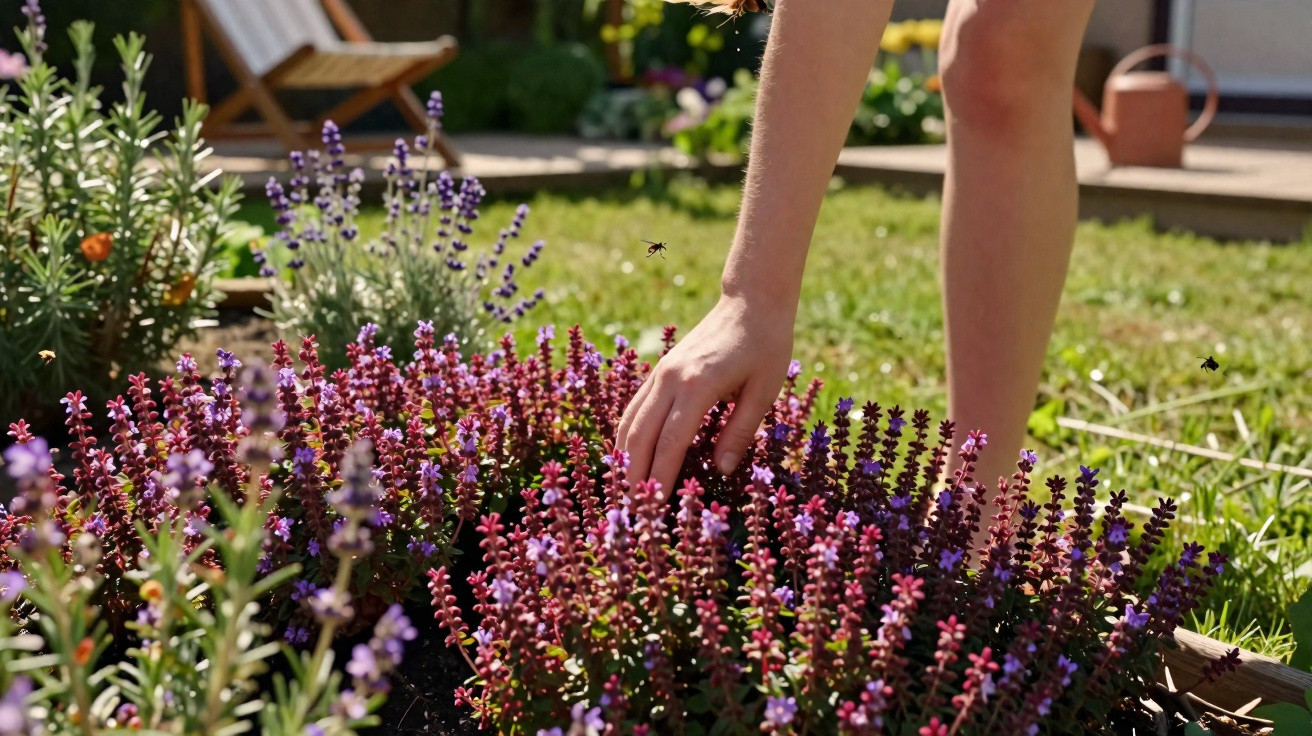
The plant in question is a particular form of wild thyme: Thymus serpyllum ‘Coccineus’, often known as red sand thyme or red wild thyme. It grows exceptionally low, usually reaching only 5 to 10 centimetres in height, but each plant can spread up to 40 centimetres wide and gradually creates a dense carpet.
Rather than circling the garden weekly with a lawnmower, you get a kind of living carpet that flowers in strong pink to purple shades in early summer. Its blooms attract bees and bumblebees, while maintenance requirements fall noticeably. Where scorched grass would otherwise be left behind, the thyme carpet remains remarkably resilient – even during hot summers.
“Red wild thyme spreads across the ground like a fragrant carpet, needs hardly any water and makes a lawn unnecessary in many areas.”
This plant thrives in poor, free-draining soil and full sun. It performs well precisely where a conventional lawn struggles: on stony ground, slopes, between stepping stones or along the edge of a patio. Anyone who has been battling bare patches, brown areas and moss in the lawn may find it a robust alternative.
Why this thyme makes summer less pleasant for mosquitoes
Mosquitoes rely heavily on scents and moisture for orientation. Many patios offer exactly what they favour: dense vegetation, damp corners and plant-pot saucers holding water – ideal places to breed and rest. Red sand thyme addresses two conditions that these blood-suckers dislike.
Dry soil rather than a damp breeding ground
The plant prefers dry conditions. Once established, it requires little water and even tolerates extended dry spells, provided the soil remains free-draining. This creates a drier, airier space directly beside the patio, with hardly any lingering moisture. Such areas are far less appealing to mosquitoes than shaded corners that stay permanently damp.
An aromatic scent that confuses mosquitoes
Like all types of thyme, this variety contains essential oils. When people walk across it, children play on it or wind passes over the carpet, these aromatic compounds are released. People tend to find the fragrance pleasantly spicy, whereas mosquitoes find it more disorientating.
“The scent of thyme creates a kind of veil of fragrance over the seating area, where mosquitoes find it much harder to orientate themselves.”
The plant is not a miracle cure – a completely mosquito-free garden remains unrealistic. However, when combined with other aromatic herbs, it can noticeably reduce the nuisance around seating areas.
How to plant red wild thyme before summer
Anyone planning to create a thyme carpet as a lawn replacement or patio border should begin in late winter or spring. This gives the plants sufficient time to establish their roots before the main heat arrives.
Preparing the position and soil
- Position: Choose as much full sun as possible, with at least several hours of direct sunlight each day.
- Soil: It should be fairly poor, sandy or stony, and essential that it drains well.
- Improvement: Work plenty of sand or fine gravel into heavy clay soil.
Red wild thyme does not cope well with waterlogged conditions. If puddles appear in the garden after rainfall, it is better not to plan a thyme area there, unless the soil is first thoroughly loosened and mixed with mineral material.
Spacing and care during the first year
To produce a continuous carpet quickly, many gardeners plant several specimens per square metre. One common recommendation is:
| Area | Number of plants | Spacing |
|---|---|---|
| 1 m² | 9–12 plants | 30–40 cm |
After planting, the young plants should be watered regularly for the first few weeks, without allowing them to sit in wet soil. Once they have rooted in, watering needs reduce significantly. In many gardens, it is enough to help them out with a watering can or hose only during prolonged hot periods.
After flowering, a light trim with shears is enough to keep the cushions compact and low. Cutting hard back into old wood is unnecessary and may thin out the carpet.
Building a mosquito barrier with herbs
The red thyme carpet works particularly well when it forms part of a broader garden approach. Around seating areas, the front door or a balcony, it is possible to create a sort of scented zone in which several aromatic plants work together.
Herbs that complement the thyme carpet
- Lemon basil: An intense citrus scent, ideal in containers beside the table.
- Lemongrass or lemon balm: A classic fragrance found in many anti-mosquito products.
- Peppermint: Grows vigorously, so it is better kept in a pot to prevent uncontrolled spreading.
Importantly, pots should not be pushed tightly against glass doors or windows, and saucers must not retain water after watering. The fewer damp spots directly beside the seating area, the less attractive the space becomes to mosquitoes.
“A dry, well-ventilated thyme carpet at ground level, combined with strongly scented herbs spaced loosely around it, changes the microclimate around the patio – away from a mosquito’s favourite place.”
Where a thyme carpet is especially worthwhile
Its uses extend well beyond a traditional lawn. Many garden owners use the plant in locations where other ground cover plants struggle or where grass is simply impractical.
- Between stepping stones: Thyme tolerates foot traffic, provided it is not continuously extremely heavy.
- On banks and slopes: It stabilises the soil and prevents exposed areas from eroding.
- Along the patio edge: It creates a neat, fragrant finish instead of a narrow strip of grass that is difficult to mow.
- In the front garden: It is an alternative to a high-maintenance ornamental lawn, particularly in sunny, dry locations.
As red wild thyme is hardy down to around minus 25 degrees Celsius, it also withstands severe winters without protection. Its evergreen, though low-growing, foliage provides year-round structure – even when the rest of the garden is dormant for winter.
What to know about its effect on mosquitoes
The plant is not a replacement for conventional protective measures. A few individual plants beside a water butt will not drive away swarms of mosquitoes. Any effect emerges only when several factors work together: dry soil, little standing water, open planting and a mixture of intensely scented herbs.
Anyone wishing to make their garden generally less mosquito-friendly should also cover open water butts, clean bird baths regularly and use plant-pot saucers sparingly. The thyme carpet supports this approach by turning a popular mosquito zone – the damp, shaded patio edge – into an area that is comparatively dry and smells pleasantly spicy.
Practical points and minor risks
In rare cases, people with very sensitive skin may react to essential oils. Children often enjoy playing barefoot on a thyme carpet, which is generally unproblematic, but anyone with known allergies should still remain alert. People who are highly sensitive to pollen should monitor whether the thyme causes symptoms during its first flowering year.
From an ecological perspective, red wild thyme offers clear benefits: it supports solitary bees, bumblebees and other pollinators, while requiring substantially less water and fertiliser than closely cut lawn. Combined with individual stepping stones, it can create an area that is both walkable and insect-friendly.
Anyone currently redesigning their garden or tired of a frustrating, patchy lawn will find this low-growing thyme a realistic alternative. It not only takes away part of the summer mosquito nuisance, but also removes many maintenance tasks – replacing them with fragrance, flowers and a noticeably more relaxed relationship with their own green space.





Comments
No comments yet. Be the first to comment!
Leave a Comment