
Everyone wants wood to have a rich, satin-like glow, without an overpowering chemical odour or a coating that becomes tacky by Sunday. A carpenter I once met showed me how to achieve it using two recognisable ingredients-ones you could probably buy this afternoon.
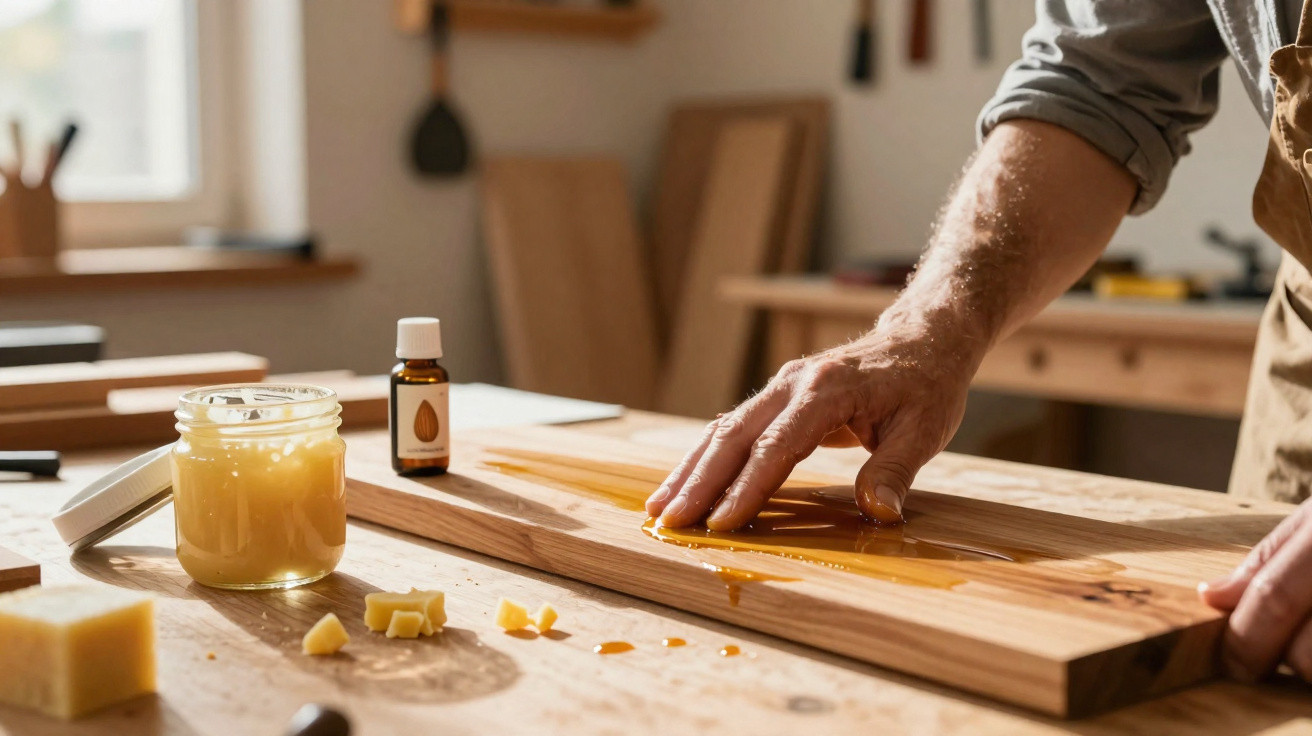
The workshop air carried the sweet scent of cedar shavings and coffee, while a radio murmured from the corner as though it were part of the timber. With his sleeves pushed up, the carpenter held a jar to the winter light: pale beeswax shavings suspended in almond oil.
Using an improvised bain-marie, much like melting chocolate, he gently warmed the mixture. He dipped in a cloth and worked it over a weary oak board. Before my eyes, the grain seemed to come alive, like a face waking after sleep. Its tone became richer, while the wood remained dry to the touch but supple, rather like softened leather. He buffed it once, then again. Honey and marzipan scented the room.
The method was almost absurdly straightforward.
Why a carpenter relies on beeswax and almond oil
He explained that he had given up silicone-based sprays years before. They made tables gleam, he said, but left them feeling oily. In his view, beeswax and almond oil work within the wood rather than merely coating its surface. The wax forms a fine, pliable layer, while the oil enters the pores and calms parched fibres. Combined, they restore a glow that does not demand another application the following week.
He demonstrated on a maple sideboard marked by years of leaning elbows and hot mugs. One section looked faded and grey-the sort of worn patch that can make a whole piece seem beyond saving. He applied a thumb-sized dab of balm, left it for a minute, and polished it with a clean cloth. The grain became brighter and the panel appeared newly rested. Smiling, he tapped the surface: Made in minutes. There was no fuss, and no odour that would hang around after dinner.
There is a modest piece of chemistry behind that lustre. Beeswax liquefies at around 62–65°C, then cools into a microstructure that repels moisture without trapping the timber beneath a plastic-like seal. Light and relatively slow to turn rancid, almond oil soaks in and keeps wood flexible without leaving a sticky finish. Synthetic polishes commonly rely on silicones for shine, which can smear and draw in dust. By contrast, the wax sets to a restrained sheen while the oil nourishes the fibres. It is straightforward, clean and pleasingly tactile.
Making beeswax and almond oil polish at home
Work with a 1:3 weight ratio: 30 g of beeswax and 90 g of sweet almond oil. Grate the wax, then heat the oil in a jar placed in a pan of gently simmering water. Add the wax and stir until it has melted completely. Remove the jar from the heat, allow it to cool for a minute, then stir once more. For added protection against oxidation, you can include 4–6 drops of vitamin E, along with a subtle touch of lemon or cedar essential oil if desired. Decant the blend into a small tin and leave it to firm up. No sticky residue.
Applying it is equally low-key. First remove dust from the surface and test the balm on a discreet area. Then use a soft cotton cloth to massage a pea-sized amount into the timber. Leave it for 15–30 minutes before buffing with a fresh, lint-free cloth until your arm starts to feel slightly ridiculous. We all know the point when a table still seems dull, then suddenly shines after two more passes. Applying too much is the standard mistake. Fine layers work best. Allow the furniture to stand overnight before putting it back into heavy use.
A few mistakes are worth avoiding. Do not hurry the melting process or allow water to splash into the jar. Skip the microwave altogether. In a cold room, the balm will set more firmly, so warm the tin between your hands before using it. On polyurethane-sealed wood, it will remain on the surface; this is not a problem, although the result will be a short-term lustre rather than a penetrating treatment. Where nut allergies are an issue, substitute jojoba for almond oil. Shine that lasts is created through patience and proper buffing, not by layering on extra wax. Honestly, no one is going to carry out this routine every day.
“Wax isn’t makeup,” he said, laying the cloth flat and pushing with his palm. “It’s a handshake. The wood should feel like wood-clean, warm, and ready to be touched.”
- Ratio guide: a firmer balm = 1:2 (wax:oil); a softer balm = 1:4
- Temperature aim: melt only until clear; do not boil
- Cloths: use an old cotton T-shirt for application and tightly woven microfibre for buffing
- Resting period: wait 12–24 hours before placing heavy items on the surface
A simple ritual that changes the way you see wood
There is a noticeable change in mood when you spend five unhurried minutes caring for a table rather than reaching for a spray and wiping it down quickly. Scratches you had ceased to notice become visible again. In the afternoon, you start to see how the light travels through the grain. The balm encourages restraint: a small amount does plenty, and the aim is not a mirror-like gloss but a finish that makes people want to touch it.
It can also be the start of repairing rather than replacing. A mark on an oak chair can be softened instead of concealed. A desk dulled by screens and coffee rings can take on fresh character. That may be why this modest recipe seems greater than the sum of its parts: two simple kitchen-style ingredients, a cloth, and a level of patience manageable on a Tuesday evening. Give a jar to a neighbour, compare fragrances and proportions, and discover what stories your furniture begins to tell in return.
| Key point | Detail | Benefit for the reader |
|---|---|---|
| Basic ratio | 1 part beeswax : 3 parts almond oil (by weight) | A smooth texture that spreads and buffs easily |
| Method | Bain-marie, gentle melting, then pour into a small tin | A dependable recipe that can be made in 20 minutes |
| Care | Thin layers, vigorous buffing, and a 12–24 h rest | A durable finish with a dry, warm feel |
FAQ:
- Can I substitute almond oil with another oil? Yes. Jojoba is particularly stable and suits warm climates well. Grapeseed oil is effective but may deteriorate more quickly. Olive oil adds more weight and can have a noticeable scent, so use it sparingly.
- Is it food-safe for chopping boards? The ingredients are edible, though nut oil may present a concern. For boards, use beeswax with fractionated coconut oil or pure mineral oil instead.
- How frequently should I apply it again? For items that are touched lightly, every 2–3 months is suitable. For heavily used tables, apply it monthly or whenever the wood appears dry. A quick buff between applications helps prolong the glow.
- Does it make wood darker? Slightly. Oils enrich the colour and bring out the grain. If you wish to preserve a very pale finish, test it in an inconspicuous place first.
- What should I do if the balm is too firm or too soft? Melt it again and alter the balance. If it is too firm, add a little more oil; if it is too soft, incorporate a little more wax. Small adjustments have a significant effect.


Comments
No comments yet. Be the first to comment!
Leave a Comment