
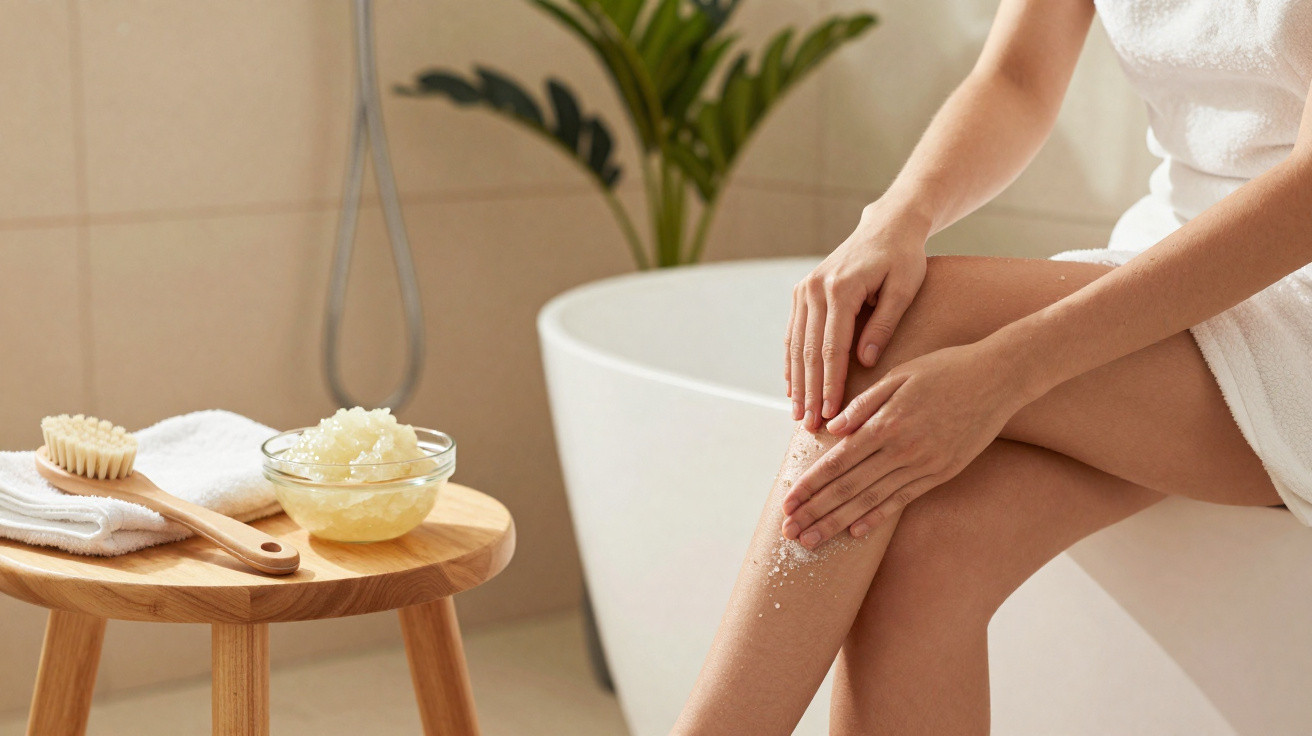
Skin may feel clean after a shower yet still have a rough texture to the touch. Provided there are no wounds or irritation, a gentle body exfoliation using fine sugar and a small amount of oil can help lift surface skin cells. The key, however, is to avoid using too much pressure or friction.
How can you make a simple exfoliating scrub for your legs?
This blend can be prepared with fine-grained sugar and just enough oil to lightly coat the crystals, helping the mixture glide across the skin. It should remain grainy, without being so dry that you have to apply force to spread it.
There is no need to make a large batch. Prepare only enough for the area you intend to treat at that time, and do not keep any leftover mixture that has come into contact with your hands or shower water. The aim is a simple, targeted treatment applied gently.
Why should you use much less pressure?
Exfoliating does not mean “scraping” the skin. Pushing the grains too firmly can increase friction and lead to redness, stinging and small injuries, particularly on sensitive skin. Use light movements and avoid repeatedly working over the same spot in pursuit of a stronger clean feeling.
- Combine fine sugar with a small amount of oil until it has a moist texture that is easy to spread.
- Apply only to unbroken body skin, using very gentle circular movements.
- Do not scrub for too long or increase the pressure on rougher areas.
- Rinse carefully, and stop using it if stinging, pain or irritation occurs.
The process should feel comfortable. If the grains feel harsh, reduce the pressure straight away or stop applying the mixture. A more vigorous exfoliation does not deliver better results and may leave the skin’s natural barrier more vulnerable.
Which areas should be kept away from this mixture?
This preparation is intended for body use only and should not be used on the face, where skin generally requires more specific care. It is also important to keep sugar away from sensitive or irritated areas, and from any skin showing signs of injury, even when the damage appears minor.
Cuts, scratches, burns, freshly shaved areas and patches of redness should not be exposed to this kind of friction. If there is intense itching, persistent flaking, pain or frequent changes to the skin, it is best to avoid homemade treatments and seek professional advice to investigate the cause.
Watch the video shared by the YouTube channel Mirella Martins, which offers tips on keeping legs smooth and free from folliculitis.
Is showering enough to get rid of roughness?
Not always. A shower removes sweat, residue and surface oil, but rough texture can also be linked to dryness and a build-up of cells in the outermost layer of the skin. For this reason, scrubbing more firmly in the shower is not necessarily the answer and may make discomfort worse.
After exfoliating, the skin may benefit from suitable moisturisation, especially if it tends to become dry after exposure to hot water and soap. Applying moisturiser once the skin is clean and dry helps complete the routine without turning exfoliation into an aggressive practice.
Gentleness matters more than intensity
The belief that you need to feel the grains “working” forcefully can result in overdoing it. In reality, soft movements and attention to how your skin responds are safer choices. The mixture of fine sugar and a little oil should be an occasional treatment, never a way of sanding down rough patches.
If your legs remain rough even after a shower, resist the urge to scrub harder. Check your skin, avoid damaged areas and carry out any exfoliation with extreme gentleness. Starting by reducing the pressure may be exactly the change needed to make this care routine more comfortable.





Comments
No comments yet. Be the first to comment!
Leave a Comment