
For decades, toilet paper was regarded as an unquestioned bathroom essential. Now, however, the roll on its holder is losing its status: scarce resources, mounting waste and hygiene concerns are prompting many people to reconsider. Anyone looking into water, cloths or modern technology soon discovers that practical alternatives have long existed – and that some have been everyday practice in other countries for generations.
Why toilet paper has suddenly become a problem
In Germany, loo roll is still considered standard equipment in every home. Yet the convenient reach for a paper roll has consequences that were ignored for a long time.
- High use of resources: Producing toilet paper requires wood, water, energy and chemicals.
- Waste and wastewater: Rolls end up down the drain or in general waste – in enormous quantities.
- Supply shortages: Since the pandemic at the latest, everyone knows how quickly supermarket shelves can be emptied.
- Skin problems: Fragrances, dyes and rough surfaces can irritate sensitive skin.
“Anyone who goes without paper protects forests, sewage treatment works and often their own body too.”
While shoppers here still put toilet paper into their trolleys by the pallet-load, many people around the world have traditionally cleaned themselves using water alone. What once sounded exotic now appears distinctly modern in an age of climate crisis and raw-material shortages.
Wet wipes are not the answer – especially not down the toilet
For convenience, many people choose moist toilet paper or wet wipes. They promise a fresher clean, but they have attracted considerable criticism.
Germany’s Federal Environment Agency clearly advises against disposing of these wipes via the toilet. According to experts, even products labelled “flushable” still cause:
- blocked household drainage pipes
- disruption at pumping stations and sewage treatment works
- high repair bills for local authorities and landlords
- additional plastic waste when put into general waste
There is another issue: many wet wipes contain preservatives or fragrances that may irritate sensitive mucous membranes. People experiencing itching or recurring inflammation often tolerate this supposedly gentle form of cleaning particularly badly.
“Wet wipes are convenient, but they are a real nuisance for the environment and the sewer network.”
Kitchen roll, paper tissues and other household or cleaning wipes are unsuitable as well. They break down in water far less effectively than standard toilet paper, increasing the likelihood of blockages.
Bidet and shower toilet: clean with water rather than paper
The best-known toilet paper alternatives all operate on the same principle: cleaning with water. It may feel unfamiliar at first, but it is widespread across the world, from southern Europe to Japan.
Traditional bidet in the bathroom
A bidet is a standard feature in many older homes in southern Europe. Resembling a low washbasin, it sits alongside the toilet. After using the toilet, the person sits on the bidet and cleans their intimate area with a stream of water or by hand.
Advantages:
- particularly thorough cleaning
- suitable for people with sensitive skin or haemorrhoids
- considerably less paper use, or none at all
The drawbacks are that a bidet needs bathroom space and must be installed and connected to water pipes. In newer homes, space for one is usually not planned at all.
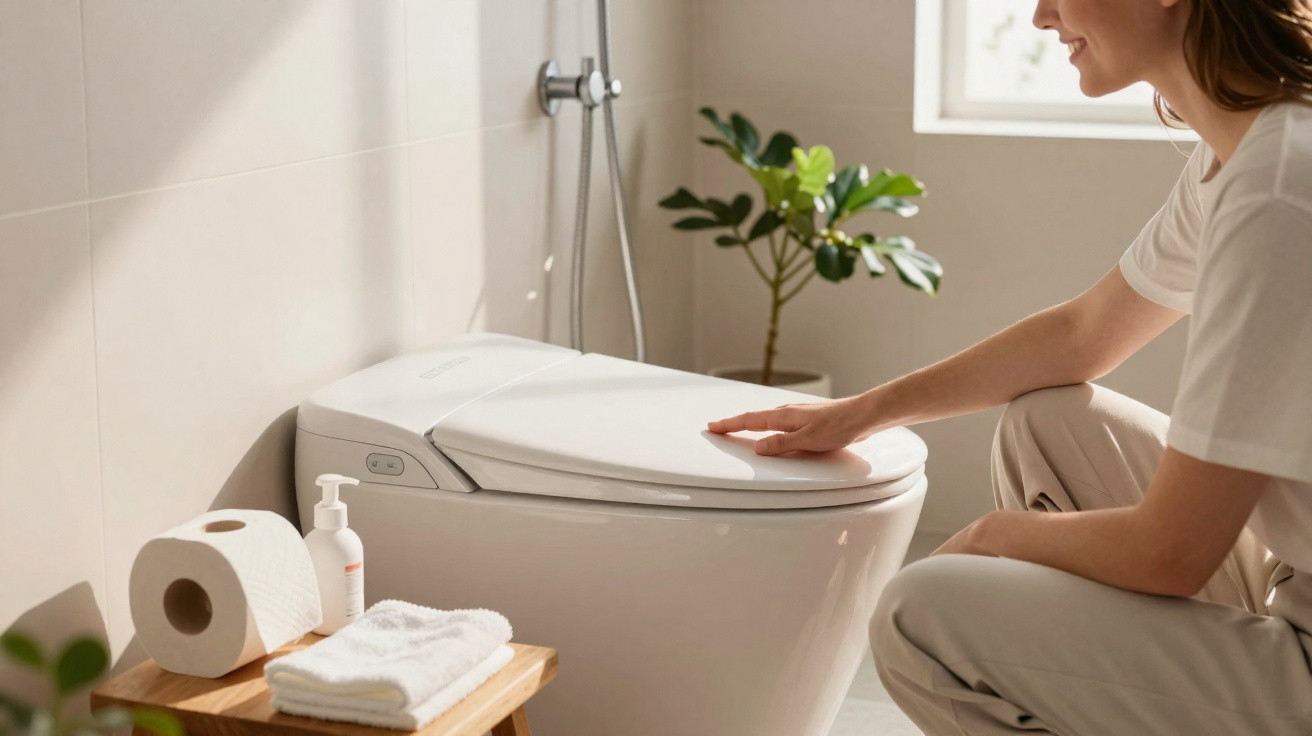
Shower toilet: high-tech built into the toilet seat
Modern toilets with an integrated shower function combine a toilet and bidet in one unit. After using the toilet, a small nozzle extends and cleans with a warm jet of water. Many models also provide features such as:
- individually adjustable water pressure
- warm water
- gentle air drying
- a heated seat
“The WHO classifies cleaning with clean water, when used correctly, as hygienically safe – and often more thorough than dry wiping with paper.”
Depending on their equipment, shower toilets cost from several hundred to several thousand euros. For homeowners taking a long-term view, the reduced need to buy paper and greater comfort may make the investment worthwhile. Tenants are better off discussing installation with their landlord if in doubt.
Bidet shower: a space-saving mini solution for any home
Those who do not want to install a complete shower toilet can begin with a simple bidet shower. It resembles a small handheld shower head, like those used in kitchens, and is fitted directly beside the toilet.
Two versions are typical:
- Fixed installation on the water supply – for example, at the isolation valve behind the toilet or at the washbasin.
- Connection to the cistern – a practical option where no additional water connection is available.
Many models can be secured with a shut-off valve, so water runs only when required. The water jet cleans the bottom and intimate area directly over the toilet. A small towel or cotton cloth can then be used instead of paper for drying.
Bidet attachments: retrofit rather than renovate
Bidet attachments for an existing toilet make the change even simpler. They sit on the ceramic rim and are fastened in the same way as an ordinary toilet seat. A slim hose links the attachment to a water supply.
There are purely mechanical models, where a dial controls the water jet, as well as electronic systems with a heating function or remote control. Their main advantage is clear: there is no major building work and no need for a completely new toilet. Most can also be removed without leaving traces in rented homes.
“Bidet attachments are a kind of entry point to the paperless toilet – inexpensive, retrofittable and suitable for daily use.”
Travel bidet: clean on the move – entirely without paper
A travel bidet is an appealing option for camping, train journeys or everyday office use. Essentially, it is a small bottle with an attachment or a compact spray device that directs water precisely where it is needed.
Advantages:
- no installation required
- ideal for hotels, campsites or travel to countries with different toilet systems
- also suitable for people with limited mobility, as vigorous rubbing is unnecessary
Many people initially use a travel bidet to test whether water-based cleaning works in everyday life. According to user reports, once people become accustomed to it, they rarely want to return entirely to paper.
Drying without disposable paper: a towel instead of a roll
All water-based options raise one question: how do you dry afterwards? According to the WHO, mechanical cleaning with clean water is sufficient for hygiene. Drying improves comfort and helps protect clothing.
Instead of conventional toilet paper, suitable options include:
- small cotton cloths that are washed regularly
- separate towels for the intimate area, clearly kept apart from the rest of the laundry cycle
- with shower toilets: a warm-air drying function
“Anyone switching to reusable cloths cuts waste and saves money in the long term – much like with fabric handkerchiefs or washable make-up remover pads.”
Which options reduce environmental impact the most
Germany’s Federal Environment Agency makes no secret of it: toilet paper creates a noticeable burden in terms of waste and resources. From felling trees and the energy used in paper mills to transport and disposal through wastewater, every flush leaves its mark.
The most environmentally considerate solutions are those that largely avoid disposable materials:
- cleaning with water (bidet, shower toilet, handheld shower or travel bidet)
- drying with washable cloths or integrated air drying
- using any remaining paper only as a backup or for guests
Anyone not ready to abandon the roll completely can at least switch to recycled toilet paper and gradually reduce consumption.
Practical tips for getting started without toilet paper
Making the switch can seem far more daunting in theory than it is in reality. Small, practical steps can help:
- first try a travel bidet or a simple handheld shower
- keep a separate small towel ready for every member of the household
- establish a clear routine: flush first, then clean, then dry
- continue offering paper to guests so that nobody feels overwhelmed
For households with children, it can help to approach the subject playfully. Many children accept water much more readily than adults who have been used to paper for decades.
Health considerations: who may find water particularly comfortable
Many proctologists and dermatologists take a positive view of gentle cleaning with water. It can offer advantages, especially for sensitive areas:
- less friction with haemorrhoids or fissures
- no contact with fragrances or bleaching agents in paper
- more effective cleaning during diarrhoea or after operations
Anyone already experiencing anal problems can discuss the change with their GP surgery or a proctologist. Sometimes a lukewarm water jet that is not too strong is enough to noticeably ease discomfort.
What really changes in everyday life
The biggest difference becomes apparent after a few weeks: bulk packs of toilet paper are bought less often, the bathroom bin fills more slowly, and considerably less cellulose goes down the drain. People living in blocks of flats also reduce the risk of shared pipe problems.
At the same time, personal expectations of hygiene change. Many people who have fully switched to water describe the feeling after using the toilet as “cleaner” and “fresher” than using paper alone. The roll often remains on its holder, but more as a backup than as the centrepiece of the bathroom.

Comments
No comments yet. Be the first to comment!
Leave a Comment