
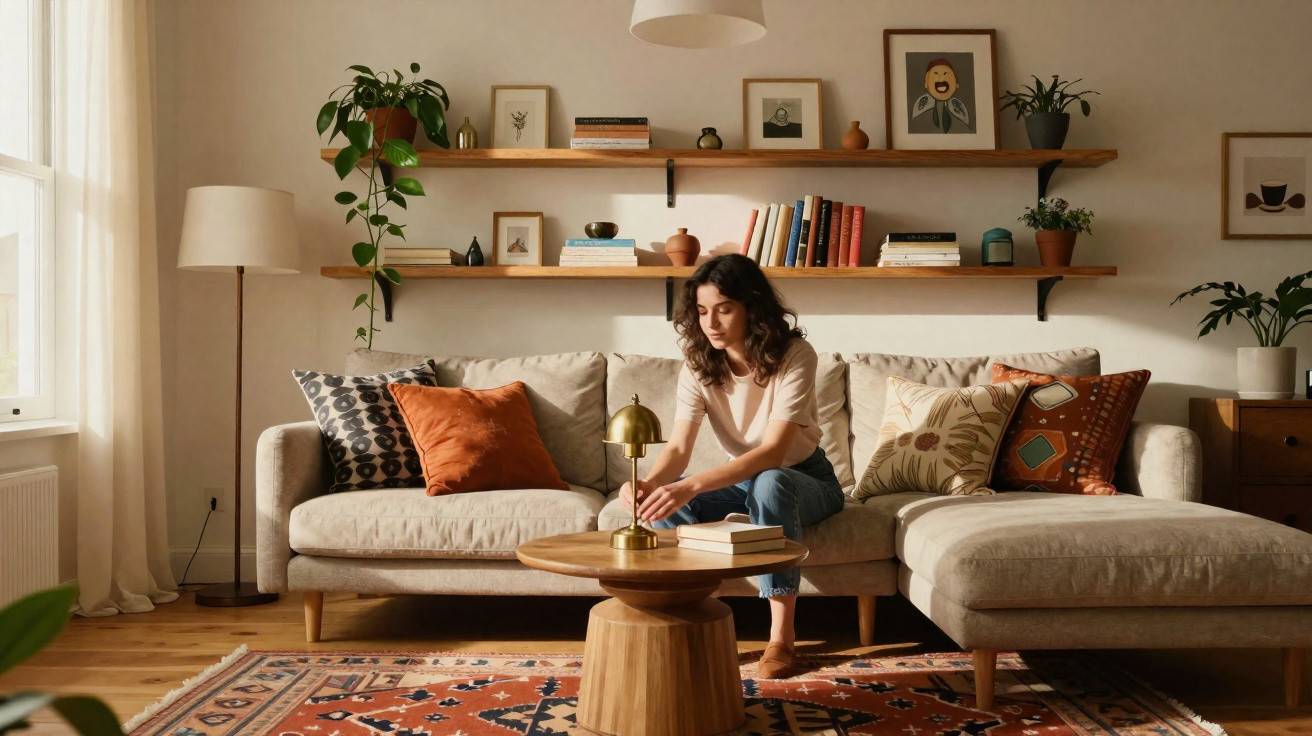
Leaf through any glossy interiors magazine and it is easy to become swept up in the latest trends, particularly when so many decorative ideas are there to spark your imagination.
That said, it can also bring you back down to earth and leave you wondering: how can you show your personality so that the space reflects you as much as the décor?
With this in mind, and whatever your design philosophy, Lara Clarke of Lara Clarke Interiors believes in a personal approach with every client: “It’s a collaborative process – instead of putting our style on you, we pull your style out.
“We work with you to try and create something that’s essentially yours and unique, and not a carbon copy of everything else.”
The Surrey-based designer says the details that matter include how you live, a fabric you adore and where you will sit with a morning cup of tea.
“We get into the nitty gritty detail… how this home is going to work for you as a family, and how it’s going to work best for you – and not for anyone else.”
A firm believer that straightforward styling techniques can make a room feel more personal, Clarke offers her leading suggestions for creative people and interior enthusiasts.
Layered lighting and shelf styling
1. Layered lighting
Lighting is one of the most important considerations. “A lot of people might just have downlights; but if you layer your lighting, it makes a huge difference.”
Clarke recommends rechargeable wall lights, which are versatile and cordless: simply fit a bracket or use strong adhesive. Think of a brass sconce paired with a decorative shade.
“You just put it on your wall, and instantly you’ll have some wall lights… it’s a great way to layer lighting in your home.”
Clarke also recommends table lamps. “Table lamps are another one,” suggests Clarke. “On a table, go for a different lampshade.”
For instance, if you purchase a table lamp from John Lewis, she advises selecting a designer lampshade of your own. “It elevates that lamp in a way an ordinary, plain white shade wouldn’t.”
She also favours introducing colour. For anyone who does not want to paint the walls but would like to refresh a room by changing its mood, Clarke says lampshades offer another way to bring in colour and pattern.
“I like using coloured lampshades in my designs, I kind of link with the scheme… a plain white one can be boring; but a patterned lampshade makes a big difference.”
2. Shelving & placement
When arranging shelves and positioning accessories, the designer recommends a combination of taller items, such as photographs and books, alongside flowers as part of the overall scheme.
“Sometimes people tend to stuff it full when actually less is more.”
If you are weighing up symmetry against scale, she says the answer is balance. “So if you’re looking at a shelf or bookcase as a hole, there will be some elements of symmetry.
“But you don’t want everything to be symmetrical, because then it will feel too staged, there needs to be a balance between both.”
Clarke prefers a varied arrangement. “I put a lot of books flat, and then it’s nice to have something on top of them.
“If you have some books you want to balance, and they’re stacked on top of one another, then balance that with an object, vase or candle on top.”
Scatter cushions and rug rules
3. The secret to scatter cushions
Clarke points out that cushions are one of the biggest areas for transforming the appearance of a room. “I think cushions is one of those massive areas where it can completely change the look of your room,” highlights Clarke.
“The key is to get a quality cushion with a good plump; you can buy cushions from the high street, but they won’t have a nice feather insert.”
As a result, when buying a cushion cover, she advises choosing a feather insert one size larger. “So you stuff it, and then your cushion looks fuller than if you were to buy the corresponding insert which normally looks a bit flat.
“It makes the cushion look more expensive, I like a very plump cushion, it’s more luxurious rather than something limp on the sofa,” she quips.
Clarke also believes there is no such thing as too many cushions. “It’s a really good way to add colour and interest to potentially a plain sofa.”
4. Rug rules
Regarding rug dos and don’ts, the designer says that many people choose a rug that is too small for their room. “And actually, it makes the space look a bit smaller if anything.
“So you want to oversize your rug… you don’t want it to look like a doormat under your coffee table.”
In an ideal setting, most pieces of furniture should sit on the rug, she says. “So that would be your sofa, your side tables, your accent chairs, if possible – but if in doubt, bigger is better.”
“You want to zone the space by including the furniture within that,” she says confidently.


Comments
No comments yet. Be the first to comment!
Leave a Comment