
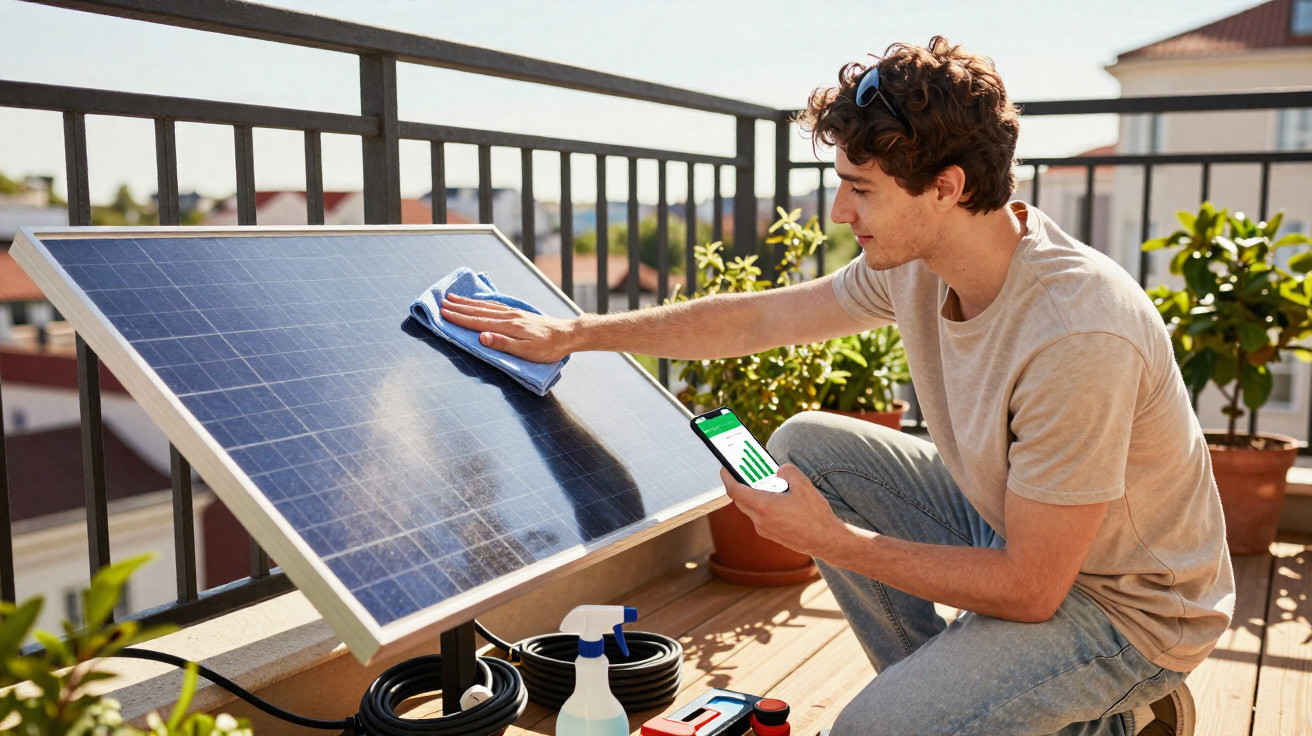
Many systems have simply been left to tick over during winter. Now that daylight hours are increasing, a short but thorough inspection will determine how much electricity you actually generate yourself over the coming months. These five practical steps will help you get substantially more from your balcony solar system while preventing costly damage or disputes with the grid operator.
Why a spring check for your balcony solar system is worthwhile
Solar installations produce considerably more in spring. The sun is higher in the sky, shines for longer and is often stronger too. Balcony solar systems benefit particularly from this, as every extra hour of sunshine directly reduces the electricity you need to buy.
Many owners do not realise how much winter weather, dirt or minor changes to a balcony or terrace can reduce output. A trapped cable, a neighbour’s new parasol or a coating of pollen on the glass may seem insignificant, but each can easily cost several kilowatt-hours over a year.
A 20-minute inspection in spring can noticeably increase the annual yield of a balcony solar system – while also protecting the installation from damage.
The five key areas are safety, positioning, cleanliness, app settings and grid-operator requirements. Checking each of these points in turn will let you enter the sunny season with far greater peace of mind.
1. Safety check: is the system still securely supported?
Winter puts components under strain: frost, wind, ice and snow all affect brackets and cables. Before the panels return to sustained full-power operation, inspect them carefully.
Inspect brackets and frames
- Are every screw and fixing still tight?
- Does the panel move when pushed or pulled firmly?
- Are there bent sections, rust or hairline cracks in any metal parts?
Safety is especially important for balcony and façade installations. In high winds, a poorly secured panel can endanger people and property. If you have any doubts, it is best to contact a specialist installer.
Check cables and connectors
Cables are often the vulnerable part of a system. Pay particular attention to areas where they pass through doors, windows or narrow gaps. Common signs of damage include:
- crushed or kinked cable sheathing
- exposed or split insulation
- loose plugs or unstable connections
- moisture or corrosion on plugs and sockets
Dry damp connection points immediately, and replace any affected components if corrosion is visible. If unsure, use a new cable – it costs far less than the potential damage from a fire.
If the insulation is damaged or plugs are loose, switch off the system and replace the faulty parts – do not keep running it and hope for the best.
2. Positioning and shading: is the panel genuinely in the best place?
Something that was unobstructed in winter may suddenly cast shade in spring: budding trees, climbing plants, new balcony furniture or awnings. Even small areas of shade can significantly reduce performance, particularly on panels without power optimisers.
Identify new sources of shade
Visit your balcony at different times of day to see whether any part of the panel is shaded. Typical causes include:
- plant pots, flower boxes and trellises
- balcony screening and privacy mats
- parasols, awnings and shade sails
- terrace furniture, especially items with tall backs
Even a small shaded corner can hold back the entire string. Where possible, move the panels slightly or reposition anything causing an obstruction.
Adjust the tilt angle
The sun sits lower in winter and much higher in summer. Many people set their panels once and then leave them unchanged for years. If your frame is adjustable, a few simple adjustments can improve the yield.
A broad guide for Germany:
| Season | Recommended tilt angle |
|---|---|
| Winter operation | 40–60 degrees |
| Spring / autumn | 30–40 degrees |
| Summer | 15–30 degrees |
The ideal setting also depends on the direction your balcony faces. A south-facing position offers the best prospects, but an adjusted tilt can still deliver worthwhile gains on east- or west-facing balconies.
3. Gentle cleaning: remove pollen, dust and winter residue
Snow, ice and, above all, pollen in spring can settle across the glass surface like a film. Even a light coating reduces the amount of light reaching the panel and therefore lowers its output.
How to clean panels properly
- use lukewarm water only
- use a soft cloth or an exceptionally soft sponge
- if needed, add a drop of mild washing-up liquid, used sparingly
- do not use abrasive sponges, brushes or metal items
Always work from top to bottom and rinse thoroughly afterwards so that no smeary film remains. If the panel is easy to reach, a damp microfibre cloth will often be sufficient.
Keep away from pressure washers, harsh chemicals and coarse brushes – the risk of scratches and leaks is high.
If your balcony solar system is difficult to access, do not attempt risky climbing. Instead, use a telescopic pole with a soft attachment, or arrange for a professional to clean a heavily soiled installation once.
4. Review the app settings: is the technology operating at its best?
Many modern balcony solar systems are connected to the manufacturer’s app. In addition to monitoring output, these apps often allow you to change settings.
Update software and firmware
Check in spring whether new versions are available:
- update the app through the App Store or Play Store
- use the app to see whether a firmware update is available for the inverter
Updates provide bug fixes, performance improvements and sometimes additional functions. The device should not be disconnected from the electricity supply while an update is in progress.
Review output and export limits
Many apps allow maximum output power and export values to be set. Restricting these too cautiously means losing electricity, while setting them too high may breach requirements.
Check the following:
- the inverter’s maximum output power
- the configured limit for export into the household electrical system
- the proportion of self-consumption and export to the public grid, if a suitable meter is installed
- battery settings, where a battery is connected
Checking the app after several sunny days quickly reveals whether the balcony solar system is still working as planned – or whether its settings need changing.
5. Regulatory requirements: is the registration still correct?
Many owners expand their systems over time, perhaps by adding a second panel, a more powerful inverter or additional battery storage. This is the point at which it is particularly worth reviewing the legal requirements.
Market Master Data Register and grid operator
Plug-in solar devices must be registered in the Market Master Data Register. Anyone changing their system should check that the entry still reflects the actual installation. If a 600-watt system becomes an 800-watt model, this must be recorded correctly.
Additional requirements apply above certain power levels. If the balcony solar system exceeds the maximum permitted export capacity, grid operators often require:
- a fixed export connection instead of an ordinary plug socket
- formal registration with the grid operator
- in some cases, replacement of the electricity meter
If in doubt, make a quick call to the grid operator. This can prevent misunderstandings, for example if an old backwards-running meter is still operating and the owner risks problems later.
Practical extra tips for increasing everyday yield
While carrying out the spring inspection, you can also make a few further adjustments to increase self-consumption. Small changes in everyday behaviour can often make a surprisingly large difference.
- Run the washing machine and dishwasher around midday where possible.
- Identify standby loads and reduce them with switchable sockets.
- For appliances with timer functions, such as tumble dryers, schedule running times for sunnier periods.
- Use the app’s analysis tools to identify typical generation patterns.
This allows you to use self-generated electricity directly in your home rather than exporting it to the grid without payment. For many users, this is the most financially attractive option.
What terms such as “export capacity” and “self-consumption” mean
Balcony solar systems often involve technical terms that can be confusing:
- Export capacity: the maximum electrical power your system supplies to the household electrical system or public grid.
- Self-consumption: electricity used directly within your own home before any is exported to the grid.
- Inverter: the device that converts the direct current generated by the panels into alternating current suitable for household use.
Understanding these basics also makes it easier to assess the figures in the app and decide, for instance, whether a small battery would be worthwhile.
With a consistent five-point check in spring, a few app adjustments and some thoughtful planning around household appliances, even a simple balcony solar system can deliver a remarkable amount. The first sunny day will then signal not only the feeling of a lighter season, but also the start of lower electricity bills.




Comments
No comments yet. Be the first to comment!
Leave a Comment