
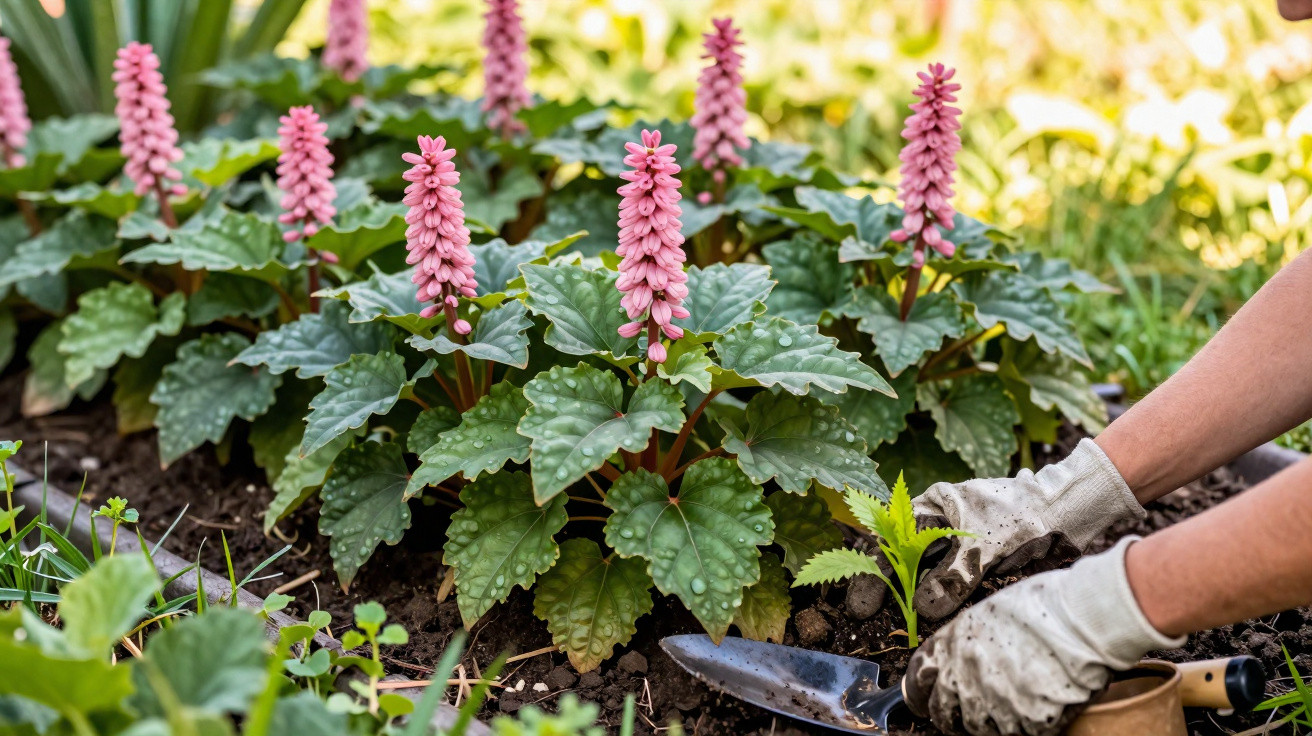
Anyone tired of constantly pulling weeds can save themselves a great deal of work with one hardy perennial.
Since synthetic weedkillers were banned, many amateur gardeners have been left wondering what to do with their beds: no sooner has one patch been cleared than fresh weeds emerge from the soil. Rather than spending every weekend kneeling among the plants with a hoe, there is a much easier approach: a plant that covers the ground like a living carpet and simply crowds out unwanted growth.
Living mulch rather than chemicals: how a perennial suppresses weeds
In traditional gardens, brushcutters are still buzzing away while knee pads and gloves see constant use. However, specialists have advocated a different method for years: ground-covering plants that grow densely enough to stop light reaching the soil. They perform the role of natural mulch, but remain alive and provide lasting cover.
This type of ground cover can reduce weed emergence by around 70 to 90 per cent – entirely without chemicals.
The principle is straightforward: when soil is no longer exposed, weed seeds have little opportunity to germinate. If the occasional shoot does make its way through, it can generally be removed in a single movement. One perennial is particularly well suited to this job, as it is tough, retains foliage throughout the year and flowers early in the season.
Bergenia: the hardy leafy plant that slows weeds
This plant is Bergenia, more precisely the species Bergenia purpurascens. It is commonly sold simply as “Bergenia” or under cultivar names. It may initially look rather unassuming in a garden, but its effect becomes remarkably clear over time.
Its key characteristics at a glance:
- perennial and hardy to roughly minus 20 to minus 30°C
- evergreen, thick foliage that keeps the ground covered throughout the year
- usually grows between 30 and 50 centimetres tall
- spreads to up to 70 centimetres per plant, making it ideal for creating unbroken carpets
- produces clusters of pink flowers in spring
Its broad, leathery leaves overlap across the ground like scales. This prevents light from reaching the soil beneath them. As a result, weed seeds struggle even to get started. At the same time, the foliage forms a natural “blanket” that protects the soil.
Gardeners also value this perennial for its appearance. Pink to reddish bell-shaped flowers rise above the foliage in spring, while some leaves often turn red to purple in autumn. This gives the bed a quick change of character without creating much maintenance work.
The best time to plant
To use Bergenia as a weed suppressant, timing matters. Spring and autumn are the two main planting periods. March to April is particularly favourable, when the ground remains moist but is no longer freezing cold.
Planting in early spring gives Bergenia enough time to establish roots before summer becomes stressful.
During this period, the roots establish quickly while temperatures are still moderate. The perennial can therefore cover large parts of the area in its first year. Those who plant now will often find they have far less weeding to do in the very same summer.
Where the plant performs best
One advantage of Bergenia is its ability to cope with a wide range of positions. It tolerates sun provided conditions are not relentlessly hot, and it also grows in partial shade and many shaded locations. The one thing it does not tolerate is waterlogging.
Typical places to use it in the garden include:
- edges of beds and paths
- areas around deciduous trees
- sloping banks that are difficult to mow
- lightly shaded spots at the edge of shrubs and trees
- rock gardens and stony areas with free-draining soil
Bergenia reaches its limits in extremely dark corners or very wet ground. In these settings, it can be combined effectively with other tough plants, such as ground-covering cranesbill varieties or lesser periwinkle. This creates a dense carpet with varied textures to suit the particular site.
Creating a dense planting carpet step by step
For this perennial to provide its full weed-suppressing effect, it needs a strong start. Simply planting it into an overgrown bed will not be enough. Preparation determines how much weeding will be required later on.
Prepare the soil
Before planting, some manual work is worthwhile:
- Remove existing weeds with their roots, rather than just pulling off the top growth.
- Loosen the soil to a depth of around 20 centimetres, removing stones and thick roots.
- Work in a little well-rotted compost if the soil is especially poor.
This effort pays off because young plants will spread more quickly. Anyone who leaves persistent, deep-rooted weeds such as ground elder or couch grass in the soil will still be dealing with them later.
Plant correctly
When planting, closer spacing is preferable if the area needs to fill in quickly. A gap of around 40 centimetres between individual Bergenias has proved effective. Place each plant in a hole slightly wider than its root ball. Once planted, the base of the plant should sit exactly at soil level.
| Task | Guidance |
|---|---|
| Plant spacing | around 35–45 cm, depending on cultivar size |
| Watering after planting | water thoroughly to settle the soil and eliminate air pockets |
| First few weeks | keep the soil evenly moist, but never waterlogged |
A thin layer of bark chips or leaves can be spread between the young plants. This cover offers protection during the first few months, until the leaves meet and the area starts to resemble a continuous carpet.
Low-maintenance once established
During the first year, water regularly whenever dry periods last for some time. Once securely established, the plant is remarkably undemanding. In many gardens, it will then manage without additional watering, provided the position does not become completely parched.
Maintenance involves only a few simple jobs:
- Remove brown or damaged leaves from time to time.
- Cut back spent flower stems after the main flowering period.
- Divide larger clumps and replant them every three to five years.
Dividing reinvigorates the planting and quickly fills any gaps that may have appeared. It also provides new plants for other areas of the garden, without spending extra money on more perennials.
After one to two gardening seasons, the ground is generally covered so densely that only a few weak weeds still appear.
Why this approach works so well in the long term
Ground cover plants such as Bergenia rely on two effects: first, they deprive weeds of light; secondly, they use water and nutrients directly at the soil surface. Together, these factors put wild-growing plants at a disadvantage. Bare earth that once attracted weeds is replaced by plants deliberately chosen by the gardener.
There is also the benefit of soil protection. Dense planting reduces erosion, keeps the ground moist for longer and offers shelter to small organisms. Anyone who has previously relied heavily on bark mulch can gradually switch to living planting and avoid having to top it up regularly.
Practical tips and potential pitfalls
It does not work entirely without some effort. Keep the following points in mind:
- Do not remove all foliage in late autumn, as it helps keep the soil warm.
- Pull out new weed seedlings consistently during the first few months, before they become well established.
- Ensure good drainage in very heavy clay soil, for example by adding sand or grit.
- Do not dig too deeply beneath shallow-rooted trees and shrubs, to avoid damaging their roots.
Those who follow these basic rules will often notice the workload falling after only a short time. Instead of spending hours battling weeds, there is more time for what many people truly enjoy about gardening: designing, observing and appreciating it.
Combining Bergenia with spring-flowering bulbs such as crocuses or small daffodils is also worthwhile. These can be planted in the soil between the Bergenias. Their flowers push through the foliage, then die back in early summer and leave the perennial to take centre stage again. The result is a varied yet low-maintenance area throughout the year, giving weeds very little chance to establish themselves.





Comments
No comments yet. Be the first to comment!
Leave a Comment