
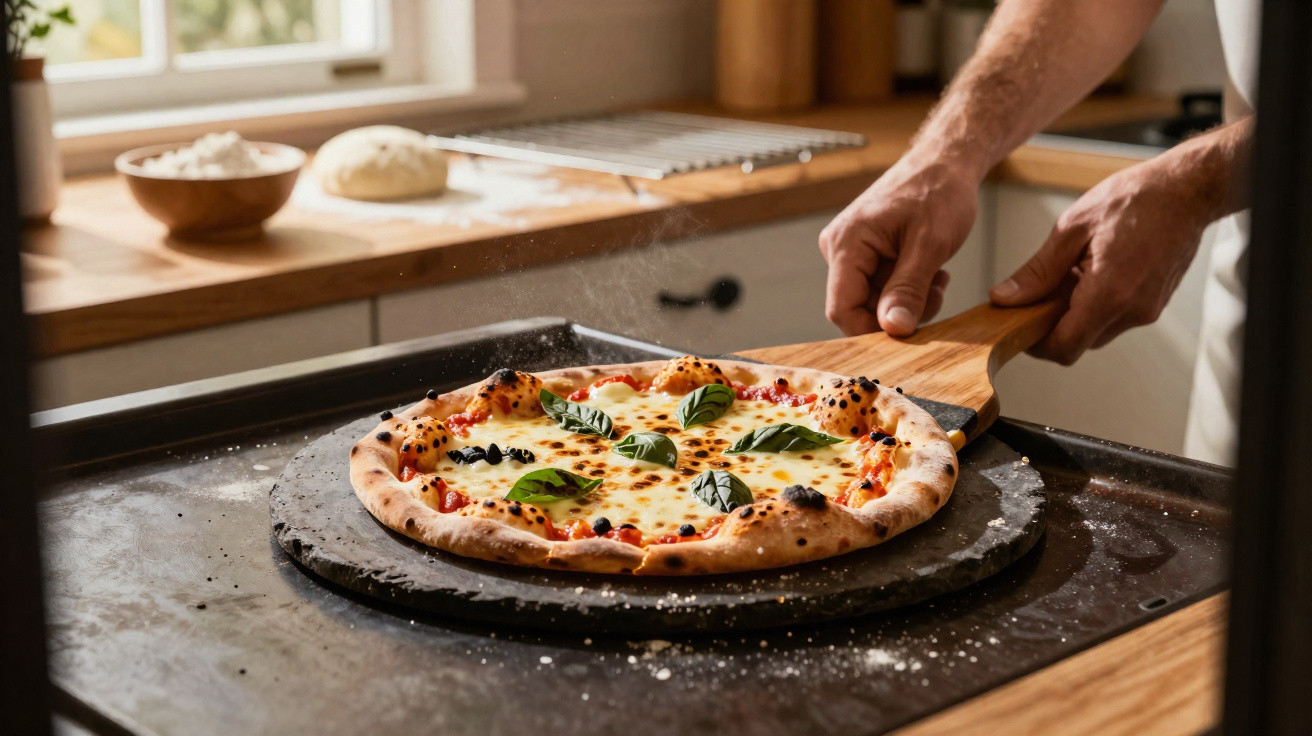
A refractory stone acts as a heat store inside the oven: it absorbs heat while preheating, then transfers it straight to the underside of the dough. This steady, intense contact lets homemade pizza cook faster, develop a crisp base and avoids the pale, damp centre that can otherwise occur.
How does a refractory stone work with oven heat?
The stone retains heat and releases it evenly as soon as the dough meets its surface. Rather than relying solely on the oven’s hot air, the pizza gets a burst of heat from underneath, much like it would in a brick-built or wood-fired oven.
This direct heat drives off some of the dough’s moisture in the opening minutes of baking. As a result, the base sets sooner, the sauce is less likely to soak the middle, and the crust rises better when the dough has been properly fermented.
Why does a refractory stone improve homemade pizza so much?
A domestic oven will not normally reach the temperatures of a pizzeria oven, but the stone helps make up for this restriction. It focuses heat beneath the pizza and provides a more effective baking surface than a cold baking tray.
- A crisper base, as the dough receives direct heat from the moment it touches the stone.
- Less moisture in the centre, because the stone speeds up initial evaporation.
- A lighter crust, provided the dough enters a thoroughly hot oven without too much topping.
- More even cooking, particularly for thin pizzas and flatbreads.
Where should the refractory stone sit in the oven?
For pizza, the refractory stone generally performs best on the middle shelf or slightly below the centre, depending on how powerful the oven is. This placement supplies enough heat to the base without burning the cheese and toppings before the dough has baked through.
If the underside remains pale, try moving the stone to a lower shelf. If the base burns before the cheese starts to bubble, raise it by one shelf or lower the temperature slightly once the stone is fully heated.
How long should it preheat, and how can cracks be avoided?
Put the stone into a cold oven and let it warm up with the oven. For pizzas, preheat at a high temperature for 30 to 60 minutes, as the stone takes longer than the oven air to heat through internally.
- Never put a cold stone into an oven that is already hot.
- Do not pour water or sauce onto the hot surface, or place frozen food directly on it.
- Never wash a hot stone in cold water, as thermal shock can cause it to crack.
- Use flour, semolina or baking parchment to make transferring the pizza easier.
- Allow the stone to cool completely inside the oven before removing it.
A refractory stone also improves breads, focaccias and crisp bakes
A refractory stone is not only useful for pizza. It can also improve rustic loaves, baguettes, focaccias, sfiha, pitta breads, thin-based tarts and even vegetables that need strong direct heat to brown without overcooking in their own steam.
The best results depend on patience: place the stone in a cold oven, allow plenty of preheating time, transfer the dough carefully and clean it without exposing it to thermal shock. Once the stone is genuinely hot, it turns an ordinary oven into a steadier baking surface, producing a crisp base, a well-baked crust and a texture much closer to pizza made in a professional oven.






Comments
No comments yet. Be the first to comment!
Leave a Comment