
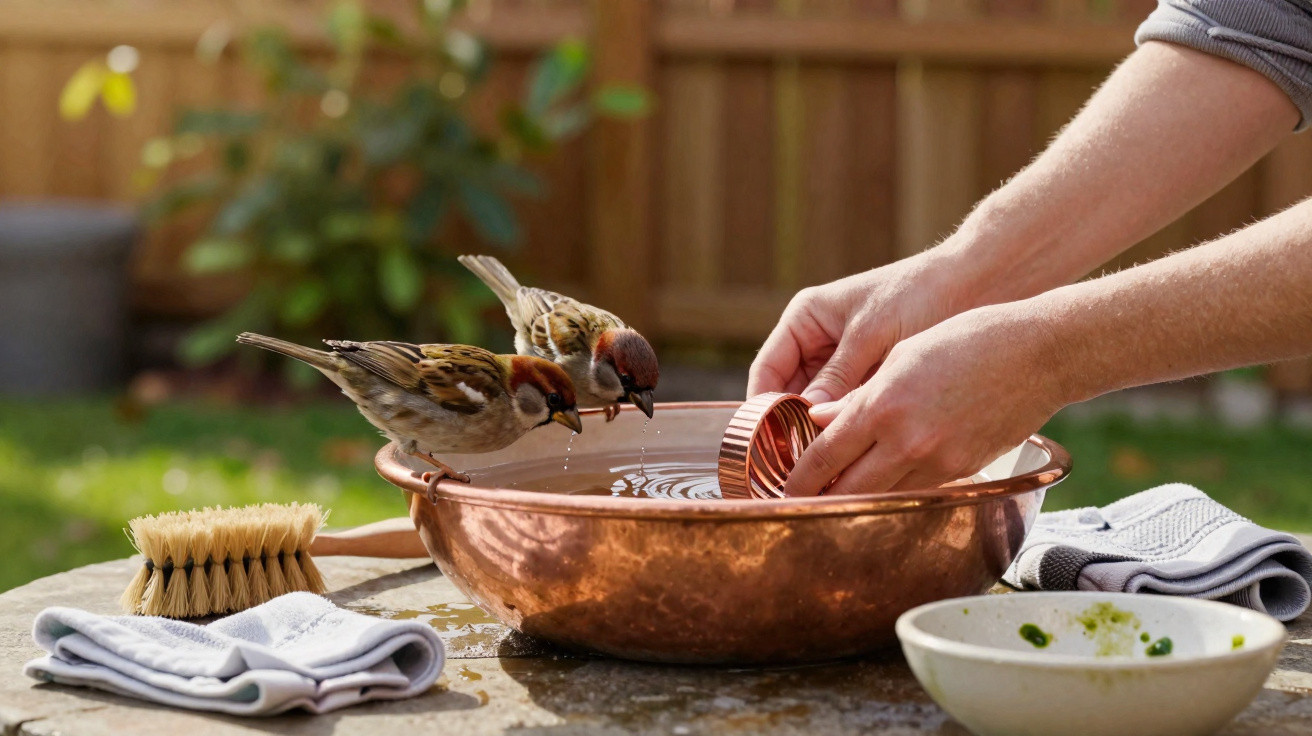
A bird waterer can draw thrushes, great kiskadees, tanagers and other birds into the garden, yet still water often develops algae within days. One straightforward measure is to place a small piece of copper in the container: the metal can help limit the growth of this green film, though it is not a replacement for regular cleaning.
Why put copper in a bird waterer?
Copper releases tiny amounts of ions into the water, and this contact makes it harder for algae to multiply around the sides and on the base of the container. As a result, the water is likely to stay clearer for longer, particularly in warm, sunny gardens.
In a bird waterer, copper is a maintenance aid rather than a complete solution. The water must still be changed regularly, as leaves, feathers, dust and droppings may contaminate the container even if no algae can be seen.
Which copper piece is safe to use?
Choose a small piece of clean copper that has no paint, varnish, solder or chemical residue. For a small garden bird waterer, a thoroughly washed piece of thick copper wire with its plastic coating removed will usually be enough.
- Use only clean, uncoated copper.
- Avoid modern coins, as many are alloys containing other metals.
- Do not use rusty or oily pieces, or items taken from dirty places.
- Wash the piece before placing it in the container.
- Use only a small amount, so that the presence of metal is not excessive.
How can you keep the water appealing to birds?
Place the bird waterer somewhere visible, while ensuring that it is sheltered from strong sunlight for part of the day. Shade keeps the water cooler, reduces algae formation and makes the spot more pleasant for birds visiting the garden.
- Replace the water every day during periods of intense heat.
- Scrub the base and sides at least twice a week.
- Avoid scented washing-up liquids or harsh cleaning products.
- Position the container away from areas with heavy footfall.
- Keep cats and dogs away from the place where birds visit.
Why do algae appear so quickly in the container?
Algae thrive when there is still water, sunlight and organic debris. In the garden, tiny amounts of soil, leaves, pollen and material carried in by the birds themselves create favourable conditions for the water to turn green and slippery.
Once this film builds up, the bird waterer becomes less inviting. Its surface becomes overly slick, the smell changes and the container may attract mosquitoes, especially if the water has been left standing for several days.
Does copper remove the need to clean a bird waterer?
Copper can slow the development of algae, but it does not remove bacteria, mosquito larvae or dirt that has collected along the sides. Cleaning with a brush and running water, alongside frequent water changes, remains the most important part of keeping the bird waterer safe for wild birds.
The most effective approach combines a small piece of copper, a shallow container, fresh water and the right position in the garden. This keeps the drinking spot cleaner, easier to reach and more attractive to birds looking for water during the day.

Comments
No comments yet. Be the first to comment!
Leave a Comment