
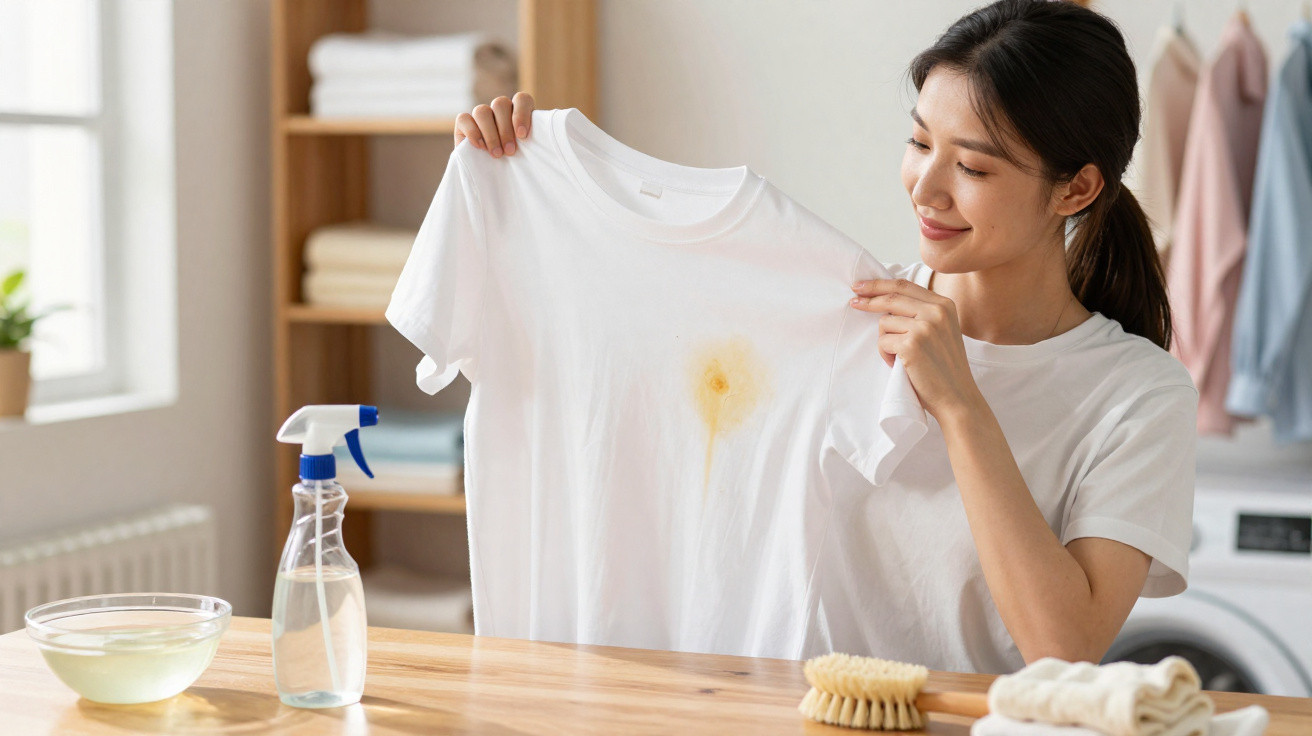
Deodorant stains in the underarm area of T-shirts and shirts are a common everyday nuisance. These white or yellowish marks often show up on both dark and light garments, spoiling their appearance. Even in 2026, despite the wide range of deodorants on the market, the issue remains widespread: the interaction between perspiration, fabric and the product’s formula is the key factor. Knowing why these marks develop and how to remove them can extend the life of clothes without using harsh products.
Why does deodorant cause stains in the underarms of clothes?
Deodorant stains are mainly associated with the aluminium salts found in many antiperspirants. These compounds react with sweat and the skin’s natural components, creating residues that cling to fabric fibres. This can produce yellow stains on light-coloured items and whitish marks on dark clothing.
As well as the chemical formula, the amount applied has a direct effect. Applying overly thick layers increases residue build-up, makes it harder to remove during washing and may block the skin’s pores. The problem therefore depends on the deodorant type, how it is used, the fabric and how often the garment is washed.
How to remove deodorant stains from the underarms of clothes safely
Among gentler household options, using 10-volume hydrogen peroxide with mild washing-up liquid and warm water offers a balanced solution. This combination helps loosen residues without the potentially damaging effects associated with bleach, particularly on coloured garments or more delicate fabrics.
To use this mixture methodically and improve the likelihood of a good result, follow a simple, consistent process. Avoid excessive scrubbing or leaving the solution on the clothing for too long.
- Make the mixture: In a container, combine around one cup of warm water with one tablespoon of mild liquid washing-up liquid.
- Add hydrogen peroxide: Add roughly two tablespoons of 10-volume hydrogen peroxide, stirring until the mixture is even.
- Apply it to the stain: Use a clean cloth or a soft-bristled toothbrush to spread the solution over the underarm area.
- Leave it to work: Allow the product to sit for around 10 minutes, without harsh scrubbing.
- Rub gently: Use soft movements with the brush to help lift the residue.
- Rinse and wash: Rinse away the mixture with warm water, then wash the garment as usual.
Why should you avoid bleach and bicarbonate of soda on deodorant stains?
Although bleach is widely used for household cleaning, it can yellow fabrics, weaken fibres and fade colours. On coloured garments, the likelihood of permanent discolouration is high. With white items, repeated use can make the material thinner and more likely to tear, especially around the underarms, where friction is already greater.
Bicarbonate of soda, meanwhile, can become abrasive when used excessively or rubbed in too forcefully. Low-concentration hydrogen peroxide works in a more controlled way, helping to break down the molecules responsible for the stain’s colour and making rinsing easier. It is also less likely to irritate the skin that will be in direct contact with the cleaned area.
How can you prevent everyday deodorant stains in the underarms?
Alongside proper stain removal, a few straightforward habits can help prevent marks from returning. Changing the application method, allowing time for the product to dry and even selecting a different deodorant can all help preserve T-shirts and shirts over months of wear.
- Apply thin layers: Use only the amount needed and avoid repeated passes over the same area.
- Wait for it to dry: Put on the garment only once the product has dried on the skin, reducing direct transfer.
- Check the ingredients: Try options with a lower concentration of aluminium salts, or aluminium-free versions, if stains occur frequently.
- Wash soon after wearing: For light-coloured clothes, washing them as promptly as possible reduces the chance of stains setting into the fibres.
- Avoid excessive rubbing: When hand-washing, very vigorous movements can make the underarm area rougher and more vulnerable.
Combining a mild cleaning method, such as 10-volume hydrogen peroxide with mild washing-up liquid, with these practical measures makes it easier to keep garments in good condition for longer. Small changes to the routine have a useful and surprising effect: fewer visible stains, better-preserved fabric and much less need to rely on extreme products or retire clothes prematurely.




Comments
No comments yet. Be the first to comment!
Leave a Comment