
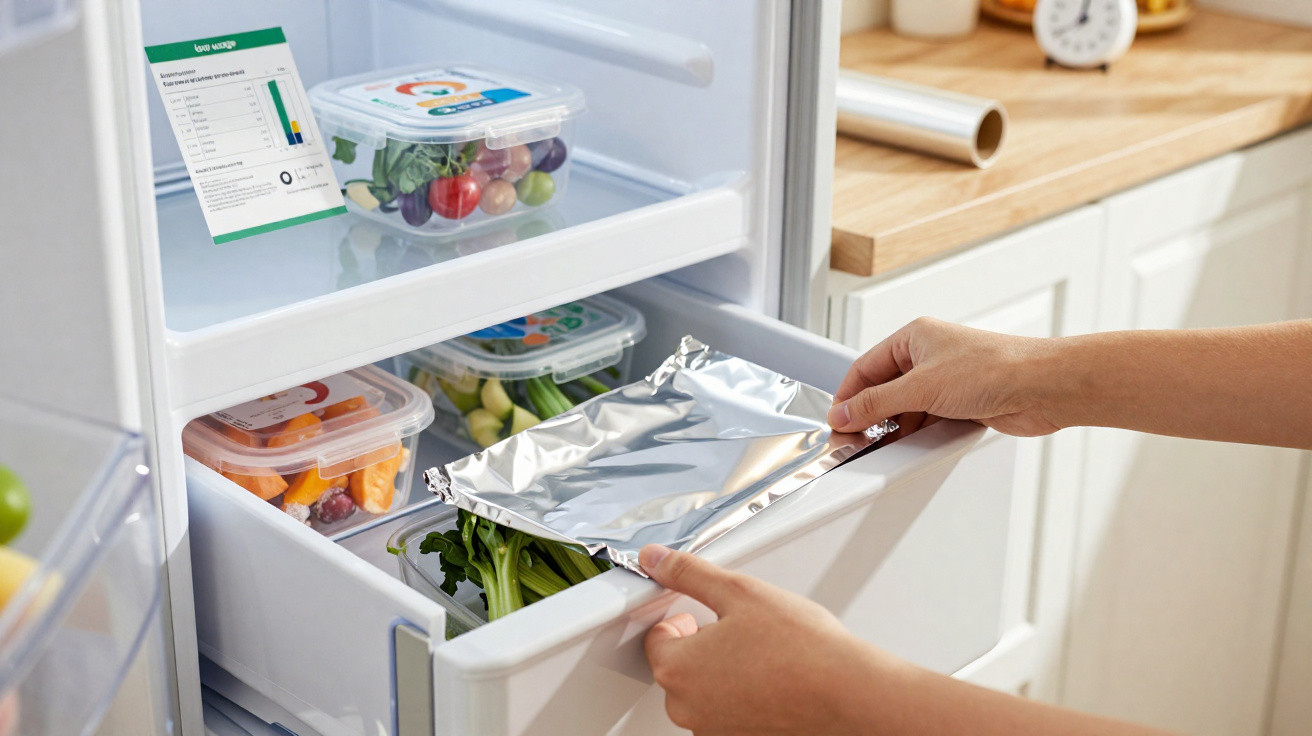
A simple trick using kitchen foil promises clear freezer drawers – and noticeably lower electricity costs in everyday use.
Anyone who opens their freezer to find little more than a wall of ice will know the issue: drawers stick, packaging freezes to the sides and the appliance seems to run constantly. Frost is not merely frustrating; it also increases energy use. A surprisingly straightforward approach involving ordinary aluminium foil is currently attracting attention – and may significantly slow frost build-up.
Why a freezer suddenly uses so much electricity
Ice on the walls does not appear for no reason. Whenever the door is opened, humid room air enters the appliance. That moisture settles on the cold internal surfaces, freezes and builds up layer by layer.
According to specialists, even a layer of ice measuring 2 to 3 millimetres can raise consumption by around 5 to 15 per cent. With 1 to 2 centimetres of frost, experts estimate annual additional consumption of up to 30 to 40 per cent. The motor has to work harder to keep the temperature consistently at about –18 degrees.
Depending on its size and age, a typical domestic freezer uses between 100 and 500 kilowatt-hours (kWh) a year. If the appliance remains frosted over, consumption can quickly reach the upper end of that range – even when usage habits have not changed. Anyone with a freezer that has no automatic defrost function should therefore defrost it thoroughly every three to six months and limit ice build-up in between.
A thin layer of ice means less work for the compressor – and fewer pounds on the electricity bill.
How aluminium foil in the freezer prevents ice build-up
The widely discussed method uses something already found in many kitchens: standard household aluminium foil. The benefit is not the metal itself, but the smooth, replaceable surface it creates.
Here is how the trick works step by step:
- Defrost and dry the freezer's internal walls thoroughly.
- Cut clean, dry pieces of aluminium foil to size.
- Line selected wall areas with the foil, pressing it flat without wrinkles.
- Do not place foil over ventilation slots, sensors or cooling fins.
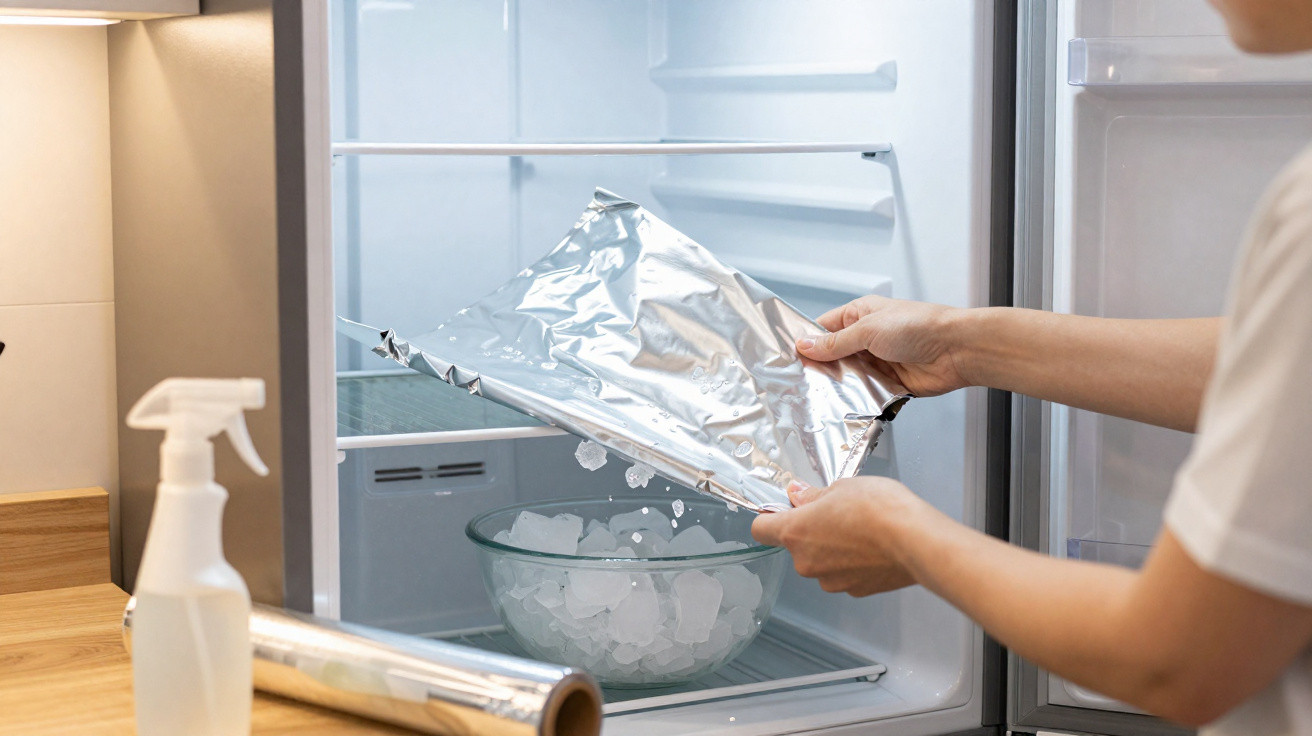
- Once a noticeable amount of ice has formed, simply peel off the foil and replace it.
Frost tends to form on the smooth metal surface. Because the foil is not permanently attached to the appliance, it can be removed together with the layer of ice. Rather than spending hours scraping or carrying hot water, one simple action leaves the wall clear again.
For freezers with static cooling – meaning no air circulation and no No Frost technology – this can make everyday use considerably easier. Their interior walls are especially prone to icing because the air circulates less.
When the trick makes sense – and when it does not
Not every appliance benefits to the same extent. Here is a broad guide:
| Appliance type | Suitability of the aluminium foil method |
|---|---|
| Older freezer with static cooling | Very suitable, as it is highly prone to frost build-up |
| Modern freezer with No Frost | Hardly any benefit, as it already defrosts automatically |
| Fridge-freezer without No Frost | Partly suitable, provided ventilation areas remain unobstructed |
For current No Frost models, manufacturers generally advise leaving the interior as unchanged as possible. Hidden evaporators and air channels provide dry, circulating cold air. Extra layers on the walls may disrupt airflow, cover sensors or, in the worst case, even affect the warranty.
Anyone with a No Frost freezer should follow the manufacturer's instructions closely rather than trying tricks.
How much energy does the aluminium foil trick really save?
No one can promise an exact saving in pounds, as consumption depends on the model, how it is used and its surroundings. However, specialists assume that keeping frost layers consistently thin can save 20 to 50 kWh per year if the appliance was previously heavily iced up.
For a typical family appliance using around 350 kWh annually, that represents a reduction of roughly 5 to 15 per cent. Depending on the electricity tariff, this could amount to several tens of pounds each year. The aluminium foil itself costs only a few pence, and many households already have it in the cupboard.
The key is to combine several measures:
- Open the door as briefly and infrequently as possible.
- Always allow hot or warm food to cool before freezing it.
- Check and clean the seals regularly.
- Do not position the freezer directly next to a cooker or radiator.
- Keep frost under control with the foil method.
Following these steps reduces the load on the motor, extends the appliance's lifespan and noticeably lowers consumption.
Health considerations: how safe is aluminium in the freezer?
Aluminium is repeatedly criticised because tiny amounts can be released when it comes into contact with certain foods. Food safety authorities point out that this release rises particularly with very salty or highly acidic foods – especially when they are stored in direct contact with foil for a long time or are also heated.
The situation is less concerning with the anti-frost method. The foil is attached to the internal wall and does not directly touch food. Ice forms on the metal surface and is later disposed of along with the foil.
A few straightforward rules can help you remain on the safe side:
- It is better to pack fish, meat and heavily salted foods in containers or freezer bags.
- Do not wrap leftovers of highly acidic dishes, such as tomato sauce, directly in aluminium foil.
- Freeze food in sealed containers as a general rule – this also protects it from freezer burn.
Aluminium foil on the interior wall has little in common with the usual concerns surrounding directly wrapped food.
Other simple ways to prevent ice in the freezer
The foil method is only one part of the solution. Those who consistently tackle frost can do more without much effort.
Filling the freezer properly and choosing the right temperature
A half-empty freezer works inefficiently because it must constantly cool down a large volume of air again. If it is packed completely full, however, cold air can no longer circulate properly. The ideal is a freezer that is well stocked but not crammed. Many manufacturers recommend –18 degrees as the standard setting. Lower temperatures offer little additional benefit but increase electricity costs.
Make defrosting part of your routine
Anyone who defrosts only every few years can quickly end up with a genuine avalanche of ice on the walls. A fixed routine, such as twice a year, is more sensible. The foil method can extend the interval, but it does not replace basic cleaning.
One practical approach is to plan the contents in spring and autumn, deliberately let the freezer empty out and then defrost it completely. During this period, you can use up leftovers that have already been stored for a long time.
What terms such as No Frost and static cooling mean
Many shoppers encounter these terms in electrical retailers without knowing what they mean. Here is a brief overview:
- Static cooling: Cold is supplied directly by evaporator surfaces on the walls. There is very little air circulation, so moisture quickly settles as ice.
- No Frost: Air is circulated by fans, while moisture settles on hidden evaporators that defrost automatically. Hardly any ice develops on the wall surfaces inside the usable compartment.
The aluminium foil method is clearly aimed at owners of appliances with static cooling. Anyone with a No Frost model should instead focus on correct loading, keeping doors closed and maintaining clean seals.
If you are already considering replacing a very old appliance, it may also be worth thinking about a more efficient model with modern technology. Freezers from the 1990s or early 2000s often use twice as much electricity as a current appliance of the same size. Combined with everyday measures such as aluminium foil on the wall, this can significantly reduce household energy demand.





Comments
No comments yet. Be the first to comment!
Leave a Comment