
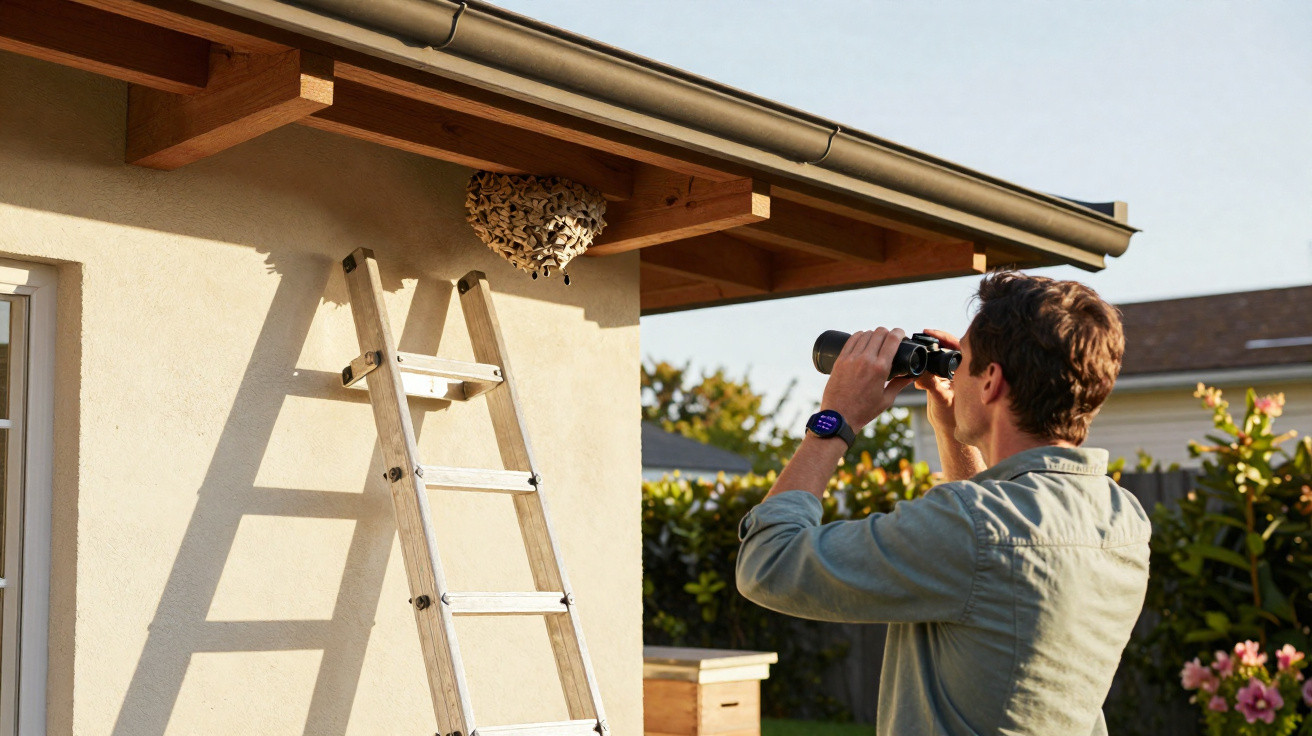
Between February and May, the crucial period begins for the invasive Asian hornet. During these months, the queen builds an initial small nest, often directly on homes or inside garden sheds. Knowing where to look makes it possible to spot the insects early and avoid bigger problems in summer.
Why the Asian hornet is becoming a problem now
The Asian hornet is regarded as an invasive species that has been spreading through central Europe for several years. It mainly hunts other insects, especially bees, and can therefore weaken entire bee colonies. It is not inherently more aggressive towards people than the native European hornet, but disturbing its nest can quickly trigger attacks.
In late winter and spring, mated queens emerge from their winter shelters. From around mid-February until the end of May, they establish what are known as primary nests. These are tiny, roughly the size of a table-tennis ball, which makes them easy to miss. At this stage, the insects particularly favour sheltered, warm spots near buildings.
“Anyone who finds the first mini-nest in spring can prevent a large colony in late summer with a single discovery.”
Within only a few months, this inconspicuous paper sphere can develop into a large nest containing hundreds or thousands of insects. The likelihood of painful stings then rises, particularly if mowing the lawn, DIY work or tidying creates vibrations near the nest.
Favourite hiding places around the house: where to look first
The good news is that neither a ladder nor specialist equipment is needed to inspect suspicious areas around your home. In most cases, a careful look from ground level is enough.
The area beneath the eaves is a hotspot
The first nest is particularly often positioned directly beneath the eaves. Common locations include:
- The undersides of roof overhangs
- End boards and fascia boards along the roofline
- Boxed-in sections and cladding on the outside wall
- Joins between the wall and roof, especially on sunny sides of the house
Move a few metres away from the house, stand where you can clearly see the underside of the roof, and watch quietly for several minutes. Focus less on finding the nest itself and more on flight patterns:
- Does a single insect repeatedly fly along a straight “corridor” to the same point?
- Can you hear a quiet, low buzzing that is concentrated in one corner?
- Does a small grey lump on the underside of the roof look unusually neat and round?
A primary Asian hornet nest resembles a small, grey-brown, marbled paper ball measuring three to five centimetres across. Its opening often faces downwards or slightly to one side. This combination of warmth beneath the roof, shelter from rain and proximity to timber makes the location especially attractive to a queen.
Why you should not use a ladder - and should keep your distance
When they suspect a nest, many people instinctively want to get closer straight away. That is not advisable. The insects are sensitive to vibrations and sudden movements. Remain several metres away and, if available, use binoculars or your phone camera’s zoom function for a closer look.
“No DIY experiments on the roof: looking carefully from the ground is safe - balancing on a ladder is not.”
Garden sheds and storage rooms: the second favourite hiding place
Alongside the eaves, a garden shed is an especially popular site for early nests. The reason is clear: it is dry, reasonably warm and largely undisturbed.
Typical nesting sites in a shed
When opening a shed in April or May, most people notice lawnmowers, tools and cobwebs rather than the space above their heads. This is precisely what the insects take advantage of.
Inside a shed, pay particular attention to:
- Joins between beams and roof panels
- Dark ceiling corners that are rarely inspected
- Areas above shelving or tool racks
- The undersides of OSB boards or metal roof sheets
The nest is often suspended at head height, sometimes only a hand’s breadth above regularly used items such as rakes, spades or bicycles. Anyone reaching upwards without looking could easily brush the ball with their shoulder or head. If the queen feels threatened, she will defend it.
A powerful torch is useful: briefly inspect the ceiling, corners and joins, and within seconds you will know whether anything suspicious is visible. Here too, a distance of two or three metres is entirely sufficient.
How to observe safely without putting yourself at risk
A sensible check does not mean panicking over every insect. A few rules will keep the process calm and safe:
- Check only in daylight, ideally on a mild, dry day.
- Stand still and observe for at least two or three minutes.
- Avoid sudden movements and do not strike at insects with objects.
- Use a phone zoom or binoculars rather than stepping directly underneath.
The key sign is regular traffic to a fixed point. A single hornet flying past at random does not mean anything yet. Repeated approaches to the same spot on the roof or shed are much more suspicious.
Occasionally, a nest may suddenly appear to be “quiet”. Weather can be the reason. On cool or rainy days, flight activity can easily seem to have stopped. Do not decide too soon that a nest is empty. Checking again at another time of day will give a clearer picture.
Found a nest - what to do next
Anyone who finds a suspected nest should do one thing first: move away and keep others at a distance. Children, pets and curious neighbours should not be allowed into the danger area.
The most common mistakes
Many incidents occur because people try to deal with the nest themselves. Typical failed attempts include:
- Knocking the nest down with a broom handle
- Spraying hairspray or insecticide from close range
- Dousing it with a bucket of water
- Taping over or blocking the entrance hole
All of these methods simply make the insects more aggressive and increase the risk of multiple stings. For people with allergies in particular, this can be life-threatening.
“Keep your hands off: do not spray, burn or tear it down - leave that to professionals.”
The correct approach
Instead, follow a clear and simple process:
- Stay calm and keep your distance.
- Note the location, for example “under the eaves on the south side” or “on the shed ceiling above the lawnmower”.
- If possible, take a photograph with your phone, without flash and from a safe distance.
- Report it to the local authority or responsible body and explain your suspicion.
Many local authorities work with trained pest controllers or beekeepers who can identify the species and remove the nest professionally. Mentioning that the nest is at an early stage can be helpful, as action may then require less effort.
How to identify the Asian hornet
Mistaken identity is common. Not every dark insect around a house is an Asian hornet. A quick check of these features can help with identification:
| Feature | Asian hornet | European hornet |
|---|---|---|
| Main colour | Dark brown to almost black | Yellow-brown, noticeably lighter |
| Legs | Tips are bright yellow | Uniformly yellow-brown |
| Head | Dark head with an orange face | Lighter, yellowish face |
| Nest shape in spring | Small, grey, enclosed ball | Often larger and differently structured |
The native European hornet is protected and has an important role in the ecosystem. Careful distinction is therefore worthwhile. If you are unsure, photograph the nest and leave the assessment to specialists.
Why early detection benefits people and nature
Finding a primary nest early not only reduces the risk of stings around the home. It also protects other insects nearby. Larger Asian hornet colonies systematically attack honeybees, wait outside hive entrances and reduce the number of foraging bees. Beekeepers in affected areas report considerable losses.
For allergy sufferers, a sting from any wasp or hornet species can be serious. Several stings over a short period can also affect healthy people. Knowing where these insects prefer to settle can help avoid dangerous situations, such as mowing close to a shed corner or drilling into roof cladding.
It is sensible to make checking the area around the house part of your late-winter and spring routine: take a quick look beneath the eaves after a winter storm, inspect the shed roof before gardening, and check the area above the patio and carport. This turns the Asian hornet from an unseen risk into a factor that can be assessed reliably.





Comments
No comments yet. Be the first to comment!
Leave a Comment