
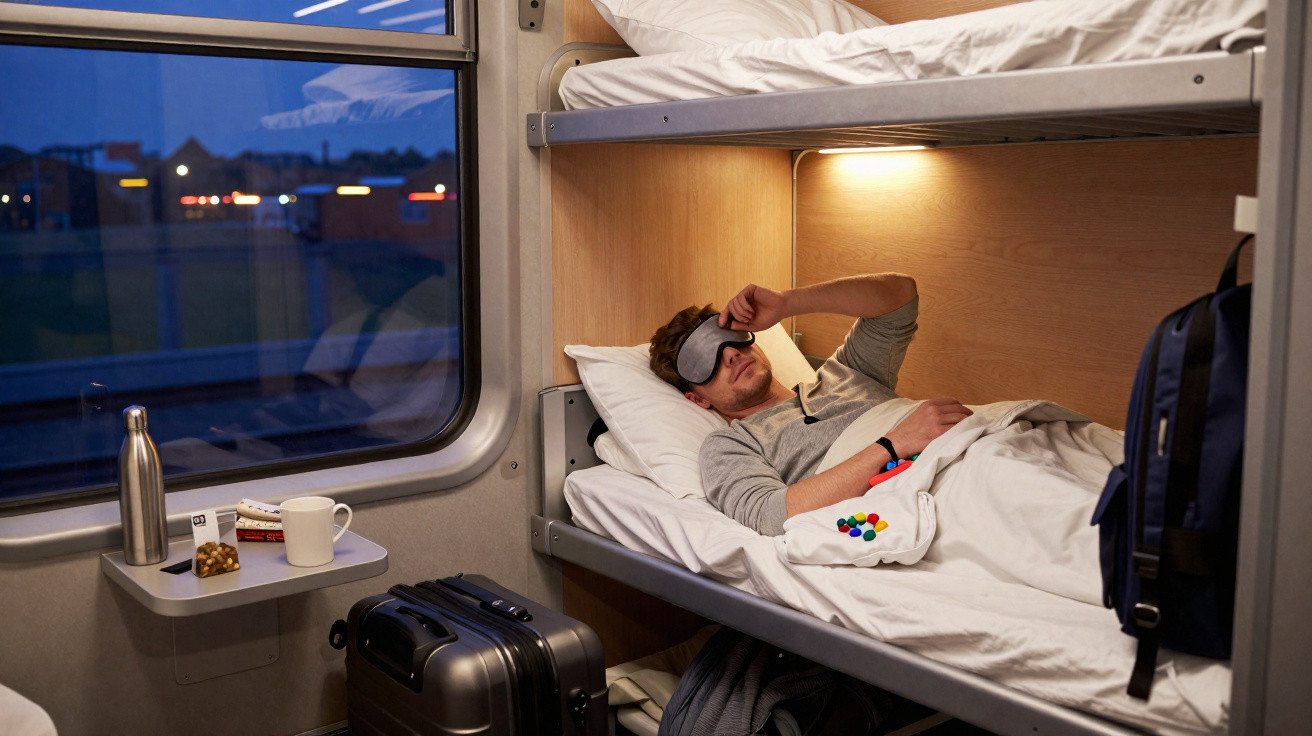
Travelling by night train is enjoying a resurgence across Europe. The prospect of boarding in the evening and stepping off, well rested, in the heart of another city the following morning appeals to many people. In practice, though, some passengers spend hours lying awake. We have gathered advice and experiences from regular night-train travellers to explain how to make a night in a couchette far more relaxing.
Why night trains are in demand again
For years, night trains were viewed as a declining form of travel, with numerous services disappearing from timetables. They are now returning, including to Germany. New routes such as Berlin–Paris and Amsterdam–Berlin, alongside Austrian and Scandinavian overnight services, are gradually restoring night trains to European timetables.
- They save the cost of a hotel and one night of your holiday.
- You arrive directly in the city centre in the morning.
- They are a more climate-friendly option than flying.
- They offer an atmosphere that simply does not exist on an aircraft.
There is one continuing drawback: sleeping properly in a narrow berth does not happen automatically. This is where the tried-and-tested tips from seasoned passengers can help.
The key question: which berth is best?
In many second-class couchette carriages, a compartment has six berths: three stacked on each side and linked by a small ladder. It may sound practical, but the arrangement affects comfort, temperature and luggage storage.
Lower, middle or upper: what genuinely makes a difference
Many frequent travellers favour the lower berth. It is not only easier to get in and out of; experience also suggests that the temperature there is usually the most comfortable.
“If you do not like waking up sweaty, choose the lower berth whenever possible.”
As warm air rises, heat tends to build up near the roof in full compartments. The upper berth also places you closer to both the ventilation and the ceiling, which some travellers find oppressive.
For many, the middle berth is a compromise: it provides slightly more distance from the floor and other passengers’ feet, while being less hot than the top berth. Those prone to claustrophobia generally feel more comfortable on the lower level.
Store your luggage strategically
One frequently overlooked benefit of the lower berth is room for a suitcase. In many couchette carriages, the space beneath the seat bench or lower berth is large enough for a medium-sized case. Sleeping there means you will not have to spend time searching for somewhere to put it.
A few basic rules are useful:
- Keep your suitcase as flat and as close to you as possible, ideally beneath the lower berth.
- Carry valuables, including your phone, money and identification, on your person or place them beneath your pillow.
- Leave only a small bag in the aisle so that nobody trips over it.
If you have the top berth, bring a small hanging pouch that can be attached to a hook above your head. It is ideal for glasses, headphones or a water bottle.
Temperature, clothing and bedding: avoid getting cold or overheating
Night trains have a reputation for unpredictable temperatures. A compartment can feel stuffy at the beginning of the journey, then suddenly become cold later in the night. The compartment temperature control is not always dependable.
“The best ‘air-conditioning system’ on a night train is wearing the right clothes in layers.”
Experienced travellers rely on three essentials:
- A thin jumper or cardigan that can be put on and removed quickly.
- Comfortable long trousers or leggings rather than short shorts, so you do not become cold overnight.
- Warm socks, as many people underestimate how quickly their feet can get chilly.
If you tend to overheat, pair a T-shirt with a light, unzipped hoodie. This lets you adjust to the temperature at short notice without needing to change completely.
What to avoid before departure
Do not drink too much – and take particular care with tea
A familiar pre-departure mistake is quickly finishing a large bottle of water, a pot of herbal tea or a supposedly calming sleep drink. By three in the morning, you may regret it.
“Anyone who has to go to the toilet every two hours will not get any rest on a night train.”
A better approach is to:
- Drink normally until around one hour before going to sleep.
- Have only small sips during the final hour before bed.
- Avoid large mugs of tea in the evening, even if they are said to aid sleep.
Coffee and energy drinks should be off limits from the afternoon at the latest. Some first-time night-train travellers cut back on caffeine as early as the morning to help themselves wind down later.
Sleep aids: from melatonin to a bedtime routine
Many regular passengers do not rely solely on the rhythmic motion of the train. Melatonin tablets and herbal remedies containing valerian, passionflower or hops are common items in their luggage.
It is important to remember that melatonin is a hormone, not a herbal substance. It affects the body’s day-and-night cycle and may be particularly useful while travelling. If you plan to take it, speak to your GP or pharmacist beforehand, especially if you already use other medication.
A consistent routine can help regardless of whether you take tablets:
- Read a few pages of a book.
- Listen to a quiet podcast or audiobook.
- Meditate briefly or do breathing exercises.
If you follow the same bedtime routine at home, you can largely recreate it on a night train. It signals to your body that it is time to sleep, wherever the bed happens to be.
Light, noise and fellow passengers: how to switch off
Earplugs and an eye mask are invaluable
Many rail operators leave a small kit on each couchette berth, containing earplugs, an eye mask and sometimes a small bottle of water and refreshing wipes. Even so, experienced travellers bring their own preferred versions because they fit better or block more sound.
“Anyone who is sensitive to noise should never board a night train without earplugs.”
There are many possible noise sources: doors in the corridor, quiet conversations, rustling bags and fellow passengers’ alarms. Many people find the sound of the train itself soothing, but not the irregular interruptions.
A good eye mask shields you from corridor lighting and smartphone screens in the compartment. If you need light for reading, use a small reading lamp with dim, warm illumination instead of switching on the bright ceiling light.
Sharing a compartment with strangers: keeping things relaxed
A couchette compartment often means sharing a very small space with five or more strangers. This can sound demanding, but a few unspoken rules make it work surprisingly well:
| Situation | Recommended response |
|---|---|
| A fellow passenger arrives late in a dark compartment | Use only a small light, move quietly and organise your bags in advance |
| A fellow passenger is leaving early in the morning | Set your alarm to vibrate and prepare your clothes the evening before |
| Someone snores loudly | Use earplugs; if necessary, politely ask whether it is possible to change berths |
Many reported experiences suggest that disastrous nights of snoring are less common than feared. People who are generally light sleepers often cope well on a night train too.
What should never be missing from hand luggage
People who travel by night train regularly pack a kind of “mini bedroom” in their rucksack. Typical items include:
- Comfortable sleepwear that you would also feel happy wearing in the corridor.
- Your own thin blanket or a large wrap, in case the railway blanket is too scratchy or too warm.
- Earplugs, an eye mask and a small neck pillow or inflatable pillow.
- A toothbrush, a small tube of toothpaste or toothpaste tablets, plus wet wipes.
- A small snack to prevent a rumbling stomach from disturbing you at night.
If you have allergies, keep tissues and, where appropriate, medication within easy reach. Air on the train is dry and can irritate the mucous membranes.
Night train benefits, drawbacks and who they suit
Night trains are not necessarily the right choice for everyone. Anyone who can sleep only in a completely silent, pitch-dark room is likely to need more time to adjust. People with significant back problems can also find the relatively firm berths uncomfortable.
For many travellers, however, the benefits still carry considerable weight:
- You arrive in a new city in the morning without jet lag.
- You avoid long transfers to airports on the outskirts of a city.
- Compared with a short-haul flight, you significantly reduce your environmental footprint.
- You experience a sense of travel that has largely disappeared from daytime high-speed rail journeys.
Night trains are particularly well suited to people who generally fall asleep easily, have flexible expectations of comfort and see the journey as part of the holiday. Those looking solely for the most functional form of transport may be happier in a seated carriage or on an early flight.
If you are unsure, it is best to begin with a relatively short overnight route of around six to eight hours. That gives you a chance to find out how well you actually sleep in a couchette berth, without risking the entire first day of your holiday if the night proves unsettled.





Comments
No comments yet. Be the first to comment!
Leave a Comment