
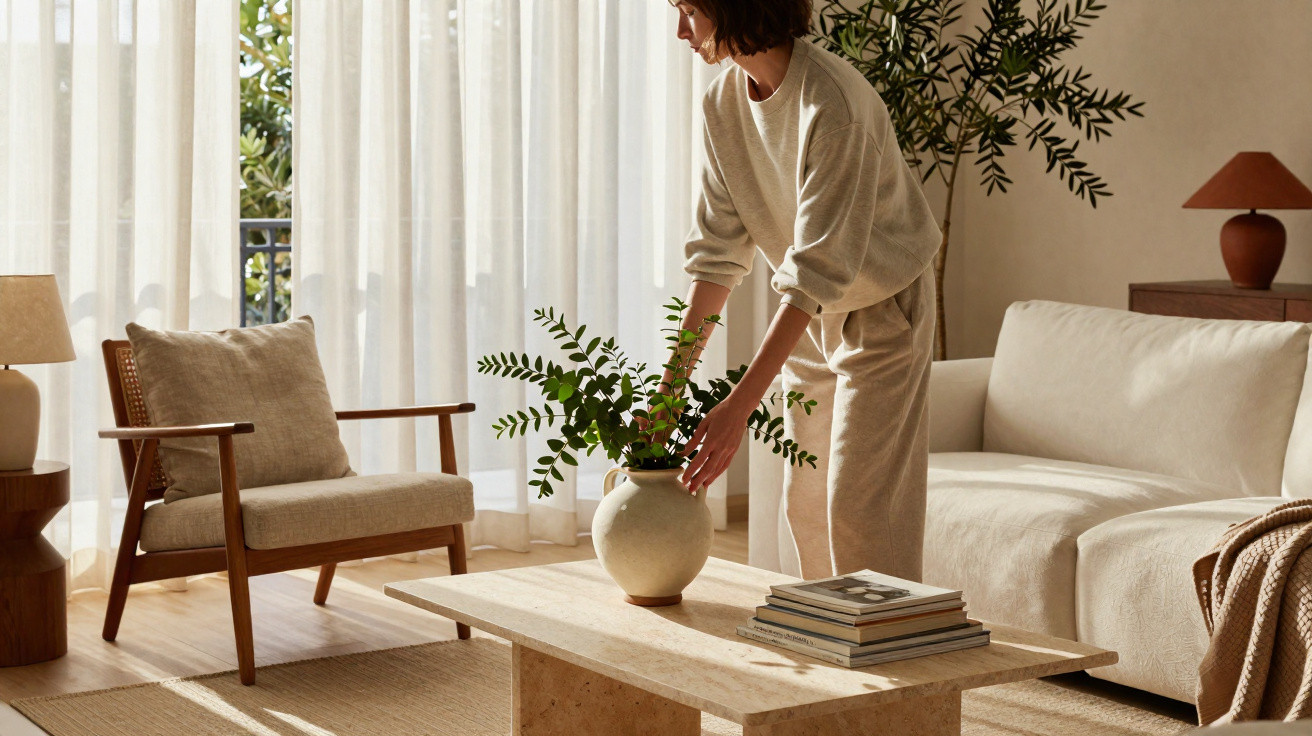
Once the fairy lights have been packed away and the last pine needles vacuumed up, many people find their homes suddenly feel either unsettled or bare. This is precisely where the major interior design shift of 2026 begins: less frenzy, more calm; less clutter, more atmosphere. Rather than continually buying new decorative gadgets, the focus is moving towards durable materials, gentle shapes and considered choices. Rethinking your home now can create a look with just a few adjustments that will not feel dated after a single winter.
Minimalism with feeling: organic shapes rather than stark and cold spaces
The new minimalism is no longer about sterile, near-empty homes. In 2026, it is organic minimalism: uncluttered rooms with soft lines and welcoming warmth. Particularly during the darker months, it can feel like a reset for the mind.
“Organic minimalism takes the pressure off: fewer things, but more calm, curves and soft transitions.”
Furniture and accessories with curved edges and rounded silhouettes are characteristic of this style:
- Bean-shaped or kidney-shaped sofas instead of angular blocks
- Oval or round wooden coffee tables rather than glass rectangles on metal frames
- Mirrors with irregular, almost “drawn” outlines
The thinking is simple: the fewer hard edges there are, the more relaxed a room appears. The eye moves smoothly rather than catching constantly. Anyone who does not want to buy new furniture straight away can begin with smaller changes:
- Swap rectangular decorative trays for round bowls
- Replace an angular old side table with a stool featuring a rounded seat
- Hang one large picture in a curving frame above the sofa
Decluttering is essential. Shelves crammed with small items visually undermine even the most expensive table. More open surface area, a handful of carefully chosen favourite pieces and room to breathe are the better approach.
Trend 2: Natural materials take centre stage
Plastic is losing ground noticeably. Wood, stone, ceramics and textiles made from natural fibres will shape interiors in 2026. These materials are allowed to show texture, slight imperfections and patina, bringing character into a room.
Especially popular are:
- Wood (oak, ash and walnut, preferably oiled rather than finished in high-gloss lacquer)
- Stone (travertine, limestone and slate for tables, surfaces and decorative pieces)
- Textiles such as linen, wool, cotton and jute
- Ceramics with a handcrafted appearance rather than a flawlessly smooth finish
“The common thread for 2026: things are allowed to age – and look more beautiful as they do.”
For a more sustainable interior, it makes more sense to choose a solid table from a flea market than new chipboard from a mail-order retailer. A well-made individual piece lasts longer and ages more gracefully than a cheap shelving unit that wobbles after two house moves.
Trend 3: Warm earth tones instead of cool grey
The long-dominant combination of white, grey and black is clearly receding into the background. In 2026, warm shades reminiscent of earth, clay and spices are taking over.
Typical tones include:
- Terracotta, rust and fired clay
- Ochre, caramel and honey
- Sand, beige and warm stone
These colours work as the new neutrals: they combine easily, feel inviting and flatter almost every kind of light. There is no need to repaint every wall. Three simple adjustments can often be enough:
- Cushion covers in terracotta or sand replace old grey tones
- A large wool-look or jute rug visually grounds the room
- Washed linen curtains in warm beige soften harsh light as it enters
Trend 4: Less is more again – moving away from decorative excess
The overloaded “museum style”, with a hundred souvenirs on every shelf, is distinctly out of fashion. Many people experience it as constant visual noise. It also affects cleaning: the more small objects there are, the more dust and effort they create.
“The new rule: one large, high-quality vase is better than fifteen little dust collectors.”
Things to consider:
- Walk through your rooms regularly with a critical eye: what still moves you, and what is there only “because it has always been there”?
- Pass on decorative gifts that do not suit your taste, without feeling guilty
- Fill open shelving only partly and deliberately leave surfaces clear
Open-plan kitchens and living areas feel considerably calmer when every available corner is not decorated.
Trend 5: Subtle patterns rather than loud retro graphics
A few years ago, bold graphic patterns were everywhere: zigzags, diamonds and sharp contrasts. In 2026, many designers are turning down the volume. Texture is clearly taking priority over a riot of pattern.
What is falling out of favour:
- Wallpaper with complex, harsh geometric designs
- Aggressive Seventies-style retro patterns across large surfaces
- Extreme colour pairings such as neon and black
Calm textures are popular instead: bouclé, coarsely woven linen and textured wall paint. Patterns can still appear, but they should be restrained: tone-on-tone, gently blurred and inspired by natural forms such as leaves, waves or stones.
Trend 6: Lighting as a tool for atmosphere
In 2026, lamps are seen as more than functional items; they form part of the overall scheme. Especially in winter, a lighting plan determines whether a room feels cosy or tired.
Three factors make a major difference:
- Multiple light sources rather than one glaring ceiling light: combine table lamps, floor lamps and wall lights.
- Warm colour temperature of around 2700–3000 Kelvin for living spaces, reserving cooler light for the workspace.
- Shades and diffusers made from fabric, paper or opal glass to create soft, dispersed light.
“Anyone who reworks their lighting scheme often changes the feel of a room more than they would with a new sofa.”
Trend 7: Personality rather than a catalogue look
For all the trends, homes should not look as though they came from an identical furniture showroom catalogue. In 2026, the important thing is combining intentional restraint with clear, personal accents.
This can include, for example:
- An inherited piece of furniture, carefully restored and thoughtfully displayed
- Your own photographs or drawings, properly framed rather than off-the-shelf posters
- Flea-market finds that tell a story
The difference from previous collecting habits is that not everything you own is put on display. Instead, you curate. One or two special objects along each sightline are enough to add individuality without creating visual unrest.
How to get started: small steps, major impact
If you do not want to redesign your entire home, begin with one room, usually the living room or bedroom. A quick assessment is worthwhile there:
| Question | Practical step |
|---|---|
| Does the room feel overcrowded? | Take a box, put away everything non-essential, and after two weeks return only what you genuinely miss. |
| Does the light feel harsh? | Replace bulbs with warm-white alternatives and add at least one extra floor lamp. |
| Is the colour scheme more on the cool side? | Add cushions, a throw and one home accessory in a warm shade; gradually replace cool-grey items. |
| Does everything look very “angular”? | Introduce a round rug, mirror or basket to break up the geometry. |
Taking a quick photo on your phone from every corner of the room is also helpful. Images reveal without mercy where visual unrest remains that you barely notice in everyday life.
Why these interior design trends will last beyond one season
The shared theme behind all these developments is greater calm, more nature and more awareness. Rather than chasing every new fashion, the aim is to follow principles that work for years. Natural materials age slowly, warm tones remain pleasant and pared-back forms can be combined flexibly.
Choosing organic minimalism, natural materials and a clear yet personal signature today is not simply decorating “for 2026”. It creates a framework that can be adapted time and again with simple changes: a new picture, a different rug or another wall colour, without disrupting its core.
Comments
No comments yet. Be the first to comment!
Leave a Comment