
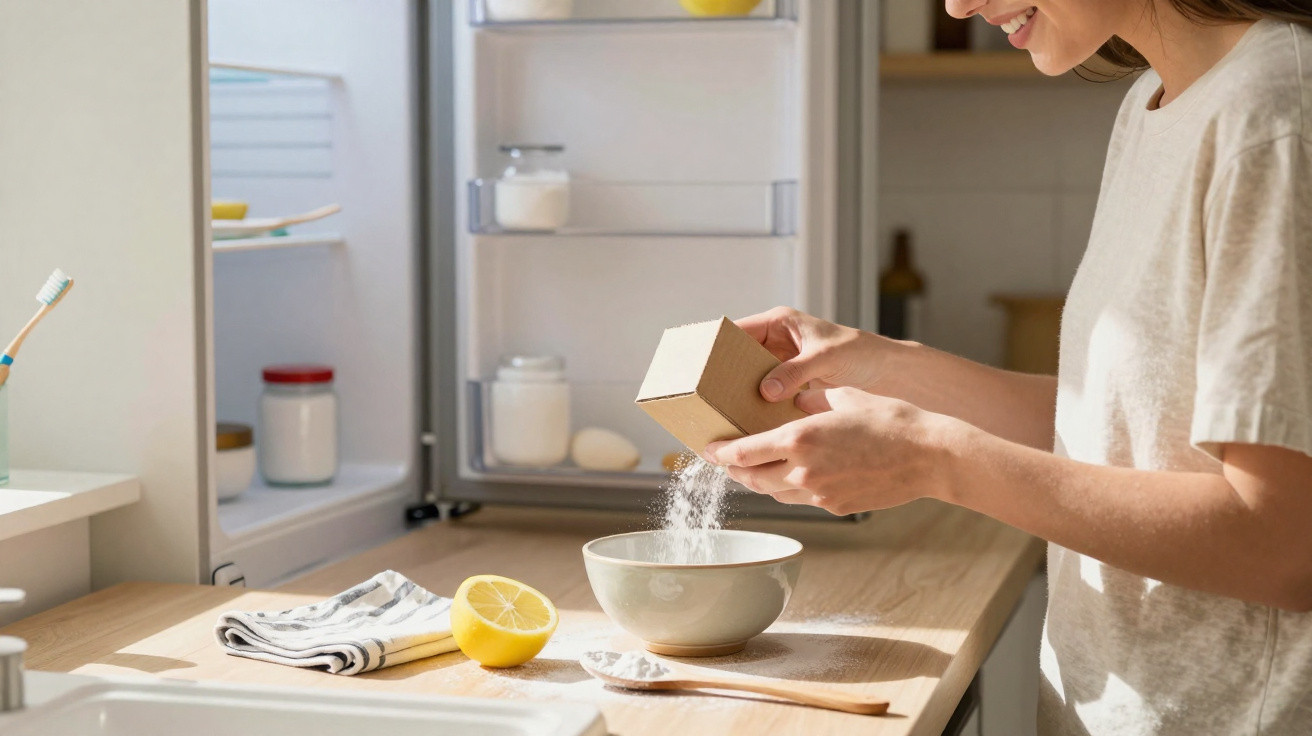
The first time I paid proper attention to the box of baking soda in my cupboard, I was looking for chocolate chips. My fingers caught the small orange carton and, for whatever reason, I read the label on the back: deodorises, cleans, freshens and whitens. It sounded like a superhero hidden inside very ordinary packaging.
An hour later, my kitchen smelt less like the previous week’s fish and more like a real home. The sink gleamed, my shoes no longer smelt, and I had used perhaps 50p worth of powder.
That was when it struck me: the smallest and cheapest item in the cupboard could be the thing that quietly transforms everything.
The 50p powder that quietly sorts out everyday messes
Look in your cupboard and you will probably find it: a modest little box that may have been there since you last made banana bread. Baking soda hardly looks impressive. There is no glossy label or influencer-led campaign.
Still, this unassuming white powder appears time and again in grandmothers’ kitchens, eco-friendly blogs and TikTok cleaning tips. It finds its way into recipes and cleaning routines, then somehow ends up beneath the sink, in the fridge and in the bathroom.
One ingredient, countless little everyday wins.
Consider Laura, 34, who fought a losing battle with her bin every summer. She tried fragranced liners, essential oils and using two bags at once. Nothing helped; the smell always returned before the week was over.
Then a neighbour suggested scattering baking soda in the bottom of the bin. Doubtful but fed up, Laura gave it a go. The following morning, there was no sour smell waiting for her at 7 a.m. - only calm, neutral air. She went on to use the same trick in the fridge, in her gym shoes and in the litter tray.
Her monthly spend on cleaning dropped. So did her complaints. Even the feeling that her home was “out of control” became less intense.
There is a straightforward explanation: baking soda is a mildly alkaline powder that reacts with acids, neutralising odours rather than simply covering them with fragrance. That invisible reaction helps turn persistent smells and grime into something that can be washed away.
It also has a gentle abrasive quality, allowing it to scrub most surfaces without scratching them. It is neither as aggressive as industrial cleaners nor as ineffective as water alone - it sits neatly between the two.
While brands market a different product for every room, this one quietly tells you: “Relax, I’ve got most of it.”
From fridge to face: little baking soda rituals that make a difference
Begin with an easy habit: do a weekly “baking soda round”. All you need is the box, a sponge and a bowl of warm water. Nothing elaborate.
Start at the sink. Dust over a light layer of baking soda, add a little washing-up liquid and scrub in circular motions. Rinse it off. The steel immediately appears newer and less dull, almost as it did when you first moved in.
Then tackle the hob, tea-stained mugs or the odd ring around the bath. Use the same approach: a small swirl of powder and water. It feels easy, almost soothing, because you know exactly what you are working with.
Many people use baking soda for more than cleaning, too. A teaspoon in a bowl can become a quick scrub for coffee-stained mugs. A spoonful mixed into warm water may help shift stubborn food odours from plastic containers.
And yes, some people rely on a small pinch in the wash to increase freshness. Others use it to gently clean hairbrushes or refresh musty towels that never quite smell “finished” after a cycle.
Realistically, nobody does all of this every day. Life intervenes. Yet it is strangely comforting to have one product that can move from one job to another. You do not need ten different bottles; you need this one understated helper.
“I thought baking soda was just for cakes,” a reader told me. “Now I keep one box in the kitchen, one in the bathroom, and I feel like my house finally smells like ‘me’ instead of leftovers and detergent.”
- In the kitchen – Deodorise the fridge, scrub the sink, clean chopping boards and save burnt pans by soaking them in hot water and baking soda before scrubbing.
- In the bathroom – Clean tiles and grout, freshen drains, and lightly scrub the bath without harming the enamel.
- Around the home – Sprinkle it into shoes, bins, pet areas or onto carpets before vacuuming to neutralise odours.
- Laundry area – Put a small scoop into smelly washes, sports kit or towels that need a proper refresh.
- Personal uses – Use it occasionally as a mild exfoliant for hands or feet, or for cleaning hairbrushes and combs.
The quiet change in mindset behind a box of baking soda
Eventually, baking soda becomes more than “that ingredient for biscuits”; it represents something else - reclaiming a little simplicity and control. You open the carton, scoop up a small puff of white powder, and your cleaning tools suddenly come down to the basics.
You spend less time studying labels and more time simply getting on with the task. There are no lengthy ingredient lists, fluorescent colours or artificial lemon fragrance lingering in the room. It is just a familiar cupboard staple quietly doing its work.
It can be unexpectedly reassuring to realise that you already own half the answers you were searching for on your phone.
| Key point | Detail | Value for the reader |
|---|---|---|
| Versatile everyday helper | One box works in the kitchen, bathroom, laundry, and more | Saves money, space, and mental load |
| Gentle but effective | Mildly abrasive and deodorizing without heavy chemicals | Safer for many surfaces and more comfortable to use |
| Simple routines | Weekly “baking soda round” and small targeted uses | Creates a cleaner, calmer home with minimal effort |
FAQ:
- Question 1 Can baking soda genuinely replace every cleaner I own?
- Answer 1 No, not every one. Baking soda works well on odours, light scrubbing and certain stains, but you will still require other products for disinfecting, glass or highly specific surfaces.
- Question 2 Is baking soda suitable for every surface?
- Answer 2 No. Do not use it on delicate finishes, including some natural stone, highly polished metals or non-stick coatings, without first trying it on a tiny concealed area.
- Question 3 How regularly should I replace the box in my fridge?
- Answer 3 Most people swap it every one to three months. Replace it more frequently if your fridge is very full or often smells.
- Question 4 May I apply baking soda straight to my skin?
- Answer 4 Only gently and from time to time. Because it is alkaline, frequent use or use on sensitive skin may lead to irritation. Pay attention to how your skin reacts and rinse thoroughly.
- Question 5 Does the brand matter, or is all baking soda identical?
- Answer 5 For cleaning and deodorising, any basic food-grade baking soda is suitable. For baking, use fresh, unopened boxes so that your cakes still rise properly.




Comments
No comments yet. Be the first to comment!
Leave a Comment