
I first spotted it while rushing through my teeth-brushing routine, barely awake and running late already. The bathroom carried a faint lemon-cleaner scent, the mirror had no streaks, and the sink was gleaming. For a moment, I felt that smug little satisfaction of someone who “has their life together” because their bathroom is Instagram-ready before 8 a.m.
Then I noticed it.
A narrow greyish mark traced the bottom of the toilet, like a grubby halo stamped onto the floor. The tiles were meant to be clean - I had mopped them only the previous day. Still, that dirty line remained, stubborn and mildly revolting, exposing my entire cleaning routine as a bit of a fraud.
That was the point when I understood I had been overlooking the area that matters most.
The spotless bathroom that was not truly clean
In theory, my bathroom-cleaning routine was reliable. I scrubbed the basin, polished the mirror, sprayed the shower walls, disinfected the toilet seat and mopped the floor. It seemed comprehensive, even vaguely professional. I had microfibre cloths, an eco-friendly spray and a small bucket, like a domestic soldier ready for service.
Viewed from the doorway, the room looked immaculate. The tiles shone, the towels were neatly folded, and unlit candles stood waiting like those in a hotel bathroom prepared for a guest. I had even taught myself to wipe the tap quickly each evening to stop water marks appearing.
But the faint dark line of dirt along the floor told another story.
I crouched down and examined the bottom of the toilet properly for the first time in months. Not the seat, lid or bowl, but the actual base where porcelain meets floor. Dust had adhered to old cleaning residue, hairs were caught in dried drips, and the grout showed slight yellowing. It was not filthy, but it was certainly not “clean enough to pretend it doesn’t exist”.
I began thinking about how often we clean the surfaces people see at eye level while ignoring concealed, low-down areas. A friend later said her child’s paediatrician had casually mentioned that floor-level areas around toilets are among the germiest places in a home. Suddenly, my carefully disinfected toilet seat felt… irrelevant.
After seeing that grimy ring, I could not stop noticing it. I inspected the toilet’s curved sides, the rear where it sits almost flush to the wall, and the small screws concealed beneath plastic caps. Each had the same faintly sticky, dusty accumulation that ordinary daily cleaning never reached.
It made complete, irritating sense. My “daily clean” focused on quick, obvious results: spray, wipe, finished. Cleaning the toilet base - particularly the back and the join with the floor - demands a different position: kneeling, stretching and concentrating on somewhere no one looks.
The uncomfortable truth was suddenly clear: I was not actually cleaning my bathroom; I was cleaning my ego.
The toilet base: the small, unglamorous area that changes everything
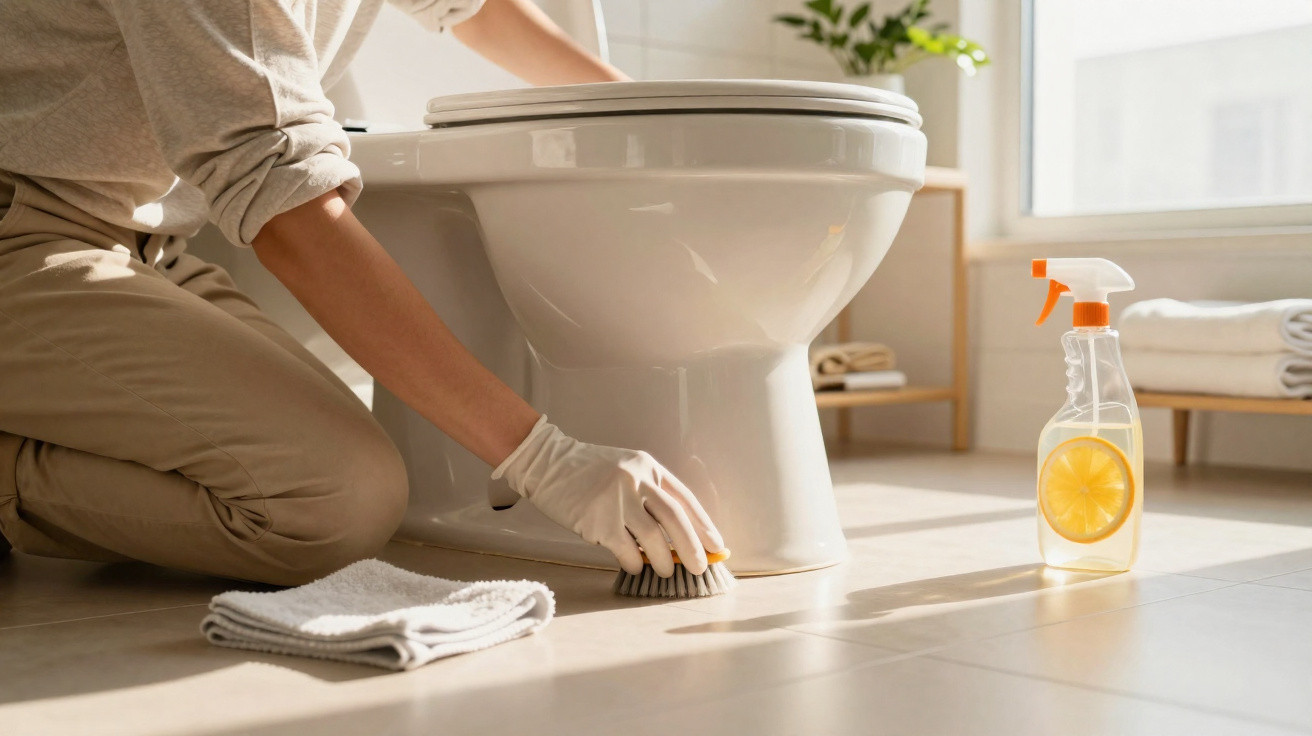
The following day, I resolved to clean that section properly. No cutting corners and no telling myself it was “good enough.” I collected rubber gloves, an old toothbrush, a small stiff-bristled brush, paper towels and a disinfecting cleaner normally saved for “big deep cleans”. I even laid an old towel on the floor to spare my knees.
First, I sprayed the whole base of the toilet, allowing the product to soak into the grout line and beneath the slight overhang where dust and droplets tend to gather. I then carefully removed the plastic caps covering the bolts and cleaned underneath them as well. It felt strangely personal, as though I were discovering the hidden anatomy of something I saw daily but had never really understood.
The toothbrush handled most of the work. I scrubbed the porcelain-to-floor join, the sides I routinely missed and the back that my mop could never properly reach. Thin streams of brownish water escaped. Hair, dust and old cleaner gathered into a small, grimy puddle on the towel. It was both disgusting and intensely satisfying.
After wiping it all clean and drying it, the entire bathroom seemed transformed. The room felt fresher. The faint “bathroom smell” I had quietly accepted as normal had disappeared. I realised the odour had not come from the drain or bin; it had been coming from that neglected ring around the base all along.
From a hygiene perspective, the reason is brutally straightforward. Gravity does its work: humidity, droplets and microscopic splashes all settle low down, close to the floor. That was precisely the place where I had been least thorough. My swift daily mop never had enough attention or friction to loosen the build-up that had accumulated over weeks.
What really altered my view was not only the dirt but the logic behind my old routine. I had spent time on visually impressive surfaces - the mirror, basin and shiny taps - while neglecting the quiet, unglamorous spot that affects odour, bacteria and genuine cleanliness. The very area my feet, socks, and kids’ hands were closest to was the one I ignored the most.
Let’s be honest: no one truly cleans this every single day.
How to properly clean the one area that matters most
To reset this part of the bathroom, approach it as a “surgical” task rather than a general wipe-down. Begin by moving everything from around the toilet - the bin, scales and bath mat - so that you can access the entire circumference. Wear gloves, even if you would normally go without them. Feeling protected makes the job seem less daunting.
Apply plenty of cleaner around the base, across the floor and slightly up the porcelain, then leave it for at least five minutes. This soaking period does much of the work by softening dried marks that may no longer be visible. Next, use a small brush or old toothbrush to scrub slowly all the way round. Do not speed through this stage. You are removing weeks - and occasionally years - of ignored residue.
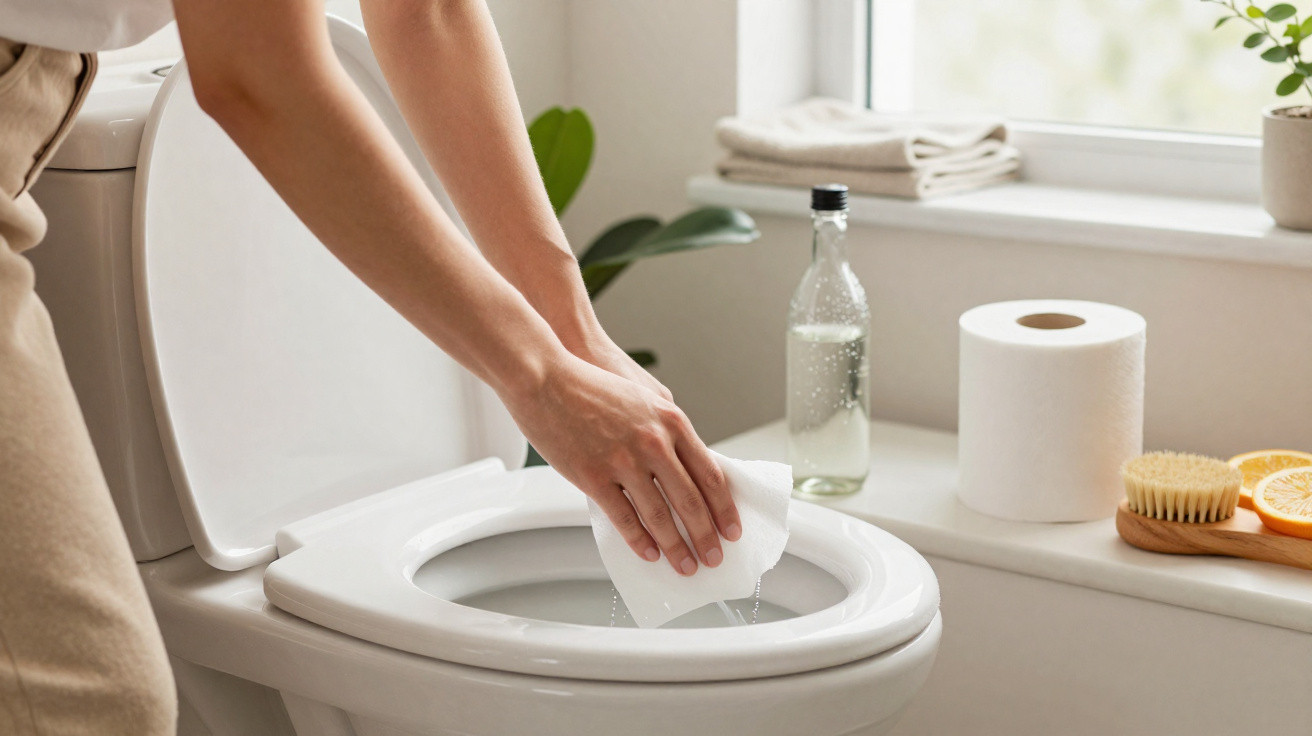
When you have finished scrubbing, take paper towels or an old cloth you are happy to discard and wipe the whole area thoroughly. Focus especially on the rear, where dust and splashes quietly merge into a sticky layer. If your bathroom has tiles or textured flooring, run a gloved finger along the grout line to check for remaining residue. Usually, one further quick spray and wipe completes the task.
After that, your daily routine can remain uncomplicated. A quick spray and wipe around the base two or three times weekly is enough to maintain the results. The deeper, kneeling scrub becomes a monthly ritual rather than an emergency-level task. This minor adjustment helps control odours and keeps the bathroom genuinely clean rather than merely tidy on the surface.
The unexpected thing is how emotional such a small job can be. There is something humbling about kneeling on the floor to clean a place for which nobody will praise you. It is unseen, private work. Yet it has an unusually large effect on both comfort and confidence.
Sometimes the most meaningful cleaning we do is the kind no guest will ever notice, but that quietly changes how we live in our own home.
- Use a dedicated small brush for the base and floor join, rather than using anything that also comes into contact with kitchen tools.
- Soak before you scrub - leave the cleaner in place so that dried grime does not have to be tackled with elbow grease alone.
- Carry out a 30-second “base check” once or twice weekly, immediately after cleaning the toilet bowl.
- Protect your knees with a folded towel, making the task feel more manageable and less punishing.
- Combine the task with something enjoyable, such as music or a podcast, so it becomes a routine rather than a punishment.
Living with a bathroom that is clean where it really counts
Once you begin noticing this overlooked area, the way you see your whole home starts to change. You spot the unobtrusive corners that shape how a room feels: light-switch edges, the bed frame underneath, the handle on the bin. The toilet base is simply the clearest and slightly unpleasant example.
Cleaning it consistently will not instantly turn you into a better person or magically transform your life. What it can offer is a quiet sense of confidence in your own surroundings. When you enter the bathroom late at night or first thing in the morning, both your nose and your mind register that the room is properly fresh rather than merely staged. That is more valuable than a perfectly folded towel.
There is also a subtly rebellious satisfaction in shifting your effort away from what looks impressive and towards what feels good for you. Nobody shares a photograph of a freshly scrubbed toilet base on social media. No aesthetic badge exists for this job. Yet it might contribute more to everyday comfort than any coordinated soap-dispenser set could.
Once you understand which small area bears the real weight of cleanliness, your priorities shift. You may still polish the mirror and arrange products on the worktop, but deep down you will know that the real work took place on your knees, around that unglamorous ring where porcelain meets floor.
Perhaps, the next time you look at your “clean” bathroom, you will see it differently - with a brush in your hand.
| Key point | Detail | Value for the reader |
|---|---|---|
| Hidden grime zone | The base of the toilet and floor join gather bacteria, dust and residue that causes odours | Helps focus cleaning on the areas that genuinely improve hygiene and smell |
| Deep clean method | Soak with cleaner, scrub using a small brush, then wipe the entire base completely dry | Provides a clear, repeatable routine that removes build-up effectively |
| Maintenance habit | Give the base a quick spray and wipe weekly, followed by a deeper scrub each month | Keeps the bathroom truly clean with very little additional time |
FAQ:
- How often should I deep-clean the base of my toilet? For most households, once a month is sufficient when you also do a quick wipe once or twice each week. Homes with young children or just one bathroom may benefit from doing it every two weeks.
- What’s the best product to use on that area? Any effective disinfecting bathroom cleaner will work, provided you leave it on for several minutes. Some people prefer diluted bleach, while others choose vinegar-based products. What matters is contact time combined with scrubbing.
- Do I really need a special brush? An old toothbrush is enough to begin with, but a small stiff-bristled brush reserved for this task makes cleaning easier and feels more hygienic. Store it separately from kitchen tools.
- Why does my bathroom still smell even after cleaning? The odour often remains because the toilet base, surrounding floor and grout have not been scrubbed thoroughly. Smells may also cling to fabric mats and the bin lid.
- Is this necessary if I already clean the toilet bowl every day? The bowl is only one part of the situation. Daily bowl cleaning is helpful, but dust, humidity and splashes gather lower down. Cleaning the base closes the gap between “looks clean” and “actually is clean.”



Comments
No comments yet. Be the first to comment!
Leave a Comment