
The remedy costs pennies rather than a service call.
The rubber door seal on your washing machine works every week to catch splashes and keep steam contained. When dirt builds up in it, freshness, energy consumption and even the appliance’s lifespan can suffer. One straightforward kitchen pairing can quickly freshen the seal without harsh odours or the familiar vinegar-and-baking-soda method.
Why the rubber seal becomes grimy
Modern front-loading machines retain moisture around the gasket. A detergent coating adheres to this damp ring, while lint and skin oils stick to the film. Heat then encourages mildew and bacteria. This pattern continues, leaving the machine smelling stale even if it appears clean.
If it is ignored, this build-up may stop the door from closing correctly. The result can be tiny leaks, longer drying times and increased detergent use to cover unpleasant smells.
Most washer odors don’t start in the drum. They start in the folds of the door gasket where moisture lingers and soap scum piles up.
The kitchen combination that refreshes the seal-without vinegar or baking soda
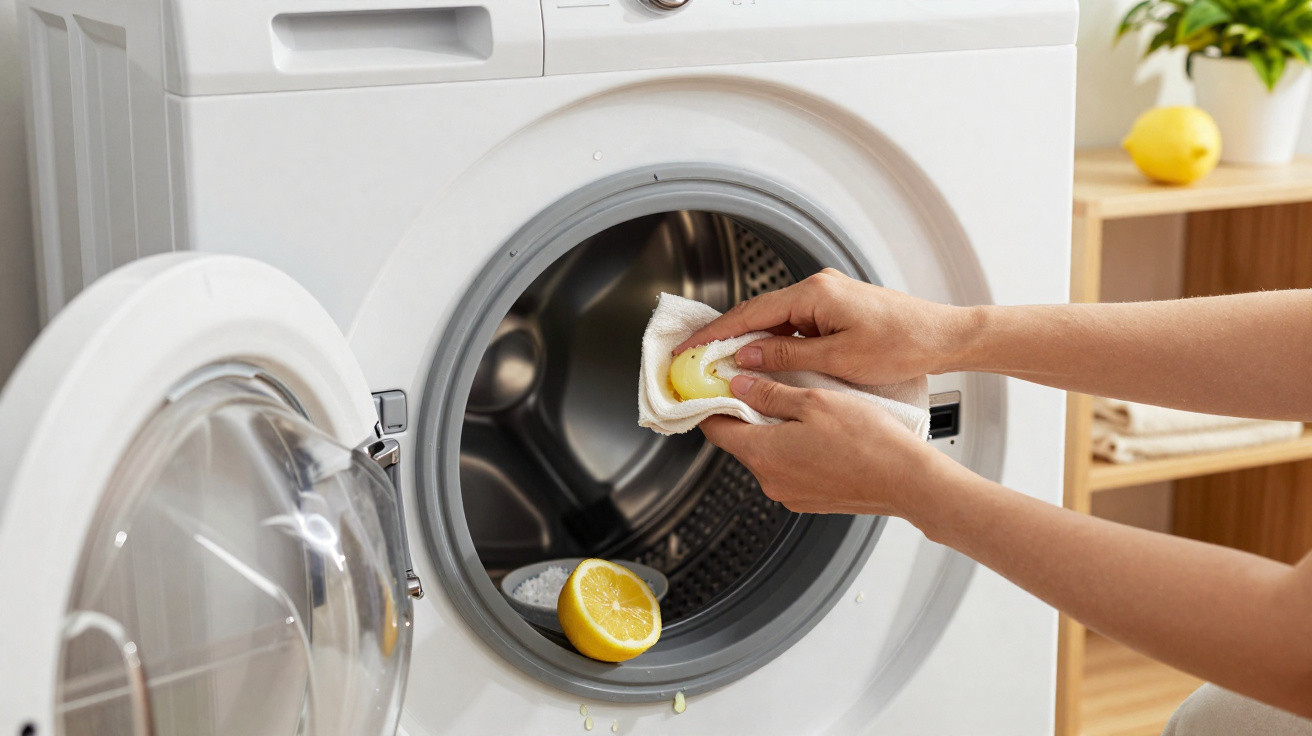
Avoid the harsher products. A simple paste made with fine salt and fresh lemon juice removes residue, reduces odour and tackles light mildew without damaging the rubber.
How salt helps
- Draws moisture out of biofilms attached to the gasket.
- Fine particles offer mild physical cleaning without scratching soft rubber.
- Helps counter stale odours held in detergent deposits.
How lemon juice helps
- Its gentle acidity breaks down mineral deposits and soap scum.
- Compounds naturally present in lemon peel and juice limit microbial growth.
- Provides a fresh, clean smell without strong fragrances.
A salt–lemon paste is non-abrasive, low-odor, and friendly to rubber components-an easy win when you want to avoid vinegar or baking soda.
Step-by-step: from musty to fresh in 10 minutes
- Switch off the machine. Ease back the gasket’s inner edge to reveal the concealed fold where deposits gather.
- Combine 2 tablespoons of fine salt with 2–3 tablespoons of fresh lemon juice. The mixture should form a spreadable paste. Add only a few drops of water if necessary.
- Put the paste on a soft sponge or microfibre cloth. Apply it through the folds and seams, and around the drainage holes at the bottom of the seal.
- Leave it in place for 5 minutes so the film can loosen. Keep the paste damp, adding a little more if it begins to dry.
- Scrub lightly. Use a soft-bristled toothbrush for narrow grooves.
- Remove loosened dirt using a clean, damp cloth until all paste has gone.
- Rinse with a freshly rinsed, well-wrung cloth. Do not allow large amounts of water to splash into the machine base.
- Run a short, empty hot cycle to remove any remaining traces. Leave the door open so the area can dry.
Useful tips that make a difference
- Choose fine salt rather than coarse crystals for gentler scrubbing.
- A small amount of lemon zest improves cleaning on stubborn film.
- Remove coins and hairpins from the gasket before cleaning to avoid tearing it.
- Where water is very hard, use slightly more lemon juice and increase the contact time to 7 minutes.
Safety, lifespan and products to avoid
- Never combine lemon juice and chlorine bleach. Leave at least one complete rinse or cycle between the two products.
- Do not allow acidic mixtures to remain on metal components. Immediately wipe spills from the door catch or hinges.
- Keep sharp implements away from the seal, as cuts in rubber can lead to leaks.
- Wear light gloves if your skin is sensitive.
Keep the door ajar between washes. Air movement breaks the moisture cycle that feeds mildew in the seal’s hidden folds.
A straightforward maintenance schedule that works
| Task | Frequency | Why it helps |
|---|---|---|
| Dry the gasket after laundry day | Weekly | Removes moisture before biofilm can form |
| Clean with salt–lemon paste | Monthly | Refreshes odour, removes scum and protects rubber |
| Empty hot maintenance cycle | Monthly | Clears deposits from the drum and hoses |
| Check drain holes at the base of the seal | Quarterly | Helps prevent standing water and tiny leaks |
Why this is better for seals than vinegar and baking soda
Vinegar and baking soda can be useful in some situations, but around rubber they have drawbacks. Baking soda may leave a gritty deposit that becomes trapped in folds. Over time, full-strength vinegar can be harsh on elastomers. Salt and lemon paste offers a middle ground: strong enough to lift dirt, but gentle enough to help the gasket remain supple.
When marks will not shift
When black marks remain after two applications, they are probably old mould staining rather than active growth. Dab the area using a cloth moistened with 3% hydrogen peroxide, leave it for 5 minutes, then rinse and dry it. Keep the door open afterwards. If the gasket has deep splits or the musty smell reappears within a day, the seal might require replacement.
Signs your seal needs attention now
- Dark slime or grit shows beneath the inner lip after every load.
- Water from the door collects on the floor after a wash.
- Laundry smells stale as soon as it comes out of the drum.
- The machine needs more detergent to disguise odours.
Sensible habits that reduce odours at the source
- Measure detergent according to load size and water hardness. Excess soap encourages deposits.
- Run hot washes at least weekly if most of your washing is cold. Heat helps remove biofilm.
- Empty pockets and shake off pet hair before washing. Less debris means less dirt in the gasket.
- Use a high-efficiency detergent if your machine needs one. It produces less foam and rinses quickly.
Beyond the washing machine: lemon and salt around the home
This same pairing can deal with several quick household jobs. Rub salt over a halved lemon to freshen wooden chopping boards. Mix a thin slurry to brighten stainless-steel sink edges, then rinse thoroughly. Apply it to fresh rust marks on cotton, wait briefly and rinse before laundering. Always test first on delicate surfaces.
Cost and time savings
A monthly salt–lemon clean costs pennies and takes less than ten minutes. This small routine can postpone gasket replacement, which is usually much more expensive once labour is included. It can also keep cycles efficient, reducing energy use and shortening drying times after spinning.
If the machine is shared or your home is humid
Place a small note near the door saying: “Leave ajar.” This one reminder greatly reduces standing moisture. In damp basements, position a low-wattage fan or a small desiccant pack nearby to limit condensation on the seal. Managing humidity works particularly well alongside the salt–lemon routine for a cleaner washing machine that lasts longer.






Comments
No comments yet. Be the first to comment!
Leave a Comment