
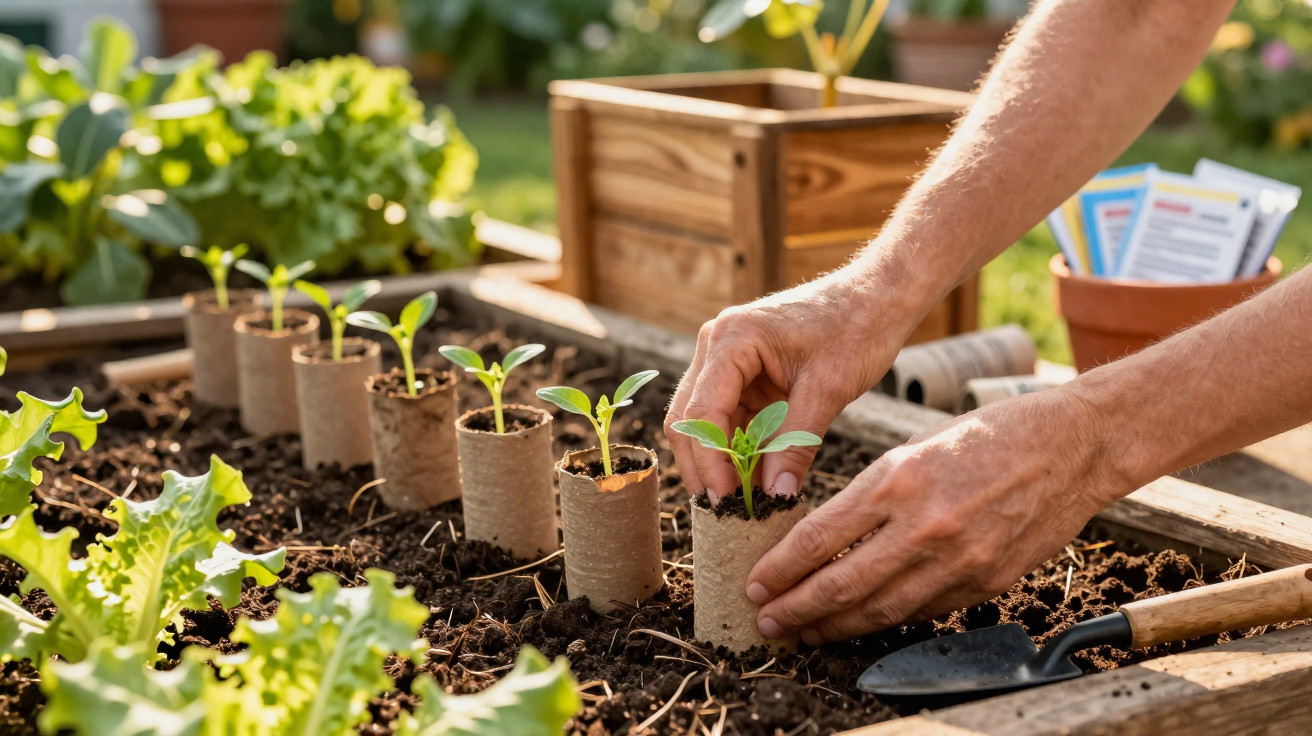
More and more amateur gardeners are placing plain cardboard toilet paper rolls around their young plants. On social media, gardening experts are praising this straightforward technique as a minor springtime game-changer. What initially sounds like an odd trend is actually a carefully considered way to protect vulnerable seedlings.
Why toilet paper rolls are ending up in the vegetable bed
Spring is the most precarious time in the garden: tomatoes, lettuces, peas and summer flowers are only just getting established, while late frosts, wind and hungry slugs are ready to damage the tender plants. Just one night close to freezing can scorch leaves, while slugs can wipe out entire rows within a few hours.
Rather than buying costly plant cloches, mini greenhouses or elaborate polythene tunnels, many gardeners use something already found in the home: an empty toilet paper roll. The cardboard creates a simple yet remarkably effective protective cover around each plant.
“The thin cardboard tube creates a small microclimate at ground level, slows down cold, wind and slugs – and later simply decomposes in the bed.”
Garden experts chiefly point to the material's properties: cardboard allows water through while shielding plants from direct draughts. As a result, ground-level temperatures fluctuate less dramatically. It also supports the area around the stem, helping young plants withstand wind blowing across the bed.
How to use toilet paper rolls outdoors as protective collars
The principle is straightforward: each young plant receives its own cardboard collar. Here is how to do it:
- Plant and water the young plant in the bed as usual.
- Keep a toilet paper roll whole rather than cutting it open lengthways.
- Carefully lower the roll over the plant from above, taking care not to trap any leaves.
- Push the tube 2–3 centimetres into the soil so that it remains secure.
This resulting “protective collar” serves several purposes at once:
- Slugs face an additional obstacle before reaching fresh leaves.
- The root collar receives slightly better protection from cold air on chilly nights.
- Splashing water containing fungal spores is less likely to hit the leaves directly.
- A light breeze cannot move the plant around as easily.
If forecasters predict a frosty night, this basic protection can be strengthened quickly. Many gardeners arrange a ring of straw or dry leaves around the cardboard and, if temperatures are set to drop sharply, place horticultural fleece over the bed as well. The plants then sit within a kind of layered protection system, with the cardboard forming the innermost barrier.
More than frost protection: other uses for cardboard tubes
Anyone who has collected a small supply of rolls soon discovers that they have numerous uses in the garden, not only around young plants that have already been planted out.
Toilet paper rolls as mini pots for raising plants
The tubes are especially useful as biodegradable seedling pots for delicate crops such as beans, peas and sunflowers. Use them as follows:
- Make four cuts around the bottom of the roll.
- Fold the resulting flaps gently inwards until they form a base.
- Fill the roll with seed compost and sow one or two seeds.
- Place the small “pots” close together in a shallow box or saucer.
After three to four weeks, once the young plants are strong enough, plant them directly in the bed together with their cardboard pots. Over time, the roots grow through the damp cardboard and the remaining material decomposes. The key benefit is that the delicate roots are not disturbed during planting, so transplant shock is largely avoided.
A barrier against weeds and competing plants
Anyone sowing vegetables or flowers in more “wild” beds or mixed herbaceous borders will know the issue: as soon as something germinates, neighbouring plants start to overwhelm it. In this situation, the tubes work as small protective and growing cylinders.
To use them, place empty rolls directly into the soil where the seeds will later be sown, then fill them with a loose layer of soil. Sow the seeds inside this small tube. While the young plants remain small, the cardboard keeps root weeds and vigorously spreading neighbouring plants at some distance, giving the seedlings a head start.
From garden bed to compost bin: cardboard as food for earthworms
Once the tube's first gardening season is over, it should go into the compost rather than the general waste. Cardboard belongs to the so-called “brown” component of compost, supplying the carbon that microorganisms need for decomposition.
“Toilet paper rolls torn into strips loosen the compost and provide earthworms with sought-after material to break down.”
Ideally, tear the rolls lengthways or cut them into smaller pieces before adding them. Then mix them with kitchen scraps, grass cuttings or leaves. This produces a more stable, better-structured compost that retains water well and can be spread through the bed in a fine, crumbly texture.
What to consider when using them
Although the tubes are helpful, they should not be used without some thought. The following points are worth keeping in mind:
- Printing ink: It is best to avoid rolls with brightly printed designs or heavily coloured recycled cardboard.
- Moisture: During very wet spells, the cardboard becomes saturated, which can initially make the soil surface dry out a little more slowly.
- Lifespan: The tubes last from a few weeks to several months. More robust pieces of cardboard are better for uses requiring a longer lifespan.
- Securing them: In very exposed, windy positions, place a small wooden stake beside the plant and lean the roll against it.
Anyone unsure can first try the method on a short row of lettuce or marigolds. This makes it easy to compare whether plants protected by cardboard get off to a better start in spring than those without it.
Which crops benefit most from this toilet paper roll trick
Not every plant needs a cardboard collar. The greatest benefits go to species planted early in open beds that have delicate stems:
- Lettuces and Asian salad leaves
- Tomatoes, peppers and aubergines in a sheltered part of the garden
- Peas and beans
- Summer flowers such as cosmos, zinnias and sunflowers
- Kohlrabi and young white or red cabbage
For very low-growing crops such as radishes or spinach, a layer of mulch is often sufficient. In these cases, cardboard is more likely to get in the way at harvest time. For taller plants, however, the tubular shape is ideal.
Why so many gardeners are changing their approach now
The idea of reusing as much as possible in the garden reflects the current mood. Social media accounts run by gardening experts demonstrate how everyday waste can become practical garden aids: seed trays made from egg boxes, labels made from wooden sticks and, of course, protective tubes made from toilet paper rolls. Millions of views are encouraging even beginners to try methods like these.
There is another reason, too: late frosts are increasingly shifting, and many amateur gardeners plant earlier to achieve longer harvesting periods. The more gardeners extend the season, the more valuable simple protective techniques become, particularly those that do not require a large budget. The cardboard tube from the bathroom meets precisely this need: it is free, quick to use and requires no specialist knowledge.
Anyone who does not throw away their next empty rolls immediately, but instead stores them in a box in the cellar or garden shed for spring, will have a whole collection of natural helpers ready for sowing time. An unassuming piece of cardboard can therefore become part of stronger young plants, better chances of a harvest – and slightly less waste.





Comments
No comments yet. Be the first to comment!
Leave a Comment