
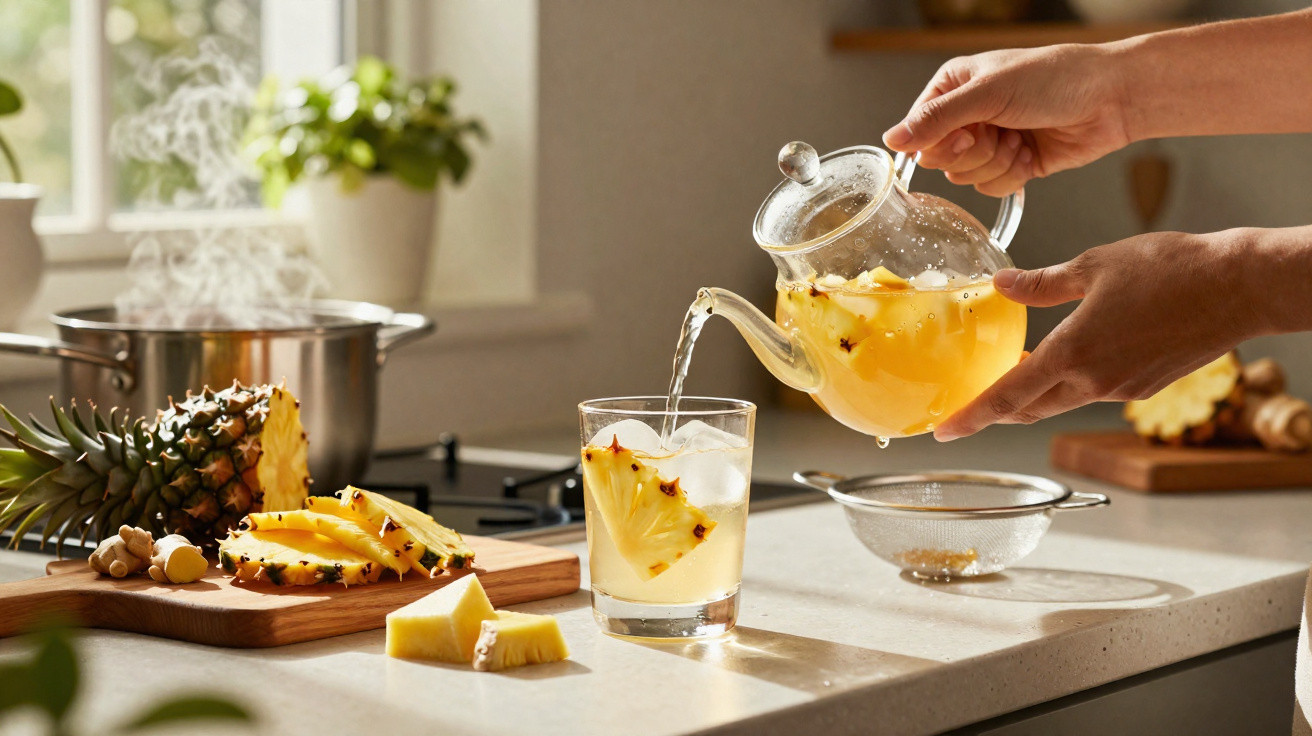
Boiling pineapple peel with ginger is an easy way to make use of a part of the fruit that would usually be thrown away. The method produces a fragrant drink with gentle sweetness and a warming spicy note, which can be served hot or chilled. Before the peel goes into the pan, however, it must be cleaned carefully: the outer surface of a pineapple is exposed to transport, storage and considerable handling before it reaches the kitchen.
What is the purpose of boiling pineapple peel with ginger?
Its main value lies in cooking and using more of the fruit. The peel still has aromatic compounds and small amounts of nutrients that transfer to the water while it cooks, while ginger contributes a fresh fragrance and mild heat. The finished drink can replace manufactured beverages or provide a base for chilled preparations.
There is no need to claim “detoxification” benefits for the recipe to be worthwhile. Its most straightforward uses include:
- Making use of a part of the fruit that would normally be discarded;
- Preparing a warm drink for cold days;
- Serving it over ice during warmer weather;
- Using it as a base for drinks with lemon, mint or cinnamon;
- Cutting down waste when eating pineapple.
Why must pineapple peel be cleaned so thoroughly?
Unlike the flesh, pineapple peel remains exposed to its surroundings during growing, transport and retail. Since it will be placed directly in the cooking water, it should be washed under running water, paying particular attention to the grooves in its surface. Where disinfection is required, follow the relevant food-safety guidance for cleaning fruit.
How to make pineapple peel and ginger drink without an overpowering flavour
Once the fruit has been cleaned, remove the peel and cut it into pieces that fit comfortably in the pan. For one medium pineapple, a useful household guide is roughly 1.5 to 2 litres of water and a few thin slices of fresh ginger. Start with a small amount of ginger, as its flavour becomes stronger during boiling.
Place everything over the heat, bring it to the boil, then simmer gently for about 15 to 20 minutes. Turn off the heat, leave the drink to stand for a few minutes, and strain it before serving.
- Only use peel with no signs of mould or spoilage;
- Slice the ginger thinly to help release its aroma;
- Begin with a small amount so it does not overpower the pineapple flavour;
- Strain the drink after cooking;
- If serving chilled, refrigerate it once it has cooled.
Does boiling the peel retain all the properties of pineapple?
No. Heat alters some of the compounds found in the fruit. Bromelain, an enzyme often linked with pineapple, is sensitive to high temperatures and loses activity during cooking. For that reason, the drink should not be presented as a concentrated way to obtain every compound found in fresh pineapple.
- Cooking mainly draws out flavour and soluble compounds;
- Some heat-sensitive vitamins may be reduced;
- Bromelain loses activity at high temperatures;
- The drink does not replace eating the whole fruit;
- Ginger adds flavour, but does not turn the preparation into a medicinal treatment.
The value of this pineapple peel recipe is use, not health promises
Preparations made with pineapple peel form part of a range of Brazilian home traditions, including in north-eastern regions, where tropical fruits are often used in juices, teas, sweets and refreshing drinks. Pineapple and ginger work particularly well together because the fruit’s sweetness and acidity balance the root’s spicy character.
The recipe’s principal advantage is turning a leftover into a simple, enjoyable drink. Thoroughly cleaning the peel, keeping the ginger quantity under control and refrigerating any unused drink properly are sufficient measures for enjoying it safely. Served hot or cold, this mixture proves that a part of the pineapple that often ends up in the bin can still provide plenty of flavour before being discarded.




Comments
No comments yet. Be the first to comment!
Leave a Comment