
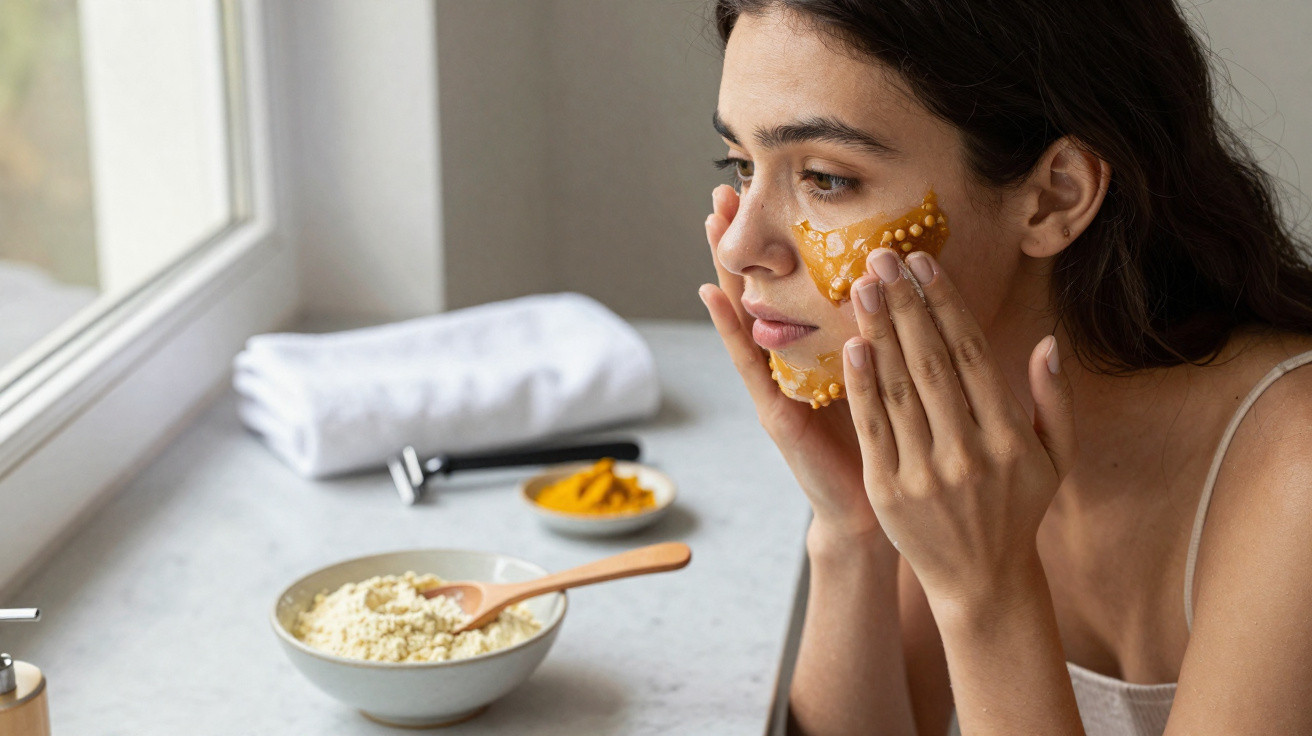
Many people look for home-based ways to remove facial fuzz without experiencing the pain associated with traditional waxing. Among the popular online recipes, a pulse-based paste claims to pull out hairs naturally, yet the method often leads to disappointment and unnecessary skin irritation.
How did the chickpea flour recipe become popular?
The recipe became widely shared on digital platforms by claiming that kitchen ingredients could replace complex cosmetic procedures. Videos recommend spreading a thick paste over the face and allowing the layer to dry completely, supposedly creating traction when the dried residue is removed by hand.
The promise of an inexpensive option appeals to people hoping to avoid the usual discomfort of threading or razors. However, the method’s reputation rests on anecdotal accounts and overlooks the biological distinction between surface exfoliation and the mechanical extraction of the hair root.
Can you shave with a razor without irritating your skin?
The key to a smooth shave lies in preparing the pores properly and using the precise angle... Read more
Does the mixture really pull hair out from the root?
Once the mixture has dried on the skin, it creates a rigid crust that sticks to the surface. Rubbing the area forcefully produces vigorous friction only; it has no genuine ability to pull out the hair follicle in an effective, long-lasting way.
Unlike the adhesion provided by cosmetic waxes, this hardened paste breaks apart easily as the hands move across it. Most hairs remain undisturbed in the dermis, while the result is often an uncomfortable feeling of dryness and visible redness caused by repeated rubbing.
Below is a video from the SHEF YouTube channel demonstrating a practical test of this recipe:
What are the risks of excessive friction on the face?
Repeated attempts to pull away the hardened crust can create invisible micro-injuries in the skin’s outer layer. This ongoing stress weakens the face’s protective barrier, leaving the tissue more susceptible to uncomfortable inflammation and the development of dark marks in the treated area.
Sensitive or acne-prone skin may be affected even more severely by this unnecessary mechanical aggression. Excessive rubbing can burst existing spots, spread bacteria across the face and heighten natural sensitivity, potentially requiring weeks of careful recovery and targeted treatments.
Facial Care
Barrier Protection
Important steps for keeping the dermis healthy after intense friction:
- Gentle cleansing with cool water and mild soap;
- Apply a soothing moisturiser with a restorative effect;
- Use sunscreen every day to prevent dark marks.
Why are conventional methods still safer?
Established techniques, such as Egyptian threading and suitable waxes, were designed to grip the hair shaft properly. These procedures allow the force to be directed with surgical precision, reducing the impact on the epithelium and providing a clean, long-lasting finish.
Choosing improvised formulas in the hope of saving time means losing control over hygiene and correct technique. Traditional methods follow cleansing protocols that protect open pores, helping to prevent folliculitis and preserve the overall health of the face.
The main factors behind the superiority of established procedures are:
- Complete removal of hairs from the root without the need for rubbing;
- A lower risk of superficial damage to the dermal barrier structure;
- Controlled hygiene that prevents bacteria from multiplying in the pores.
What is this ingredient’s real role in skincare?
Although it is ineffective for hair removal, powder made from this pulse has useful properties when used as a gentle exfoliating mask. It can absorb excess oil and lift away superficial dead skin cells, leaving a velvety feel without harming the structure of the dermis.
Understanding the true capabilities of each substance prevents unrealistic expectations and safeguards facial integrity against short-lived trends. The key to maintaining an even-looking complexion is choosing suitable products, combining mindful daily care with cosmetic procedures of proven effectiveness.






Comments
No comments yet. Be the first to comment!
Leave a Comment