
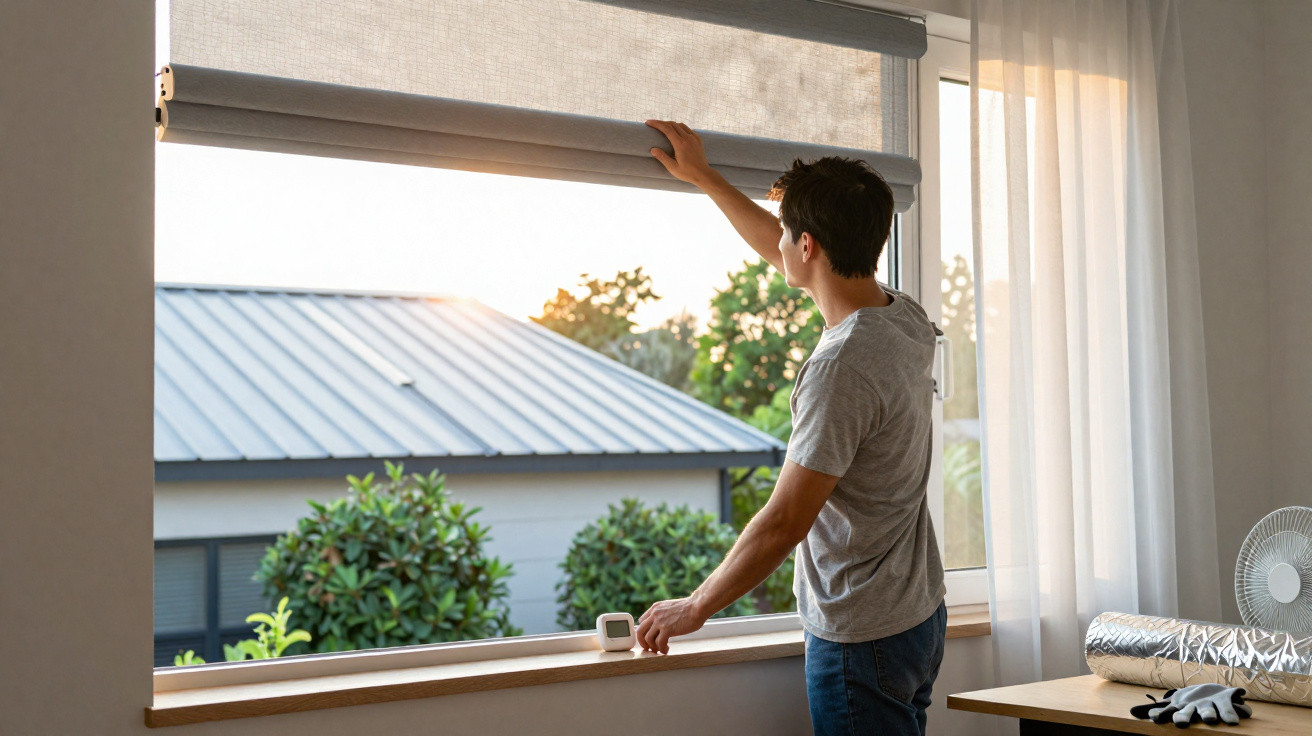
A house that gets too hot during the day does not retain heat simply because the outdoor air is warm. Its roof, walls and windows are exposed to solar radiation for hours, absorbing some of that energy before releasing it indoors. This is why certain rooms can remain stuffy long after sunset. To reduce the temperature, the most effective approach is to stop heat getting in and ventilate only when the outside air is cooler.
Why does the house stay hot after the sun has gone down?
Concrete, brick, roof tiles and similar materials take in energy while they are in the sun. Known as thermal load, this energy does not vanish as soon as night falls: walls and floor slabs gradually give off their stored heat, leaving rooms warm for several hours.
The issue is often worse in top-floor rooms and on walls exposed to the strongest afternoon sun. Particular attention should be paid to:
- Roofs and slabs in direct sunlight;
- Walls exposed to the sun for long periods;
- Windows without blinds, curtains or external shading;
- Rooms with limited air circulation;
- Dark exterior surfaces, which absorb more radiation.
When is the best time to open the windows?
Opening every window during the hottest part of the day can have the opposite effect, allowing even warmer air inside. Instead, keep windows and solar shading closed when the outdoor temperature is higher, and create cross-ventilation early in the morning, at night, or whenever the air outside is cooler than indoors.
How can you stop the sun heating walls and windows during the day?
Preventing radiation from reaching a surface is generally more effective than trying to remove the heat afterwards. Awnings, trees, pergolas, shutters and other external shading options directly cut the amount of energy that reaches windows and walls.
Internal curtains and blinds can help too, particularly if they are closed before sunlight reaches the room. Outdoors, lighter colours generally reflect a greater share of radiation than very dark surfaces.
- Close blinds before direct sunlight reaches the window;
- Use awnings or other outdoor features where possible;
- Provide shade for walls that receive strong afternoon sun;
- Consider light shades for façades that become very hot;
- Avoid leaving dark furniture in direct sunlight through glazing.
Why does the roof deserve attention before buying another fan?
The roof is often among the surfaces receiving the most radiation throughout the day. Thermal insulation, a reflective covering suitable for the building system, and proper waterproofing can reduce heat transfer to the rooms below. A fan improves how the temperature feels on the skin, but it does not stop a heated slab from continuing to radiate heat indoors.
Lowering the temperature starts by keeping heat out
Air conditioning can remove heat from a room, but it has to work harder when walls, ceilings and furniture are still releasing stored energy. Before increasing the unit’s capacity, passive measures such as shade, insulation, ventilation at the right times and window protection can reduce the thermal load that needs to be tackled.
A cooler home, therefore, relies less on one single trick and more on identifying where the heat is entering. If the roof is the source of the problem, insulation may have the greatest impact; if it mainly occurs in one particular bedroom during the afternoon, shade and window protection may resolve much of the discomfort. The principle is straightforward: the less solar radiation a building absorbs during the day, the less heat it will return to its occupants at night.





Comments
No comments yet. Be the first to comment!
Leave a Comment