
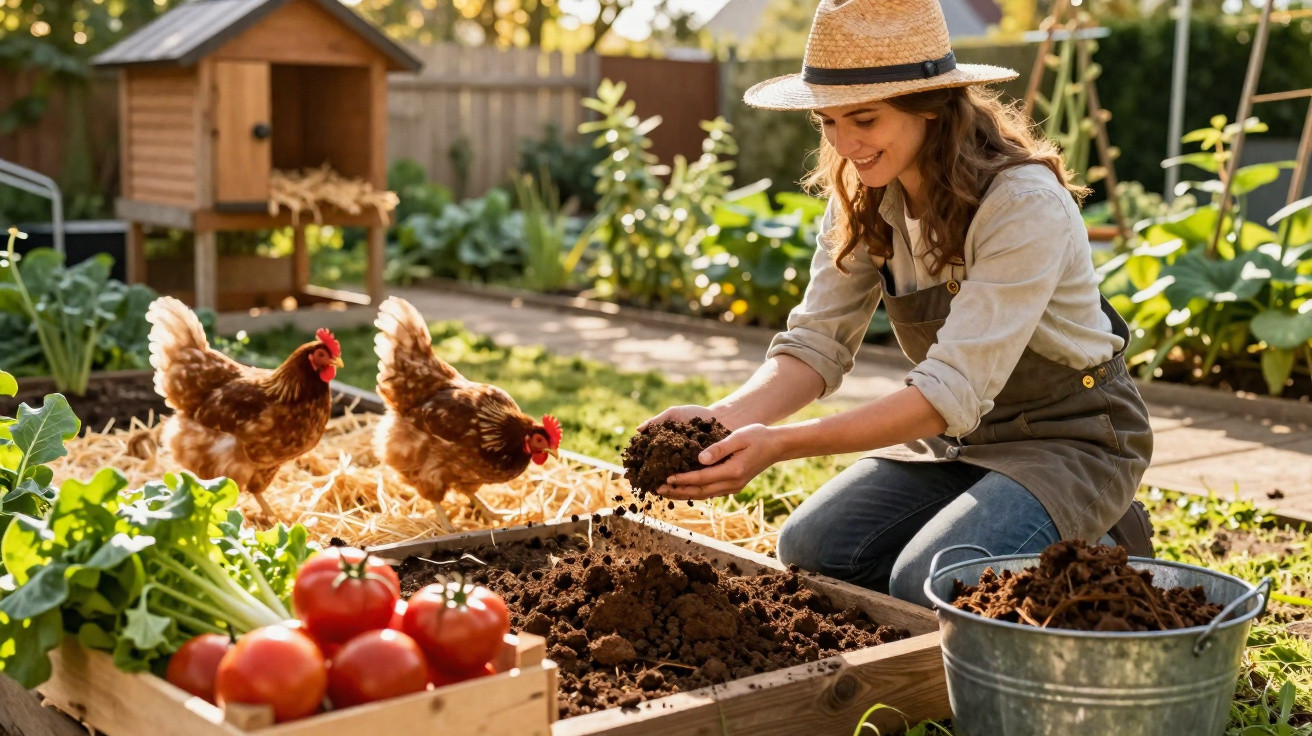
Anyone keeping a few chickens in the garden gets more than fresh eggs. Behind the scenes, a fertiliser is quietly produced that can rival any specialist blend bought from a shop. Used correctly, it gives tomatoes, courgettes and fruit trees a visible boost in the bed – without chemicals or additional expense.
Why chicken manure is such a powerful fertiliser
Chicken droppings are among the most nutrient-rich organic fertilisers available to home gardeners. They are considerably more concentrated than cattle or horse manure, for example.
“Chicken manure provides large quantities of nitrogen, phosphorus and potassium – the three key nutrients for vigorous growth and abundant harvests.”
The nutrient powerhouse explained
Chicken manure contains precisely the elements vegetable beds crave in spring:
- Nitrogen (N): promotes leaf and shoot growth; important for lettuces, brassicas and herbs
- Phosphorus (P): supports roots and flower formation; vital for tomatoes, peppers and berries
- Potassium (K): improves flavour, keeping quality and resistance to drought and disease
As these nutrients occur in chicken manure at high concentrations, the effects in the bed can be noticeable: plants establish more quickly, foliage becomes a deeper green, and fruit grows larger and more plentiful.
Why bedding makes all the difference
It becomes even more useful when the droppings mix with coop bedding. Straw, hay or wood shavings provide plenty of carbon, balancing the high nitrogen content. This combination is what turns a troublesome waste material into an ideal ingredient for compost.
Rather than buying costly bags of “organic slow-release fertiliser”, it is often enough to look in the chicken run: soiled bedding already provides half the ingredients for first-rate humus.
Why fresh chicken manure is dangerous for plants
While this fertiliser is highly effective, it must be handled carefully when fresh. Anyone tipping the contents of a chicken coop straight on to a bed may quickly get an unpleasant surprise.
Typical damage caused by fresh droppings
Fresh chicken manure can effectively scorch plants. Its nutrient concentration is so high that it damages the roots. Common signs include:
- leaves suddenly turning yellow or brown
- dried-out leaf edges
- young plants dying despite regular watering
“Straight from the coop to the bed – with chicken manure, that is a sure way to ruin plants.”
The golden rule: wait at least six months
Time is needed to turn this “hot” material into gentle humus. As a rule of thumb, the mix of droppings and bedding should compost for around half a year.
The process in the garden is straightforward, but essential:
- Remove soiled bedding and droppings with a garden fork.
- Build it into a heap in shade or partial shade.
- Keep it slightly damp, while protecting it from persistent rain, for example with an old tarpaulin.
- Leave it undisturbed and allow the micro-organisms to do their work.
Over this period, bacteria and fungi gradually transform the heap. Harsh components dissipate, the material develops a crumbly texture and its smell becomes milder. The result is a dark, earthy compost that plants tolerate well.
How autumn compost becomes fertiliser for record harvests
Once the compost has matured, the most interesting stage begins: applying it purposefully to the bed. Using the correct amount is what determines success or failure.
The ideal layer depth
The fertiliser remains potent even after composting, so a thin layer is entirely sufficient. Gardeners who apply too much again risk damaging roots.
“The recommendation: spread no more than two to three centimetres of chicken compost evenly over the soil – no more is needed.”
If desired, the humus can be lightly worked into the top layer of soil. In heavy soils, this also improves aeration; on sandy ground, it keeps water and nutrients near the root zone for longer.
Where chicken manure works best
It is especially worthwhile for plants known as heavy feeders. They have high nutrient requirements and reward every extra helping.
| Plant group | Suitable candidates | Benefits of chicken manure |
|---|---|---|
| Vegetables | Tomatoes, peppers, chilli, courgettes, squash, brassicas | vigorous plants, more flowers, larger fruit |
| Fruit | Apple and pear trees, berry bushes | reliable fruit set, more flavoursome harvests |
| Ornamental plants | Roses, nutrient-hungry perennials | abundant flowering, better recovery after pruning |
The mulch trick: keeping the fertiliser effective
A mistake often happens at the very end: compost is spread widely, then left exposed in the sun. This reduces some of its effectiveness.
Why covering it is essential
Organic fertiliser benefits from moisture and protection. Sun and wind dry the surface, while rain can wash nutrients too quickly through the soil profile.
“Anyone who covers chicken compost with mulch after applying it preserves its effectiveness for weeks and months.”
Suitable materials include:
- dried grass clippings
- leaves collected the previous year
- straw
- torn, unbleached cardboard as a base layer, topped with organic material
This layer of mulch retains soil moisture, protects soil organisms and stops nitrogen escaping into the air too rapidly.
Slow, even nutrient release
A thriving soil ecosystem gets to work beneath the mulch. Earthworms gradually draw the compost into deeper layers, while micro-organisms continue breaking down the organic matter. Nutrients therefore reach the roots little by little.
For the gardener, this means less effort spent on repeat feeding, less watering and sturdier plants that invest in sustained, healthy development rather than brief bursts of growth.
Practical advice for chicken keepers with a vegetable garden
How often should the coop be cleaned out?
In a small backyard chicken coop housing four to six birds, a thorough clean-out every four to six weeks is often sufficient. Those using deep litter and regularly adding fresh bedding will accumulate a substantial quantity of composting material over winter.
Smell, hygiene and safety
Many people worry that chicken manure is “unclean”. In a compost heap working away over several months, micro-organisms reliably break down problematic germs. It is important to wear gloves when handling it and not to position the heap directly beside a patio or sandpit.
Use chicken compost sparingly, and only when very well matured, on leafy vegetables eaten raw, such as cut-and-come-again lettuce. The risk is considerably lower with tomatoes or fruit trees, as the edible parts grow well away from the ground.
What home gardeners without chickens can take from this
Those without chickens do not have to miss out on this approach entirely. Neighbours, smallholdings or self-sufficient growers nearby often have this material in abundance and are happy to give it away – frequently in exchange for a few apples, courgettes or a jar of homemade garden jam.
The basic rules are unchanged: always compost it, allow time, apply it thinly and mulch. Whether the fertiliser comes from your own coop or the holding next door makes little difference to success in the vegetable bed.




Comments
No comments yet. Be the first to comment!
Leave a Comment