
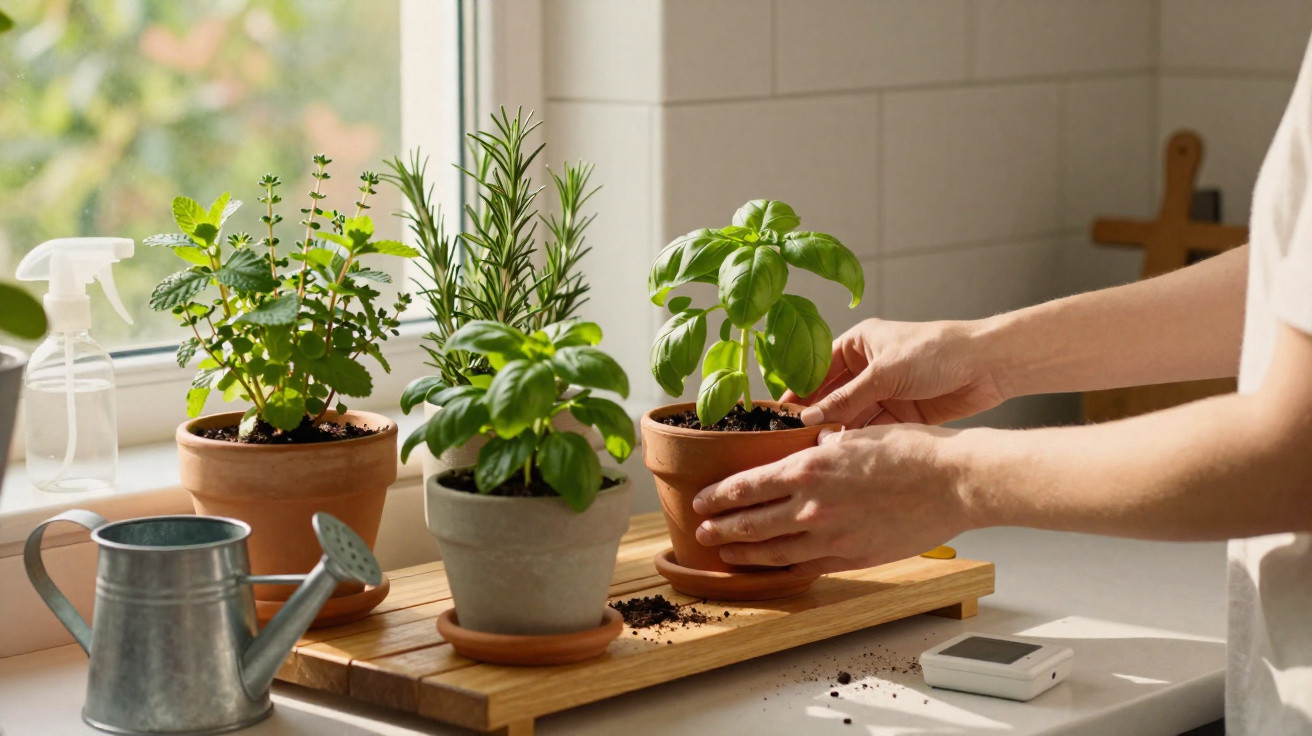
A herb corner can make use of a neglected shelf, turning an unused area into a compact growing space. Basil, mint and rosemary can be kept close together, yet each herb has its own requirements for light, water and room, which directly affects the outcome.
Why can a shelf work for organising herbs?
Vertical organisation makes better use of walls, balconies and other compact areas. Arranging pots across several levels makes the plants easier to see and allows straightforward access to every container for watering, pruning and harvesting.
However, the structure must be sturdy enough to support pots filled with damp growing medium. An old shelf should be checked before it is used, particularly if there are signs of wear, decayed wood or loose fixings.
What should be considered before placing the herbs?
Light levels are among the most important considerations. Basil and rosemary, for instance, generally need plenty of light, whereas mint can cope with different conditions. Simply grouping all the pots together is therefore not enough: each plant's placement should reflect its individual needs.
Drainage also needs careful consideration. Pots must allow excess water to escape, while a tray can help protect the shelf from splashes. Do not allow water to collect in containers, especially indoors.
How do you create a herb corner on a shelf?
First, clean the shelf and make sure it is secure. Then arrange pots in sizes suited to the available space, leaving enough room for the plants to receive light and to be tended without difficulty.
Position the herbs according to what they need. Plants requiring more light can be placed on the brightest levels, while varieties that tolerate some shade may go in less exposed spots. Labels showing each plant's name can also make the care routine easier.
Who should adapt this corner, and in which settings?
In flats, kitchens and small balconies, the shelf's location should take both ventilation and light into account. Where there is limited natural light, it may be necessary to select varieties that are more shade-tolerant rather than trying to grow every herb in the same place.
Watering frequency should likewise be adapted to each species and to the climate. Mint, for example, usually enjoys more moisture than rosemary, which prefers a growing medium with good drainage. In this way, the herb corner becomes more practical when its arrangement reflects the characteristics of each plant.





Comments
No comments yet. Be the first to comment!
Leave a Comment