
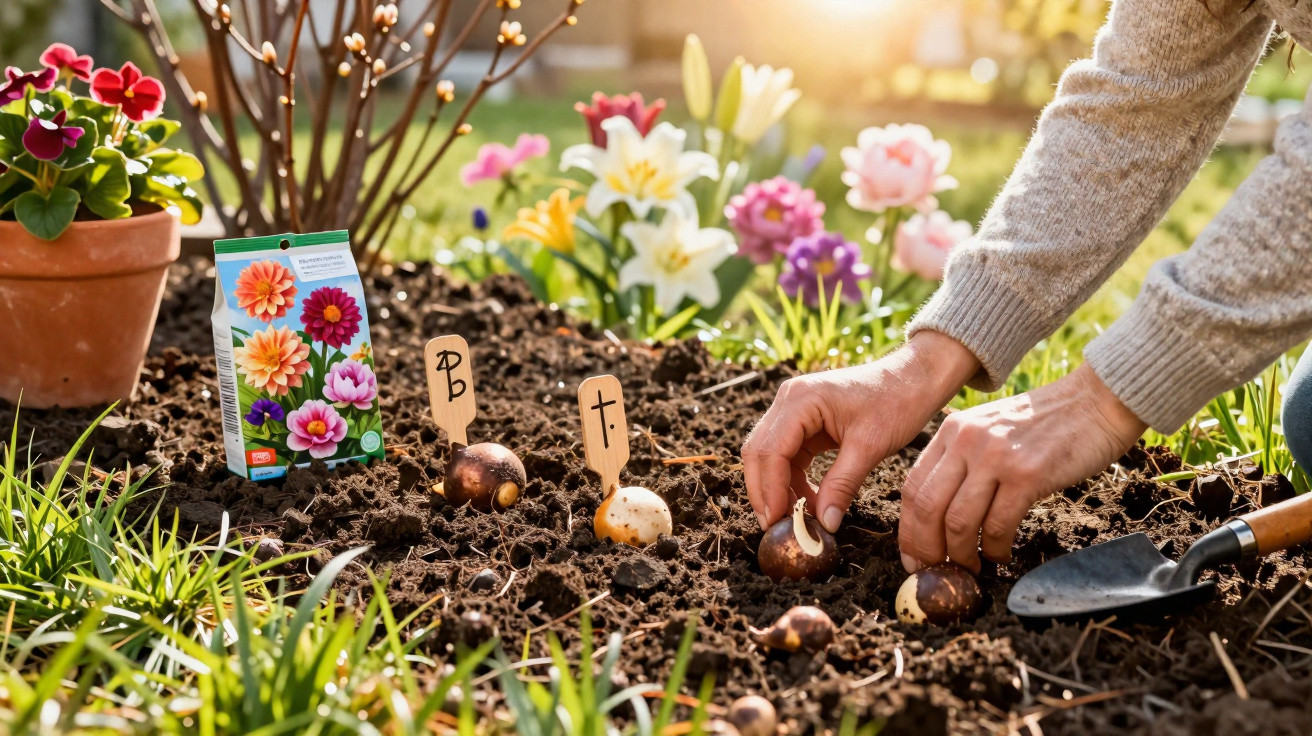
With four carefully chosen bulb and tuber plants, you can prevent this dreary gap in the garden.
Many keen gardeners know the situation: the first spring flowers have faded, roses are showing only leaf buds, and colourful summer perennials are still some way off. Anyone who fails to plan ahead in March can often be left looking at largely empty borders until July. A straightforward planting scheme using four selected bulb and tuber plants can close this lean period surprisingly easily, providing flowers from early summer through to autumn.
Why March is the crucial time for summer-flowering plants
Across central Europe, March generally signals the change from winter to spring. The hardest frosts begin to ease, the ground thaws and the soil gradually warms up. This is precisely the window experienced gardeners use to get summer-flowering plants into the ground.
“Those who plant summer-flowering plants only in late April or May often delay flowering until high summer – and lose valuable weeks of colour.”
Many tuberous and bulbous plants need several weeks to establish roots, produce strong shoots and form flower buds. If planted too late, they fall behind the garden season. From the outside, this can make it appear as though the garden is “not getting going”.
The key is to start four varieties in March that complement one another in both timing and appearance. This creates an almost uninterrupted succession of flowers from early summer until autumn, even in small gardens or on balconies.
Four key plants for an uninterrupted summer of flowers
In practical terms, these four choices have proved particularly reliable:
- Dahlias – richly coloured repeat-flowering plants for borders and containers
- Begonias – dependable sources of colour for shade and partial shade
- Lilies – elegant structural plants with intense fragrance
- Peonies – an investment in abundant flowers for years to come
Each plant has its own role within the garden display. Together, they fill gaps in both time and space, ensuring there is no sudden “off-air period” once the spring flowers have finished.
Dahlias: a blaze of colour from June to October
Dahlias are among the most popular summer-flowering plants of all. They offer an enormous range of flower shapes and colours, from small pompons and simple open blooms to spectacular cactus forms.
A practical March routine:
- Take tubers from winter storage or buy fresh ones.
- Plant them in pots filled with loose compost, with the shoot point facing upwards.
- Keep them somewhere bright, frost-free and slightly moist, such as an unheated conservatory or a cellar window.
- Move them into borders or large containers after the last frosts.
Gardeners who start dahlias indoors in March may see their first flowers as early as June, depending on the region. Tubers planted directly outdoors without being started first usually take considerably longer, often only taking off in high summer.
Begonias: a solution for shady corners and north-facing balconies
Shady spots are often considered problem areas. Tuberous begonias are particularly effective in exactly these places. They manage with little direct sunlight and continue flowering provided they are watered regularly.
How to plant them in March:
- Place tubers flat in trays or pots, with the slightly rounded side facing upwards.
- Cover lightly with loose compost; the upper area may remain just visible.
- Position them somewhere bright and frost-free, away from harsh midday sun through glass.
- Keep the growing medium evenly moist, while avoiding waterlogging.
Begonias are ideal for window boxes, hanging baskets and the front edge of shaded borders. Their almost continuous flowering from early summer to autumn reliably fills colour gaps left by other plants.
Lilies: tall flowering stems as focal points and gap-fillers
Lilies act like living exclamation marks in a border. Their upright stems and frequently strongly scented flowers rise above lower perennials, elegantly filling empty spaces in between.
For March planting, follow these basic guidelines:
| Criterion | Recommendation |
|---|---|
| Planting depth | 2–3 times as deep as the bulb is tall |
| Soil | Deep, loose and well-drained, with no waterlogging |
| Position | Sun to partial shade, “head in the sun, feet in the shade” |
| Flowering period | Depending on the variety, from May until late summer |
Combining several types of lily extends the flowering period over many weeks. Early-flowering varieties bridge the gap after spring bulbs, while later types cover the period until autumn asters take over.
Peonies: March marks the start of years of floral pleasure
Peonies, also commonly called Paeonia, only partly solve the immediate flowering gap in their first year. They often need two to three years to reach their full splendour. Even so, planting them in March is one of the most worthwhile investments for an ornamental garden.
“A well-established peony can remain in the same place for decades and produce a small firework display of large, often scented flowers every spring.”
Important planting points:
- Do not plant too deeply – the “eyes” (shoot buds) should sit only a few centimetres below the surface.
- Choose a site with free-draining, nutrient-rich soil and no waterlogging.
- Peonies prefer to be left undisturbed, and do not respond well to being moved later.
Planting one or more peonies in March will not immediately fill the current flowerless gap, but it ensures that this very gap becomes smaller every year to come.
How this planting plan closes the garden’s “colourless” period
The success lies in combining the four plants intelligently. Their flowering periods overlap like runners passing a baton:
- Spring bulbs such as tulips and daffodils provide colour until April/May.
- Early lilies and pre-started dahlias take over in June.
- Begonias supply continuous flowers in window boxes and along border edges from early summer into autumn.
- Late dahlias and lilies continue until the first frosts arrive.
This combination reduces the typical quiet weeks when little is happening in the garden. Even small spaces benefit greatly: a single container of dahlias, a window box of begonias and a few lily bulbs among perennials can noticeably transform the overall impression.
Practical tips: position, soil and reducing risk
For the plan to work, a few practical details matter more than expensive specialist varieties. The three main priorities are frost protection, drainage and watering.
- Watch for frost risk: Night frosts can still occur in March. Pre-started tubers should remain protected until after the last frosts, while lily bulbs generally withstand light cold when planted in the ground.
- Avoid waterlogging: Dahlia and begonia tubers in particular rot easily if they sit in wet soil for extended periods. Drainage holes and a drainage layer in containers will help.
- Water regularly, but moderately: Newly planted bulbs must not dry out, but they do not need a “constant shower”. Testing the soil with a finger helps prevent mistakes.
If you are unsure, begin with just a few specimens and expand your collection over the coming years. Many gardeners build up their succession of flowers step by step rather than trying to achieve everything in one season.
Why the effort in March pays off over time
At first glance, March may seem an unremarkable planting month: it is still cool outside and the gardening year is only slowly gathering momentum. That is exactly where its advantage lies. Jobs completed now pay off many times over, both visually and financially.
Bulbs and tubers can often be bought more cheaply than plants already in flower during summer. Many types, including lilies and peonies, also remain in the ground for years and require little maintenance. Even dahlia tubers can be overwintered and started again the following March.
Those who consistently make use of this head start experience early summer in the garden very differently: instead of pale borders after spring, there is a seamless wave of flowers. That is why more and more keen gardeners are choosing a manageable effort in March, so they are not faced with empty borders in June, July and August.






Comments
No comments yet. Be the first to comment!
Leave a Comment