
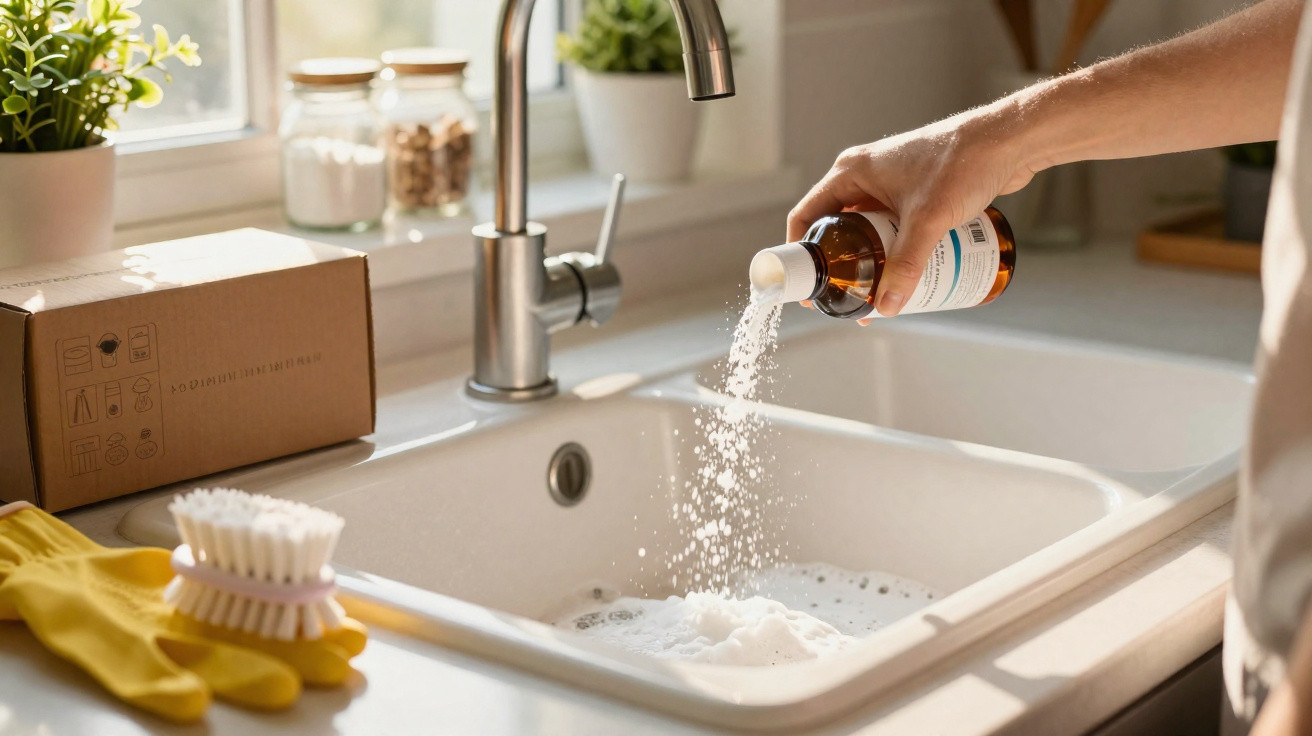
The first time I watched somebody casually tip baking soda into a bowl of hydrogen peroxide, I instinctively moved back, as if they were making dynamite.
It happened in a cramped kitchen on a Tuesday morning, beside a marked chopping board and a cup of coffee that had turned cold. There were no gloves or lab coat in sight-only a chipped ceramic bowl and a wooden spoon.
Seconds later, the mixture started fizzing gently, rather like a subdued fizzy drink. Brown marks on the board began disappearing before my eyes. Its scent was fresh and faintly clinical, although not overpowering. There was no expensive, slickly packaged cleaning product involved: just two inexpensive supermarket staples.
That was when I understood that something was taking place in our homes, far from the big brands, with hardly anyone properly discussing it. It was an understated DIY chemical revolution, and this pairing of white powder and clear liquid sat at its heart.
From old-fashioned remedy to viral “miracle mix”
Spend a few minutes on cleaning TikTok or home-hack Instagram and the pattern is familiar: a grimy sink, a yellowed mug or grout that has become nearly black. The camera then focuses on a spoonful of baking soda and a dash of hydrogen peroxide. Moments later, the grime appears to dissolve. Captions call it a “game changer” and ask, “where has this been all my life?”
Baking soda was once the neglected packet pushed to the rear of the fridge, while hydrogen peroxide was the brown-bottle antiseptic your grandmother applied to grazed knees. Together, they are now popular as an inexpensive, lower-toxicity alternative to aggressive cleaners. They seem harmless, even unremarkable, but users insist that they beat many of the brightly coloured bottles stored beneath the sink.
The trend has straightforward yet intriguing chemistry behind it. Baking soda provides mild alkalinity and gentle abrasion. Hydrogen peroxide is an oxidiser that breaks down into water and oxygen as it tackles stains, bacteria and unpleasant odours. Mixed together, they make a paste that can scrub, lift dirt and disinfect at the same time. There is something strangely satisfying about using such everyday ingredients and seeing ingrained marks disappear.
In one viral video, a mother tackled the dull, seemingly hopeless grout between white bathroom tiles. She combined baking soda and hydrogen peroxide into a cloudy paste, applied it along the grout with an old toothbrush and left it to work. Following a brief scrub, the footage switched to a striking “after” shot: grout several shades brighter, with the sort of transformation usually associated with a professional deep clean.
These stories are supported by real figures. Across home-care forums and Reddit discussions, people regularly say they have replaced two or three specialist products with this single mixture, including stain remover, toilet cleaner and tile whitener. In laboratory testing, hydrogen peroxide at the standard 3% household strength is known to significantly reduce bacterial load on surfaces. Paired with baking soda’s abrasive action, the results are visible and quick-and, frankly, addictive to watch in real life.
An unexpected driver of these recommendations is exhaustion. People are weary of incomprehensible labels, eye-stinging smells and paying premium prices for products that leave streaks behind. A combination of two recognisable ingredients can feel reassuring. Some dentists and dermatologists even mention baking soda and hydrogen peroxide casually in interviews or posts, covering uses from teeth whitening-with caveats-to cleaning make-up brushes and razors.
How to prepare baking soda and hydrogen peroxide without damaging your belongings
The standard formula is remarkably easy: two parts baking soda to one part 3% hydrogen peroxide. This produces a smooth paste with a consistency between toothpaste and thick yoghurt. Add extra baking soda if it is too liquid; if it is dry and crumbly, mix in a few further drops of peroxide. No specialist equipment is required-a small bowl, spoon and perhaps an old toothbrush or sponge will do.
Apply the paste to the surface you want to tackle, whether that is stained grout, dirty oven-door glass, tea-marked mugs or the soles of white trainers. For minor jobs, leave it in place for 5 to 10 minutes; for persistent marks, allow up to 20 minutes. Scrub gently, then rinse thoroughly with water. The fizz is entirely normal: small oxygen bubbles are helping lift grime and colour.
However, the mixture has limitations, and this is where many people run into trouble. Certain materials genuinely do not tolerate it well. Repeated use can etch or dull natural stone, including marble and granite. Delicate textiles can fade unpredictably, particularly coloured cotton and synthetic fabrics. Before using it on a favourite sofa or costly worktop, try it first on a tiny concealed patch. Never combine this duo with vinegar or other cleaning products as part of an improvised “cocktail”. Chemistry is indifferent to home-hack enthusiasm.
A frequent error is applying the mixture to the same surface every day. Because it performs so well, some people begin treating their sink, grout or even teeth with it as a daily ritual. That’s when you move from clever hack to slow damage. Over time, baking soda may scratch glossy finishes, while even 3% hydrogen peroxide can gradually bleach colours or dry materials out when used excessively.
Let’s be honest: nobody truly does this every day while following every precaution perfectly. You arrive home late, find the oven filthy and simply want it clean. So you estimate the quantities, spread it on and leave it there. That is human nature. The safest middle ground is to save this combination for major cleaning missions: the awful oven job, a spring bathroom refresh or trainers you had assumed were beyond saving.
Treat it as a targeted cleaner rather than an everyday supporting act. Choose mild tools, such as soft brushes, non-scratch sponges and microfibre cloths. Rinse for longer than seems necessary, particularly on porous materials. If you plan to use it close to your body-for teeth whitening, cleaning earrings or treating underarm stains-seek guidance from a dentist or dermatologist instead of relying on a 30-second video.
“The power of baking soda and hydrogen peroxide isn’t that they’re ‘natural’ or ‘magical’,” says a chemist I interviewed. “It’s that they’re predictable, cheap, and surprisingly effective when you respect what they can and can’t do.”
A handful of basic principles will help ensure this combination works for rather than against you. Consider them a practical shared cheat sheet, rather than rigid rules, from somebody who has already learnt the hard way.
- Prepare only small quantities and discard any remaining paste after use.
- For household use, use 3% hydrogen peroxide only, rather than stronger products.
- Keep hydrogen peroxide in a dark bottle and away from both heat and light.
- Wear gloves if your skin is sensitive or you expect to be scrubbing for some time.
- Avoid regular use on natural stone, antique wood and delicate fabrics.
Beyond cleaning: the broader, stranger life of this duo
The story of baking soda and hydrogen peroxide extends well beyond sinks and tiles. This basic pairing turns up in very different parts of day-to-day life. Pet owners use it in a well-known recipe to neutralise skunk spray on dogs. Gardeners dilute it for cleaning plant pots and combating fungus on pruning tools. Some runners use it to scrub odours from sports kit that ordinary laundry products do not seem able to remove.
There is also a more controversial, personal side. People prepare highly diluted versions to rinse mouthguards, retainers and toothbrushes. DIY enthusiasts discuss brightening stained nails, washing hairbrushes and even preparing reusable menstrual cups with solutions that are rinsed extremely thoroughly. Every one of these applications sits in a grey area between “probably fine” and “please ask a professional first”. The boundary is narrow, and your body is not a kitchen sink.
Emotionally, this pair seems to represent more than a way to clean. We have all experienced opening a cupboard crammed with household products and no longer knowing what we bought or why. Baking soda and hydrogen peroxide can feel like a quiet response to that clutter: two basic products, a few recipes and a renewed sense of command over your home and spending.
There is a subtle pride, too, in achieving a dramatic result with something so uncomplicated. When you show a friend the before-and-after of an oven door, then tell them it was done with ingredients costing less together than a coffee, their response is usually part disbelief and part interest. “Send me the recipe,” they say. This is how trends emerge-not through headlines, but through modest shared wins against stains and grime.
This effective combination also has clear limits, and frustration starts when those are ignored. It will not somehow solve mould buried deep inside walls or restore a rusted pan to a brand-new appearance. Neither is it a substitute for professional hospital disinfectants or targeted healthcare treatments. It is a tool, not a religion. The more candidly we discuss what it will and will not achieve, the more useful it becomes.
Still, the quiet growth of this fizzing paste says something about the way people want to live today: less packaging, fewer unfamiliar chemicals and greater transparency. People want the chemistry at work in their sink or on their trainers to feel understandable rather than mysterious. They want to open a cupboard, take out two familiar items, combine them in a bowl and not feel deceived.
That may be why recommendations for this mixture continue spreading through one conversation at a time. A neighbour teaches another person how to save a baking tray. A parent shares the tip with an adult child setting up their first flat. An internet stranger films a grout transformation that reaches a million views. Somewhere between the bubbling fizz and whitening tiles, a small but persistent confidence is restored: confidence in simple things that work quietly, without promising the moon.
| Key point | Detail | Benefit for the reader |
|---|---|---|
| Simple but powerful combination | 2 parts baking soda + 1 part 3% hydrogen peroxide = a versatile cleaning paste | Makes it possible to replace several household products and reduce costs |
| Varied uses | Tile grout, ovens, stained mugs, shoes, sports equipment and garden tools | Provides practical solutions for common household problems |
| Essential precautions | Avoid natural stone, delicate fabrics and random mixtures with other products | Protects your surfaces and health, while preventing unwelcome surprises |
FAQ:
- Can I use baking soda and hydrogen peroxide on my teeth every day? Most dentists recommend against everyday use. The mixture may help remove occasional stains, but repeated scrubbing can wear away enamel and irritate gums. Think of it as a “special occasion polish”, rather than daily toothpaste.
- Is this combo safe for coloured fabrics? Take considerable care. Hydrogen peroxide has a mild bleaching action and may fade some dyes. Always test a hidden area first and rinse well. For valuable garments, a professional cleaner is still the safer option.
- What strength of hydrogen peroxide should I buy? For domestic cleaning, the usual 3% solution available in supermarkets and pharmacies is sufficient. Stronger concentrations are more powerful but also riskier, and are generally intended for professional or medical settings.
- Can I mix baking soda, hydrogen peroxide and vinegar together? It is best not to. These ingredients may neutralise one another or produce unpredictable reactions. Use them individually for separate jobs, rather than treating them as an all-purpose potion.
- How long can I keep a batch of the mixture? Mix small amounts and use them immediately. Hydrogen peroxide degrades over time and becomes less effective. Any leftover paste can dry out and lose activity, so storing it is not worthwhile.



Comments
No comments yet. Be the first to comment!
Leave a Comment