
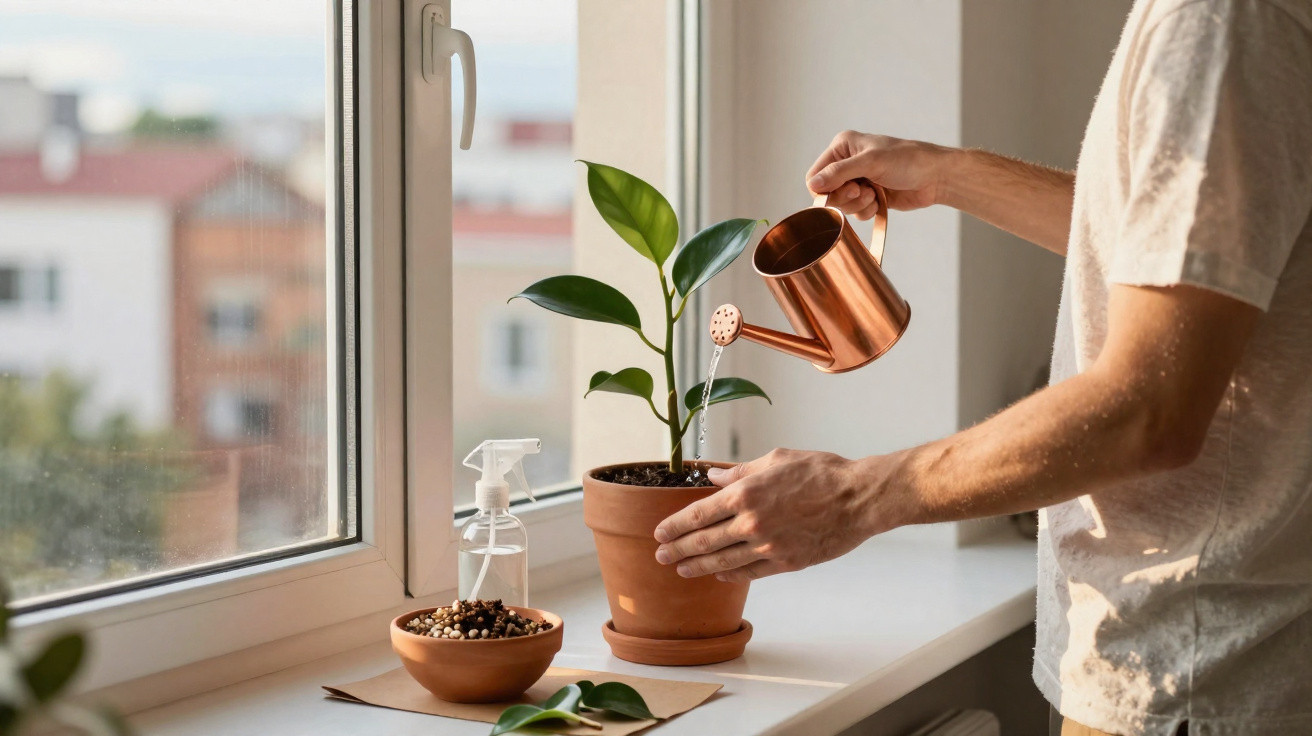
Having a home decorated with vibrant greenery is the wish of many people with busy urban routines. The well-known jade plant is an ideal choice for growing on a sunny apartment window, without demanding daily effort.
How can you ensure ideal light for your window succulent?
Successfully growing any succulent species depends on carefully meeting its natural lighting requirements. Direct exposure to sunlight in the morning or late afternoon prevents its structure from changing shape as it reaches for brightness.
If the pot is kept in a completely dark place or somewhere without sufficient light, the plant can develop the feared etiolation. This harmful process entirely distorts its naturally symmetrical silhouette, leaving the foliage elongated and visibly delicate.
To grow your window plant successfully and prevent development problems, follow these five essential secrets:
- Light: A few hours of direct sunlight are crucial for healthy foliage.
- Watering: Water generously only once the entire growing medium has dried out.
- Substrate: Combining topsoil with coarse sand and gravel chips ensures excellent drainage.
- Repotting: Replacing the soil every year encourages healthy root growth.
- Protection: Diluted hydrogen peroxide tackles pests efficiently and safely.
What is the secret to watering without risking root rot?
Many first-time growers wrongly believe that plants from dry climates dislike plentiful water. In fact, they appreciate a generous supply of water at the right time, provided the pot has effective drainage holes at its base.
The golden rule is to check the moisture of the soil before watering the small pot again. In hot regions of Brazil, evaporation happens quickly and calls for greater frequency, whereas colder places require longer gaps between watering.
To understand the correct watering methods visually and see the proper water flow, watch the explanatory video on the Spagnhol Plantas YouTube channel:
How do you make an ideal, fuss-free homemade substrate?
The key to an excellent growing medium lies in the particle size of the ingredients blended for the pot. Soils made entirely of clay tend to compact, completely restricting healthy root development and preventing rainwater from draining away quickly.
Homemade Mix
Successful Proportions
One measure of topsoil provides all the essential basic nutrition the plant needs.
One part coarse sand combined with ordinary gravel chips delivers high aeration.
Simple materials bought from builders' merchants can solve your apartment pot's drainage needs perfectly. This highly porous combination lets the roots breathe freely, encouraging the healthy growth of ornamental foliage without any difficulty.
The following list sets out the three indispensable materials for making the perfect substrate:
- Good-quality topsoil to provide basic nutrients.
- Coarse builders' sand to prevent soil compaction.
- Gravel chips or 0-grade crushed stone to increase overall porosity.
When and how should you repot a jade plant to propagate new plants?
A healthy plant shows clear signs when it needs renewed space for its roots to spread. Wilted or dehydrated leaves, even after correct watering, suggest the old substrate is exhausted and has lost vital nutrients.
Moving the plant into another container at least once a year makes it possible to clean away dry parts that can shelter mealybugs. During this delicate process, manually separating the small side shoots helps with propagation, creating healthy new pots.
The key stages for carrying out the process correctly include the following actions:
- Take the established plant from the pot and clean the roots carefully.
- Remove dry leaves to prevent opportunistic pests from appearing.
- Enlarge the pot's drainage holes using a sharp tool.
- Put a layer of gravel at the bottom to ensure drainage.
How can you fight mealybugs and fungi with a safe homemade solution?
The sudden appearance of pests and fungal diseases can seriously affect the beauty of foliage on plants grown in apartments. Carefully applying a diluted hydrogen peroxide mixture removes invading organisms without harming plant tissues.
Four tablespoons of 10-volume hydrogen peroxide mixed into one litre of clean water make the ideal treatment. Spraying this protective liquid in the late afternoon ensures the complete elimination of mites while keeping plants healthy.
Read also: Goodbye to diesel: scientists develop an engine powered by seawater



Comments
No comments yet. Be the first to comment!
Leave a Comment