
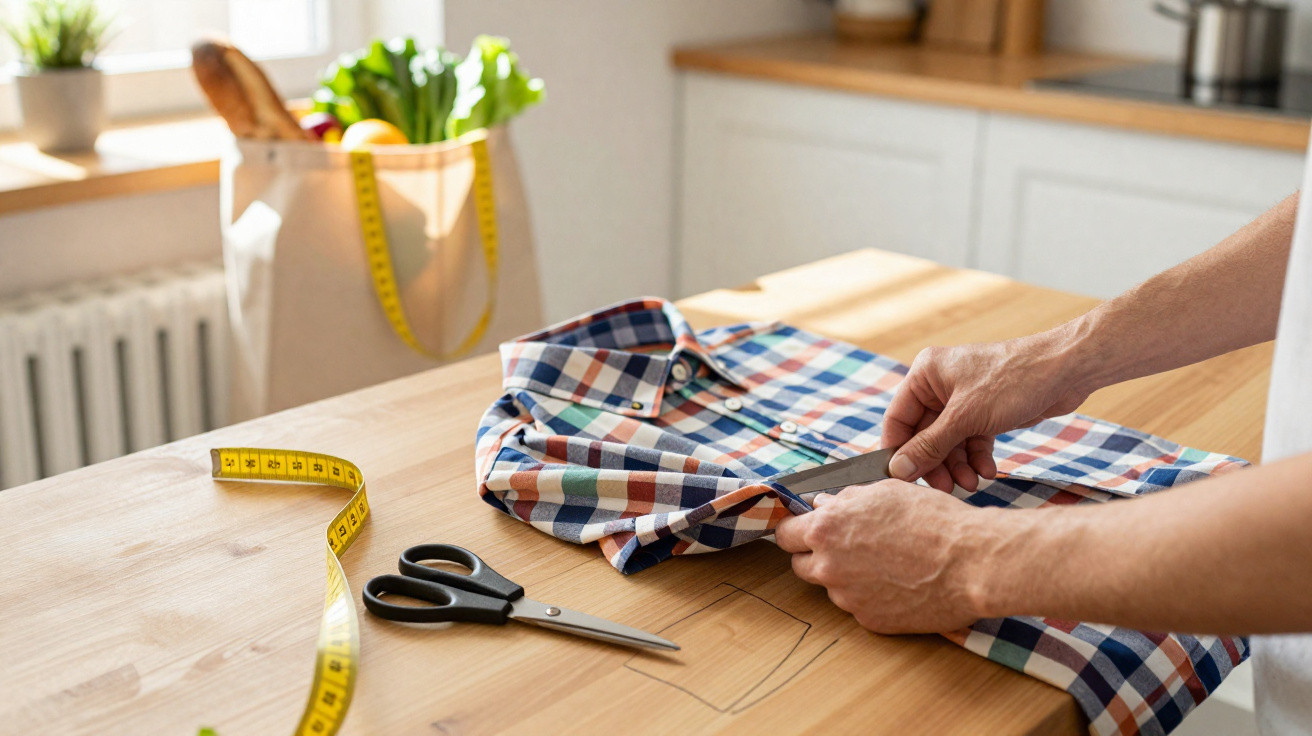
The answer is surprisingly often already hanging in the wardrobe.
There may be stretched-out men's shirts in the cupboard, colourful fabric bags tempting shoppers at the supermarket checkout for a high price, and piles of thin plastic bags at home. Anyone with basic sewing skills – or simply willing to give it a go – can neatly escape this situation. In about an hour, an unwanted shirt can become an exceptionally sturdy shopping bag that costs nothing, lasts for years and may quickly become an everyday favourite.
Why an old shirt makes a better shopping bag
Men's shirts are the workhorses of a wardrobe: they are made to withstand plenty of wear, washed regularly and often constructed from durable fabrics. Those qualities make them perfectly suited to a second life as a carry bag.
Turning a worn shirt into a bag saves money, cuts waste and provides a highly durable everyday essential.
Many shirts are made from tightly woven cotton poplin or another finely woven fabric that withstands pulling and abrasion well. In practical terms, this means glass bottles, bags of flour, packets of pasta or heavy nets of fruit can be carried safely without the material tearing or the handles fraying.
There is also a financial benefit. Good-quality fabric bags can easily cost between 15 and 30 euros. Converting three old shirts into bags could ideally save 45 to 90 euros, while removing the need to buy new shopping bags for years.
Turning a shirt into a shopping bag: the basic idea
The design follows the familiar tote bag format: open at the top, closed at the bottom and fitted with two strong handles. The key difference is that the button placket, breast pocket, pattern and collar shape all come from the original shirt, making every bag distinctive. The result is a one-off item that is sure to stand out at the supermarket.
Larger or looser-fitting shirts work especially well, including XL and oversized styles. They offer greater capacity, longer side seams and enough material to make wide, comfortable carrying handles.
Materials and preparation
Only a few items are needed to make a shopping bag from a shirt, and many households will already have them:
- 1 unwanted men's shirt, ideally made from tightly woven cotton
- Scissors or a rotary cutter
- Sewing machine with straight and zigzag stitches
- Pins or sewing clips
- Tape measure or ruler
- Matching sewing thread
Before beginning, wash the shirt without fabric conditioner. This ensures the material will not shrink further and helps the bag retain its shape. Loose threads and missing buttons can be removed first.
Step by step: making a shirt shopping bag
1. Shape the shirt
Place the buttoned-up shirt flat on an even surface. Smooth away all creases so that the front and back lie precisely on top of one another. This is important to prevent the finished bag from having uneven edges.
Cut off both sleeves directly along the shoulder seam. Next, create the neck opening by cutting out a gently curved section beneath the collar. This opening will form the top edge of the shopping bag.
2. Close the bottom edge
The shirt's original hem now becomes the base of the bag. Turn the shirt inside out so that the inner side faces outwards. Carefully pin the bottom edges together, aligning edge to edge.
Sew across the full width with a straight stitch. Run a zigzag stitch directly beside it to stop the fabric from fraying. For carrying particularly heavy loads, add a second straight seam a few millimetres away. This creates a durable double base.
3. Cut handles from the sleeves
The removed sleeves provide the fabric for the carrying handles. From each sleeve, cut a long strip of fabric approximately ten centimetres wide. Its length determines whether the bag is best carried by hand or comfortably over the shoulder.
Fold each strip lengthways down the middle, with the right side facing inwards. Stitch the open long edge using a straight stitch. Then turn the fabric tubes inside out so the attractive side is on the outside. If desired, topstitch close to both edges of the handles. This gives a neater finish and makes the handles even stronger.
4. Attach the handles and reinforce the bag
Mark four points around the shirt's upper opening, with two at the front and two at the back. These are where the handles will be fixed. Make sure they are positioned neither too close to the button placket nor too far towards the outer edges, so the bag stays well balanced.
Place the ends of the fabric handles against the inside of the edge and stitch them in place in a cross pattern. A box-and-cross stitch – a rectangle containing a diagonal cross – distributes the pulling force particularly effectively. Then turn the shirt the right way out again: the bag is now ready for use.
Practical bonus: The old breast pocket is ideal for a shopping list, keys or a trolley token.
How much money and waste a shirt shopping bag can save
Anyone who buys several fabric bags each year will notice the difference over time. This overview shows the impact that a single upcycled shirt can have:
| Aspect | Shirt shopping bag |
|---|---|
| Purchase cost | 0 euros (shirt already owned) |
| Price compared with a new fabric bag | Avoided spending of approximately 15–30 euros |
| Amount of waste | One less item of clothing thrown away, fewer single-use bags |
| Service life | Several years under normal use |
| Care | Machine washable and quickly ready to use again |
If several shirts are repurposed, they can be assigned to different types of shopping: one bag for jars and tins, another for fruit and vegetables, and another for bread and baked goods. This makes shopping more organised while gradually clearing out the old wardrobe.
Tips for especially durable shirt bags
Not every shirt is equally suitable. The following points can help when choosing one:
- Choose shirts made from tightly woven cotton or blended fabrics where possible
- Styles with reinforced seams are more hard-wearing
- Larger sizes provide more capacity and longer handles
- Dark fabrics hide marks better than very pale ones
- Checks, stripes and patterns create visually striking one-off bags
Anyone who is unsure can practise with an old stained shirt. If the first bag turns out crooked, it can still be used as a laundry or toy bag. With some practice, the seams will look tidier, the shape will become straighter and the bag will appear more professional.
Variations for experienced sewers and creative makers
Once the basic technique is familiar, the shirt bag can be adapted in many ways. A few possibilities include:
- Stitch the lower side seams at a slight angle to create a rectangular base
- Sew an additional strip of fabric inside to reinforce the bottom
- Make a small keyring from the collar and attach it inside
- Add small internal pockets using fabric offcuts from other projects
- Add an embroidered message or patches to the front for a personalised look
Personalised bags are particularly useful for families: children can recognise their own shopping bag straight away, and there are no more arguments outside the supermarket over which bag belongs to whom.
What households should also consider
To keep the new bag in good condition for a long time, carry out a quick check before every large shop: are the seams at the base still intact, and are the handles firmly attached? Such checks prevent unpleasant surprises caused by split seams at the checkout.
Fabric bags collect dirt, crumbs and sometimes moisture during everyday use. Regular washes at 30 to 40 degrees clean the material reliably. When carrying glass bottles or bottles of oil, place an old tea towel in the bottom if needed, as it can absorb a fair amount in the event of a leak.
The effect on the household is also noticeable: those who consistently take durable bags with them automatically accumulate fewer thin carrier bags. As a result, the pile of bags and plastic carriers that often sits in a kitchen drawer or behind a door gradually shrinks.
Transforming old shirts demonstrates how much potential is hidden in seemingly unwanted textiles. A little sewing turns worn everyday clothing into useful companions for countless shopping trips – sturdy, practical and considerably cheaper than any new bag bought in the shops.





Comments
No comments yet. Be the first to comment!
Leave a Comment