
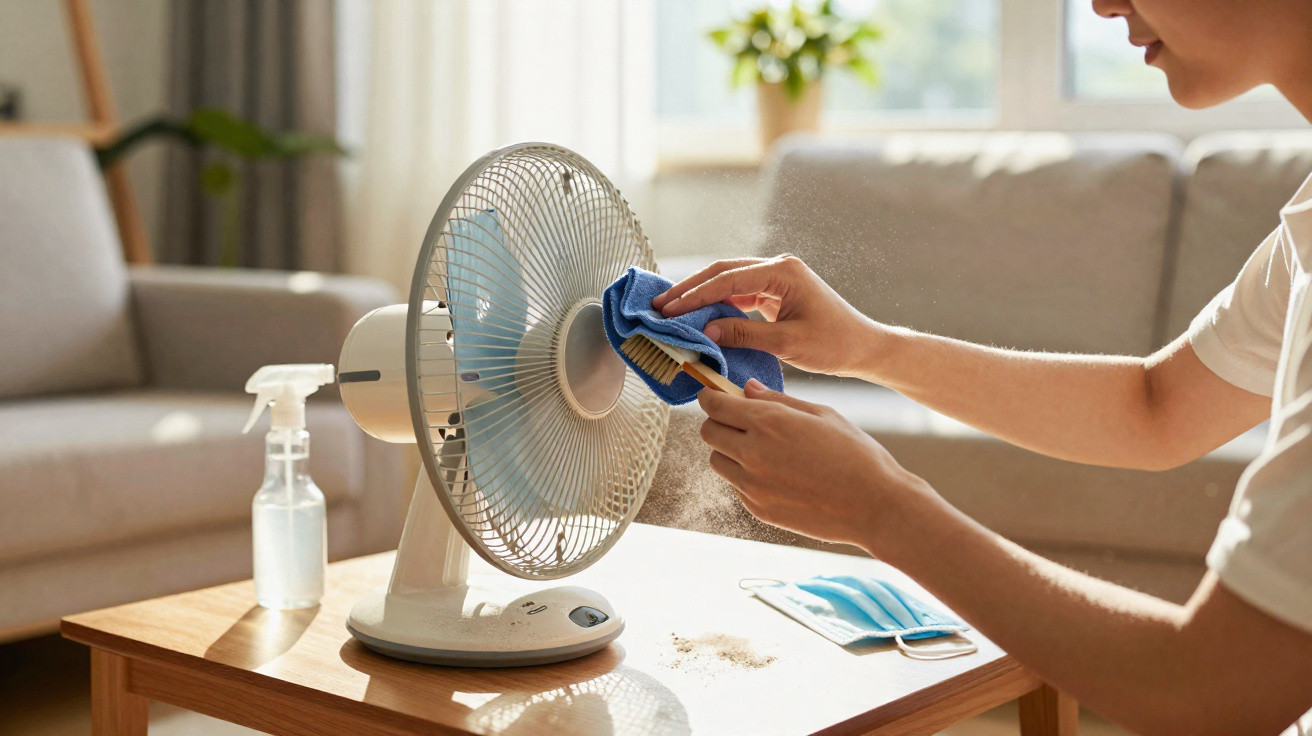
A fan that gathers dust may seem unusual when its blades are still fairly clean, yet the appliance constantly circulates air and airborne particles around the room. Some of this material becomes trapped in the grille, around the motor and in areas where the airflow slows down.
Why does a fan gather so much dust?
A fan does not create dust; it moves large volumes of air. As it does so, particles already present in the room can pass through the grille and settle on the appliance's internal surfaces, especially where the airflow meets obstructions.
Dust can also gradually build up on the blades and grille themselves. In rooms with more airborne particles - such as spaces near open windows, fabrics or busy walkways - the appliance is likely to collect more material.
What causes dust to collect in particular areas?
The front and rear grilles create numerous small surfaces that can hold onto particles. The motor and other internal parts may also gather dust because they are partly shielded from routine cleaning while receiving the air moved by the appliance.
Air speed affects where dust settles too. When the airflow changes direction or hits a surface, some particles can leave the air stream and remain there. For this reason, inspecting the propeller alone does not necessarily show how much dust is inside the equipment.
How can you clean a fan without spreading dirt?
Before cleaning it, switch off the appliance and unplug it from the mains. Remove the grille and detachable parts only if the model allows this, following the manufacturer's instructions. Built-up dust can be removed using a suitable cloth or the method stated in the manual.
Do not spray or pour water directly onto the motor or electrical components. Once cleaned, any washed parts must be completely dry before reassembly. Keeping both the grille and blades clean also limits the amount of particles left inside the appliance.
Who should pay closer attention to this care, and when?
Fans used every day, or fitted in particularly dusty rooms, need more frequent cleaning. Bedrooms, living rooms near windows and spaces with lots of fabrics may require extra attention, as particles remain airborne and are constantly moved around.
It is also worth checking how the appliance operates after cleaning. Unusual noises, vibrations, a burning smell or unexpected heating should not be addressed through household cleaning alone. In these situations, it is safer to stop using it and seek a technical assessment. This allows a fan that gathers dust to be kept clean without putting either the appliance or the user at risk.




Comments
No comments yet. Be the first to comment!
Leave a Comment