
A simple kitchen helper could change that.
Many households will recognise the problem: you only want to grab something quickly from the freezer compartment, but first have to battle through a thick layer of ice. The appliance hums more loudly, uses more electricity, and there is rarely time in day-to-day life for a major defrosting session. Over recent months, online forums and advice sites have been sharing a surprisingly straightforward idea: placing several layers of aluminium foil in the right areas of the freezer. It may sound like an internet myth, but there is a plausible reason behind it.
Why frost in the freezer compartment becomes an energy drain
Frost forms because of moisture in the air. Whenever the door is opened, warm, humid room air enters the appliance. That moisture condenses on the freezing-cold walls and turns to ice. Layer by layer, it builds into a dense coating of frost.
Even a few millimetres can increase electricity use:
- from around 2–3 millimetres, experts estimate 5–15% additional consumption
- at 1–2 centimetres, annual consumption can rise by 30–40%
A standard domestic freezer uses roughly 100 to 500 kWh of electricity per year, depending on its size and energy-efficiency rating. If it remains frosted over continuously, those figures can climb considerably. The motor has to run for longer to maintain around -18 °C. This affects not only household bills but, over time, the appliance itself.
“Even a thin layer of ice acts like a blanket over the cold – and makes the electricity bill grow.”
Anyone using a freezer without an automatic defrost function should defrost it every three to six months. In reality, many people keep putting that task off. This is where the aluminium foil trick comes in: frost will still form, but in a way that allows it to be removed in one easy step.
How aluminium foil in the freezer slows frost build-up
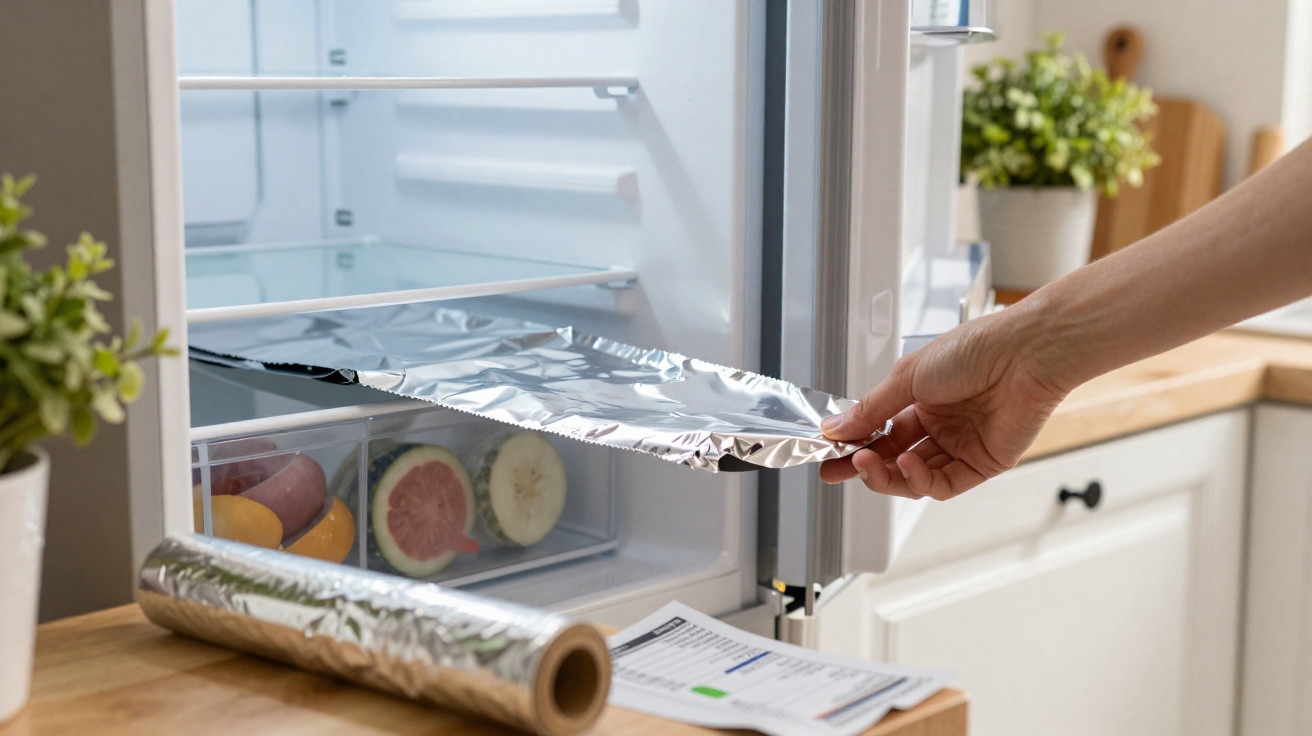
The approach is simple: line selected interior surfaces of the freezer with clean, dry aluminium foil. The foil creates a smooth, replaceable layer. Frost does not cling to it as firmly as it does to rough plastic, so it can be removed almost as one piece.
The basic process is as follows:
- Cut clean, dry aluminium foil to size.
- Press it flat against selected interior surfaces, such as the rear or side walls within compartments.
- When visible ice has accumulated on the foil, remove the foil together with the frost.
- Fit fresh foil and begin the cycle again.
This does not create a magical anti-ice barrier. The amount of moisture remains unchanged. Instead, the frost settles on a kind of removable lining rather than directly on the appliance’s actual wall.
“The foil works like a peel-away ice shield: lift the frost, remove the foil, and the surface is clear again.”
Where aluminium foil really belongs in the freezer compartment
Anyone trying this method should not simply cover the entire interior indiscriminately. Air circulation remains essential for keeping the temperature stable throughout the appliance. Certain areas must be left unobstructed.
Suitable surfaces for the foil
- smooth rear walls in individual compartments, where accessible
- sections of the internal side walls
- the bases of drawers or compartments, provided the foil lies flat
Do not cover:
- ventilation slots or air channels
- racks, baskets or shelves with numerous openings
- sensors or visible cooling coils
If in doubt, consult the instruction manual. Many manufacturers specify which areas must remain clear. If the manual warns against foil, covers or foreign objects inside the appliance, that warning also applies to aluminium foil.
Which appliances benefit from the trick
Not every model benefits to the same extent:
- Freezers with static cooling
These traditionally develop more frost. In these appliances, the foil can make a noticeable difference by allowing part of the ice layer to be removed quickly. - No Frost appliances
These models defrost themselves mechanically. Foil offers little benefit here and could, in the worst case, interfere with airflow. It is better to avoid it and follow the manufacturer’s guidance.
How much electricity can realistically be saved
Figures for the precise saving vary because every household uses its freezer differently. Broad estimates suggest that consistently frost-free interior walls could save 20 to 50 kWh per year. At current electricity prices, this often equates to several tens of pounds annually.
What matters most is not the foil itself, but the condition of the freezer compartment: the less frost there is, the closer consumption remains to the manufacturer’s stated figures. In homes where the appliance is always well stocked and opened frequently, the effect may be more noticeable than in single-person households with a small freezer box.
“Aluminium foil does not replace an efficient appliance, but it can help an existing one operate closer to its ideal performance.”
Health and aluminium foil: what can go near it – and what cannot
Many consumers are understandably cautious whenever aluminium is involved. With freezer-trick foil, it is placed on the walls rather than directly against food. This greatly reduces the risk of metal components transferring to food.
Health authorities repeatedly point out one issue: some foods can more readily release aluminium from foil. The most critical include:
- very salty foods, such as pickled fish or heavily seasoned marinades
- very acidic foods, such as citrus fruits, tomato sauce or vinegar-based marinades
Such products should never be stored in the freezer wrapped directly in aluminium foil. Better choices include:
- sturdy plastic containers with lids
- freezer bags with clips or zip seals
- glass containers with plastic lids that are suitable for freezing
Food stored in ordinary containers or bags can safely be placed near the anti-frost foil. Direct contact between food and the wall lining is not needed for the method to work.
How to reduce frost formation further
Aluminium foil can make everyday life easier, but it is no substitute for good habits. To keep frost build-up permanently low, follow a few straightforward routines:
- Open and close the door quickly
Decide what you need before opening it rather than searching for a long time. - Allow food to cool first
Hot food placed in the freezer produces steam, which then creates fresh frost. - Seal packaging properly
Open bags and containers release moisture into the appliance. - Check the rubber seals
Worn or dirty seals allow warm room air to enter continuously. - Set a sensible temperature
In most cases, -18 °C is sufficient. Setting a much colder temperature increases electricity use without improving storage life.
Combined with the foil method, these measures can mean that a full, labour-intensive defrost is needed only rarely. Rather than putting pans of hot water into the freezer for hours, it is often enough to replace a few pieces of foil.
When the aluminium foil trick is not a good idea
There are several situations in which lining the freezer interior is best avoided:
- The appliance is still under warranty and the manufacturer explicitly prohibits foil or coverings inside it.
- The foil bulges so much that compartments or drawers no longer close properly.
- Sharp edges develop that could cause cuts or damage plastic components.
- The foil lies directly on visible heating or cooling coils in a particular model.
In these cases, conventional methods are safer: defrost regularly, remove frost with a plastic scraper, and ensure good air circulation. It is also worth checking the energy-efficiency rating. Sometimes a new appliance saves more electricity than every trick can achieve with an older model.
Using aluminium foil cleverly – beyond the freezer compartment
Anyone who already has a roll of foil in the kitchen can use it sensibly elsewhere without placing it directly against food. Everyday examples include:
- lining baking trays with foil to prevent stubborn baked-on mess
- placing it beneath baking tins when batter is likely to overflow
- using it as a protective liner in the oven, as long as ventilation slots remain clear
It remains important not to throw foil away immediately after one use if it is still clean. In the freezer compartment especially, it can be reused several times, provided thick ice layers are not stuck to it. This conserves resources and makes the electricity-saving trick more sustainable.
Anyone wishing to limit their use of aluminium can reserve it for situations where other options are impractical – such as when flexible, thin and easily shaped surfaces are required. The freezer compartment is exactly such a case: hardly any other material can be fitted as cheaply and simply as a removable “ice shield”.





Comments
No comments yet. Be the first to comment!
Leave a Comment