
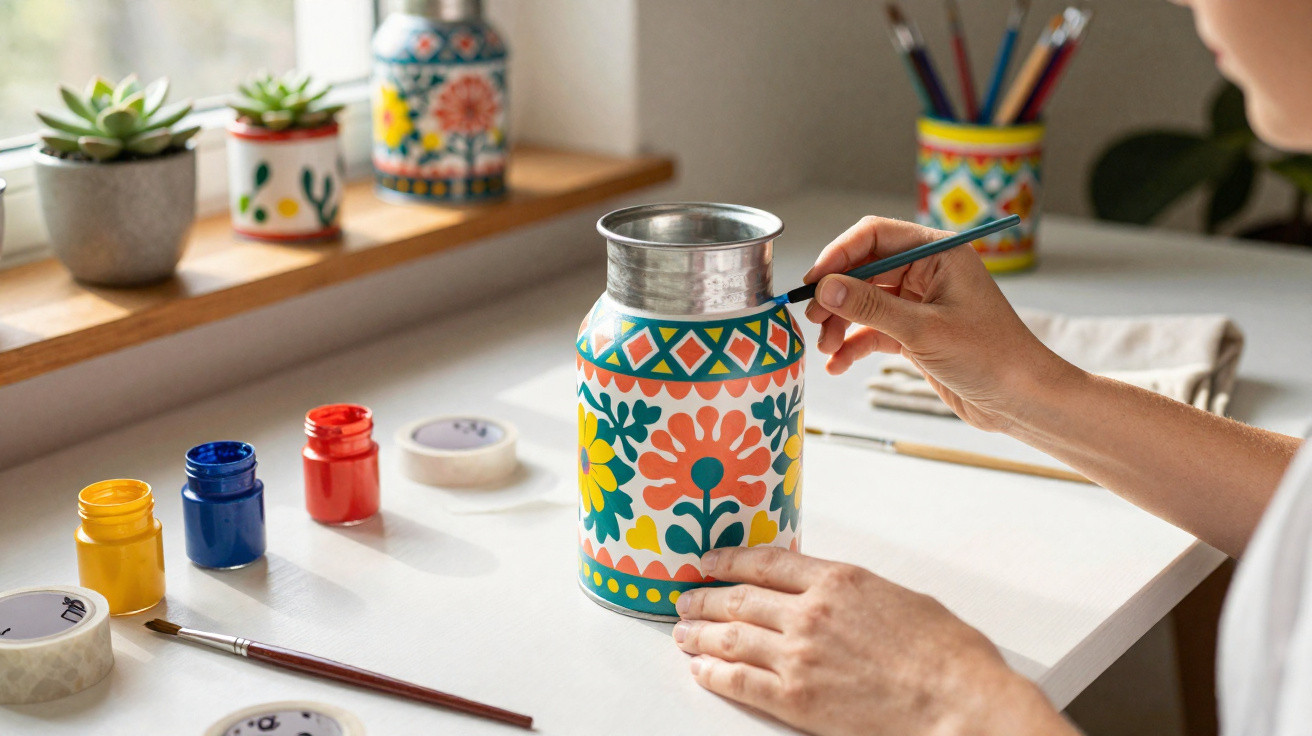
Many people throw away metal tins after everyday use without recognising their decorative potential. With straightforward craft techniques, empty containers can become refined organisers, enhancing interior spaces through plenty of creativity and conscious everyday saving.
Why reuse empty tins in home décor?
Reusing tins at home cuts the amount of solid waste discarded and supports a sustainable lifestyle. Customising used packaging also encourages imagination, making it possible to produce practical pieces that convey the residents’ identity in every personalised detail.
Turning basic materials into decorative objects prevents spending on expensive items from conventional shops. This at-home refresh improves rooms in a practical way and provides tailored solutions, delivering meaningful savings while enriching the visual aesthetics of any family space.
How can Mexican style transform milk tins?
Traditional Mexican craft techniques use vivid colours and rustic textures to produce unique pieces that impress any visitor… Read more
How should tins be prepared before customisation?
The first step is to wash the metal thoroughly with warm water and mild washing-up liquid, removing all impurities. Next, carefully dry away all moisture with a soft cloth, ensuring the surface is completely clean so the materials will adhere properly.
Another essential precaution is sanding the sharp inner edges to avoid accidents while handling the tin. Applying a protective coat of primer helps prevent early rust, leaving the container ready to take specialist paints or glues with ease.
Below is a video from the Eu Fiz Tu Faz YouTube channel that explores the points covered in this topic in greater depth:
Which items are essential for transforming metal containers?
Choosing suitable supplies ensures that home-made craftwork has a durable, professional finish. Acrylic paints make even coverage easier, while instant adhesives and hot glue provide strong fixing for decorative embellishments on the metal base.
Additional materials, including cork strips, natural-fibre cord and small wooden supports, add a sophisticated finish. These elements bring a welcoming touch to each creation, combining rustic textures that work perfectly with the rigid structure of reused tins.
Essential craft kit
Basic items for customisation
Gather the following materials to transform the containers:
- Acrylic paint or multi-surface spray paint to cover the metal surface;
- Hot glue and instant adhesive for long-lasting attachment of accessories;
- Cork tape, sisal rope and fabric offcuts for decorative finishing.
Which practical projects are easy to make?
Creating elegant planters is among the most popular options for anyone growing foliage plants and succulents. With small wooden feet and cork details, the plant pot takes on distinctive elegance and becomes a visual highlight on tables or sideboards.
Another appealing option is making utensil holders for kitchen worktops, studios or offices. Finishing them with rope and wooden pegs keeps objects in order, adding plenty of practicality to the daily routine in any setting.
Among the most versatile projects for reusing these items are:
- A hanging planter or one with a wooden tripod base for ornamental plants;
- A rustic sisal-covered organiser for brushes, cutlery or pens;
- A decorative container with a wood-effect pattern for storing small items.
How can customised pieces complement each room?
Incorporating new pieces into a room’s arrangement calls for attention to the dominant colour palette. Earthy shades and natural textures pair particularly well with rustic or contemporary styles, creating a pleasing visual balance between furniture and ornaments.
Placing the containers across shelves, bookcases and coffee tables brings movement and personality to the home. Using these recyclable items thoughtfully refreshes the domestic setting with subtlety, ensuring a welcoming, charming and highly original environment.



Comments
No comments yet. Be the first to comment!
Leave a Comment