
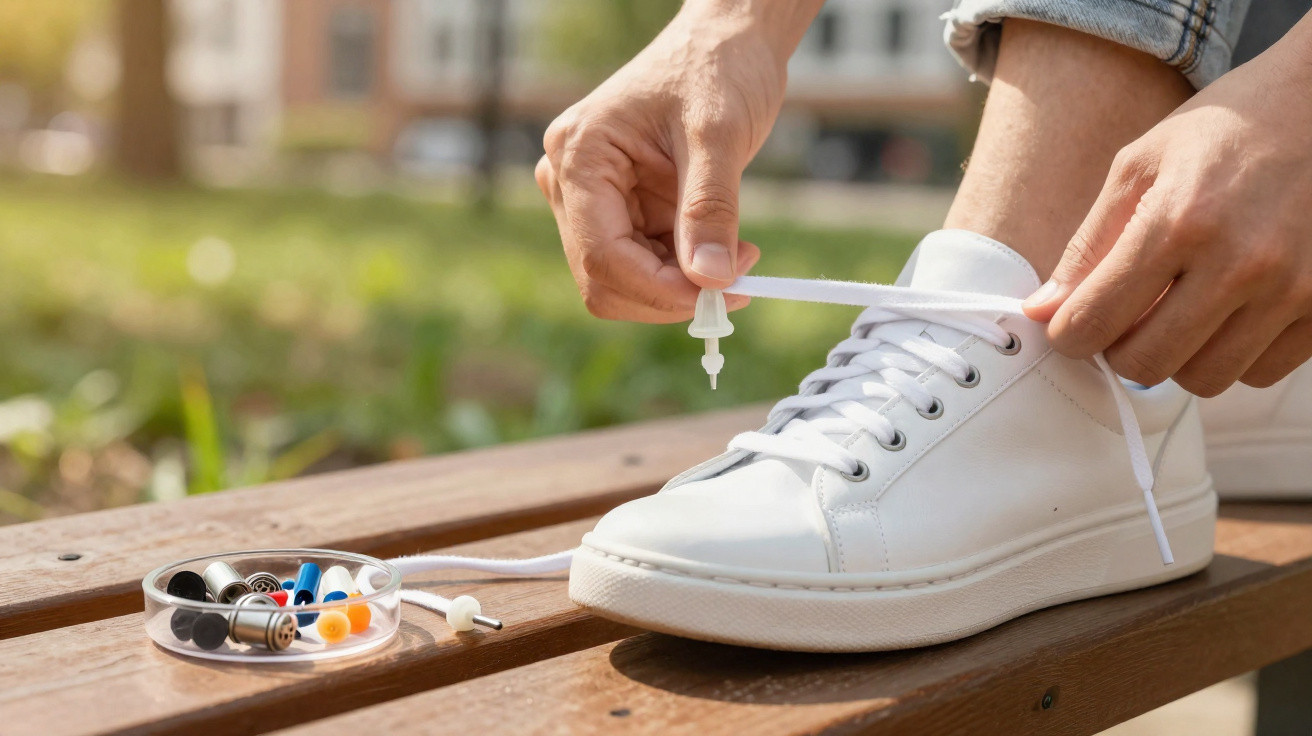
The small rigid piece at the end of a shoelace is called an aglet, also known as an aiglet or a tip. Although it is unobtrusive, it stops the fibres from coming apart and makes the shoelace easier to thread through eyelets.
What is the plastic tip of a shoelace called?
The name most closely associated with this tip is aglet, used for the small covering fitted to either end of a shoelace, cable or cord. In everyday use, it may also be called an aiglet.
In practice, many people simply call it a tip, as it sits precisely at the end of the cord. Wikipedia also records alternatives such as lace tip, reinforcing that different names can refer to the same basic function in finishing a shoelace.
The most common terms help to describe the component:
- Aglet: the recognised name for the covering placed on the end of a shoelace.
- Aiglet: a widely used term for the small rigid end.
- Tip: a popular name based on the part’s position on the cord.
- Lace tip: another variation for the same protected end.
- Use: to make it easier to pass a shoelace through eyelets and similar guides.
Where does the name aiglet come from?
The term can be traced to the Old French aiguillette, a diminutive of aiguille, a word connected with the idea of a needle. That origin suits the item’s appearance, since the end of a shoelace acts like a small needle.
Its etymological route also extends to the Latin acus, meaning needle, which helps explain why the names are so closely related. The word aiglet itself is regarded as a diminutive, referring to a fine point fitted to a cord.
Why does an aglet stop a shoelace from fraying?
An aglet’s most important role is to keep the fibres together. Without this covering, the fabric ends are likely to open up, lose their firmness and become harder to manage, speeding up both visual and functional wear.
Small component, crucial role
The rigid end protects, tapers and strengthens the shoelace.
An aglet keeps the fibres grouped together, preventing the shoelace from fraying at its end.
By making the end firmer and narrower, it improves handling and helps it pass through eyelets.
As well as holding the fibres in place, the component tapers the end of the shoelace. Its narrow shape makes it easier to handle and allows the tip to go through eyelets or similar guides without bending, snagging or losing its shape in daily use.
Without a lace tip, the following issues can occur:
- The fibres at the end become looser and more uneven.
- The shoelace loses firmness in the area used most often.
- Threading it through eyelets becomes more difficult.
- The end can fray more easily.
Which materials have been used to make aglets?
Today, aglets are mainly made from plastic, a lightweight material that is easy to mould. However, descriptions of the component also include metal versions, showing that the finish can differ according to use, cost and strength.
In earlier periods, aglets were also made from glass, stone and decorated metals. Some used precious materials such as silver, particularly when they served a decorative purpose on garments, bows and cords used to fasten clothing.
Examples of materials mentioned by the source include:
- Plastic, common on modern shoelaces.
- Metal, including examples such as copper and bronze.
- Glass and stone, used in earlier periods.
- Paper and glue, mentioned during the Great Depression.
Why does the lack of an aglet affect a shoelace?
The absence of an aglet turns a small detail into a practical problem, much like other functional details found in everyday objects. Without a tip, the shoelace loses definition at its end and takes more effort to pass through the holes.
Once the fibres come loose, the shoelace may become wider, uneven and difficult to rethread. An aglet is therefore more than a finishing detail: it protects durability, makes everyday use easier and preserves the cord’s structure.





Comments
No comments yet. Be the first to comment!
Leave a Comment