
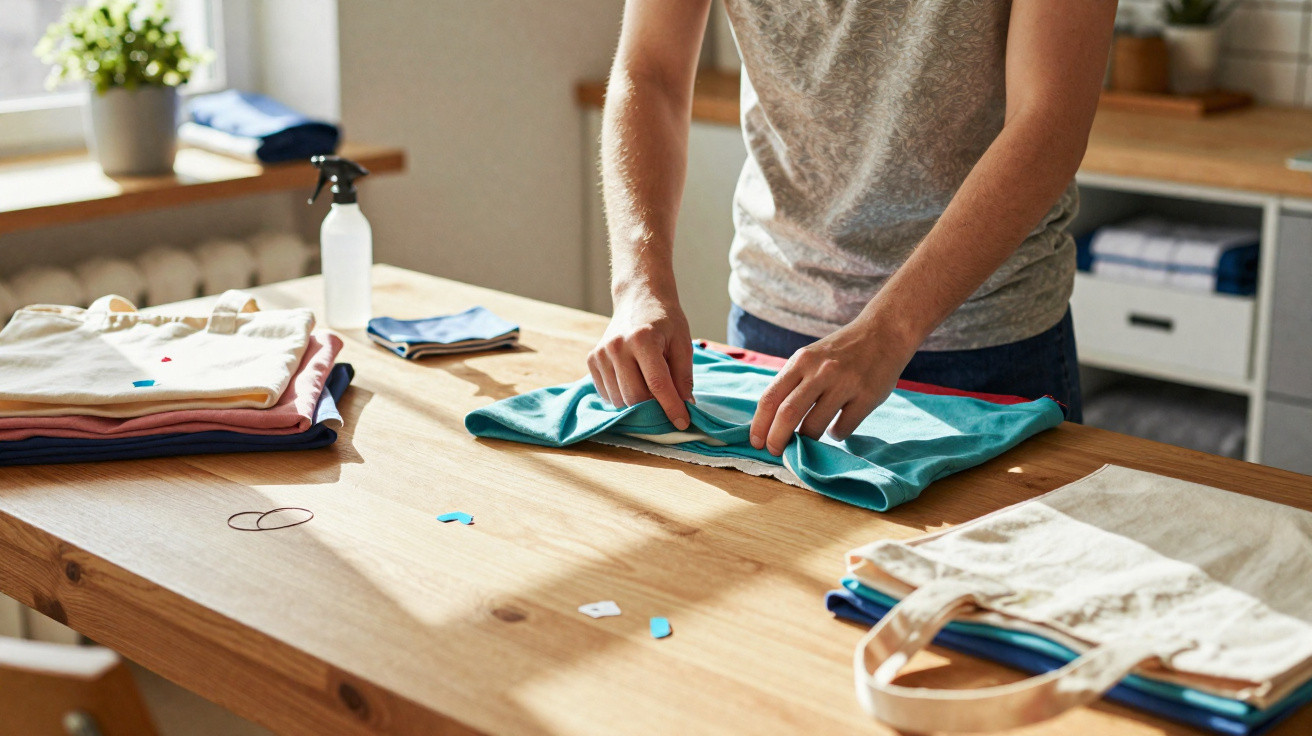
Reusing old T-shirts has become a practical option for anyone looking to reduce clothing waste, save money and make useful everyday items. With only a few materials and no advanced sewing skills, forgotten fabric can be turned into cleaning cloths, bags and household organisers.
Why is it worth reusing old T-shirts at home?
Giving old T-shirts a new purpose cuts spending and extends the useful life of items already in the wardrobe. Rather than buying new household essentials, you can make use of T-shirts, especially cotton ones, as they tend to be soft, absorbent and easy to cut.
The jersey fabric used in these garments does not usually fray easily, so it can be cut freely without needing an immediate finish. With just scissors and, where needed, a needle and thread for simple adjustments, you can create cloths, linings, strips and even small covers in a few steps.
How to turn an old T-shirt into a multipurpose cleaning cloth
Turning stained or torn T-shirts into multipurpose cloths is one of the easiest ways to reuse them. These cloths can be used to clean furniture, glass, shoes, cars and general surfaces, replacing disposable wipes or new towels.
- Lay the T-shirt flat on a level surface, such as a table or worktop.
- Use scissors to remove the sleeves and neckline, keeping only the sections in good condition.
- Cut open the side seams to create a larger rectangle of fabric.
- Cut this rectangle into smaller squares or rectangles, according to the size wanted for each cloth.
- Fold the pieces and keep them in a cupboard or designated box for cleaning tasks.
To keep the routine better organised, separate the cloths by colour or size according to their purpose. This helps prevent unwanted cross-use, such as using the same cloth in the bathroom and kitchen.
- Light-coloured cloths: suitable for the kitchen and for cleaning surfaces that are less likely to stain.
- Dark-coloured cloths: ideal for the bathroom, outdoor areas and heavier dirt.
- Smaller pieces: useful for polishing shoes, cleaning screens and reaching awkward details.
How to make a no-sew T-shirt bag for everyday use
A medium or large T-shirt can become a reusable bag in just a few minutes, without a sewing machine. It is a useful option for small shopping trips, carrying a packed lunch, taking books out or organising toys and clothes at home.
- Choose a T-shirt made from a more durable fabric.
- Cut away the sleeves along the armhole outline to create the handles.
- Remove the neckline, widening the top opening as you would for a shopping bag.
- Make vertical cuts around 3 to 4 centimetres long along the hem to form strips.
- Tie the front strips to the corresponding back strips, making firm knots to close the base.
For extra strength, tie a second knot or braid some of the strips so that heavier items cannot fall through. It is also worth testing the bag with increasing weight, allowing you to adjust the knots and avoid surprises on its first outing.
How to use old T-shirts to organise and decorate the home
T-shirts that remain in better condition can be adapted into storage solutions and small decorative details. Jersey fabric can be used to make covers, baskets, bands and ties that keep cables, rugs and assorted objects in place, while making use of appealing colours and prints.
- Simple cushion cover: cut the T-shirt below the sleeves, leave the hem closed and close the top with hand stitches or tied strips, inserting the filling through a side opening.
- Tying strips: cut the garment into horizontal bands to create jersey ties for securing cables, fabric rolls or rolled-up rugs.
- Braided-strip basket: cut several strips, braid them in groups of three, then sew or tie the cords together to make the base and sides of a small basket.
Before starting any project, wash and dry the T-shirt thoroughly, and use sharp scissors intended for fabric. Sorting garments by thickness and jersey type is also helpful: thicker fabrics work best for bags and simple rugs, while thinner jersey is ideal for cloths, bands and organising details.


Comments
No comments yet. Be the first to comment!
Leave a Comment