
Social media has turned home décor into an almost endless source of inspiration. Immaculate kitchens, minimalist living rooms and bedrooms that look as though they belong in a magazine gather saves and become benchmarks for people wanting to refresh their spaces. The issue arises when inspiration turns into imitation.
A home that looks attractive on screen does not always work in real life. A design suited to one person’s routine may be entirely incompatible with another family’s habits. The number of residents, whether there are children or pets, how often meals are cooked and even the volume of belongings stored all directly affect the choices made for each room.
“Before focusing on aesthetics alone, it is important to understand how that space will be used day to day. A home must suit the routine of the people who live in it. A reference can be a starting point, but it needs to be adapted to the reality of each space and each family,” says Nayara Giroleti, a décor specialist and product designer at Madesa, a furniture manufacturer in Brazil.
To support anyone planning to update their home, the specialist outlines seven points to consider before trying to recreate spaces seen online without taking their own routine into account.
1. Choose furniture you like, but pay attention to dimensions
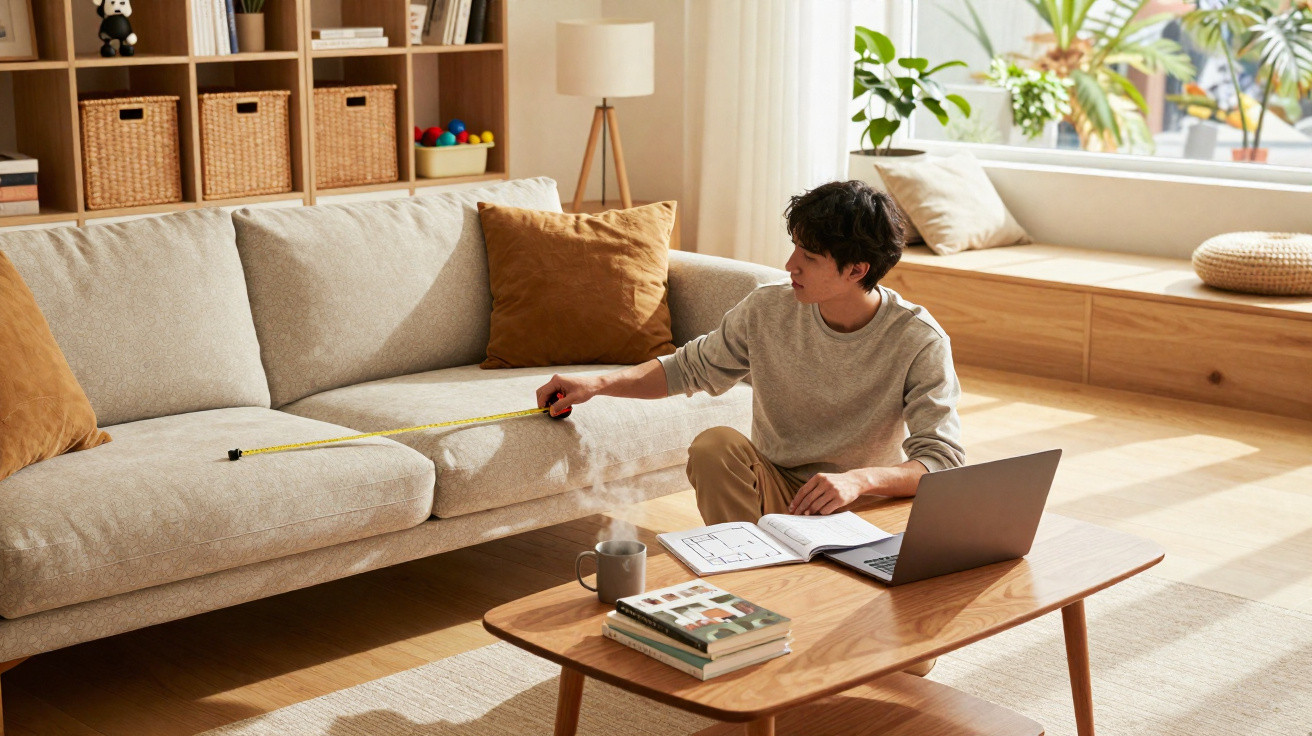
A sofa, cupboard or kitchen set may appear proportionate in an image but take over a smaller room completely. Before buying, it is essential to measure walls, openings such as doors and windows, and circulation areas. It is also worth marking out on the floor the space the furniture will occupy. This simple trick helps show whether the route through the room will remain comfortable.
2. Choose furniture that fits your routine
Completely clear worktops and a small number of cupboards work well in photographs. In everyday life, however, anyone who cooks daily, has children or owns lots of utensils needs room to keep things organised. Copying a minimalist kitchen without allowing for storage can leave the space filled with scattered objects only days after moving in.
3. Combine appearance with functionality
Surfaces, finishes and arrangements should also be selected according to the time available for looking after the home. Spaces that demand constant tidying or frequent maintenance can become impractical for people who spend the day away. Décor should support a routine rather than add another task to the diary.
4. Consider who actually uses the space
A living room designed for entertaining friends has different requirements from one used every day for watching television. The same applies to kitchens, bedrooms and home offices. Before copying a reference, it is important to consider who uses that space, how often they use it and which activities take place there.
5. Consider aesthetics, but do not sacrifice storage space
Closed cupboards do not always take centre stage in inspirational photographs, yet they are valuable allies in keeping a home organised. Cutting back on storage simply to recreate a lighter-looking style can produce the opposite result: belongings without a defined place and rooms that feel visually cluttered.
6. Create the perfect space in your own time
The eagerness to see a finished home can result in impulse purchases. As well as putting pressure on the budget, this can increase the chance of investing in furniture and items that do not work together in daily life. Creating rooms in stages makes it easier to understand what the home needs and make more suitable choices.
One option is to begin with essential modules and add new pieces gradually, as the routine becomes clearer and the plan develops. This spreads the investment over time and ensures every purchase works with the overall scheme, preventing waste.
7. A home changes with its residents
A routine is not fixed. Working from home may become necessary, the family may grow, and new habits can alter how rooms are used. For this reason, functional furniture and solutions that allow spaces to be reorganised help a home adapt to these changes.
“A functional home does not have to sacrifice aesthetics. The balance lies in identifying references that suit the resident’s style and adapting them to everyday needs. Ultimately, the best space is not the one that produces the prettiest photograph, but the one that works when the camera is switched off,” Nayara Giroleti adds.
By Amanda Martins



Comments
No comments yet. Be the first to comment!
Leave a Comment