
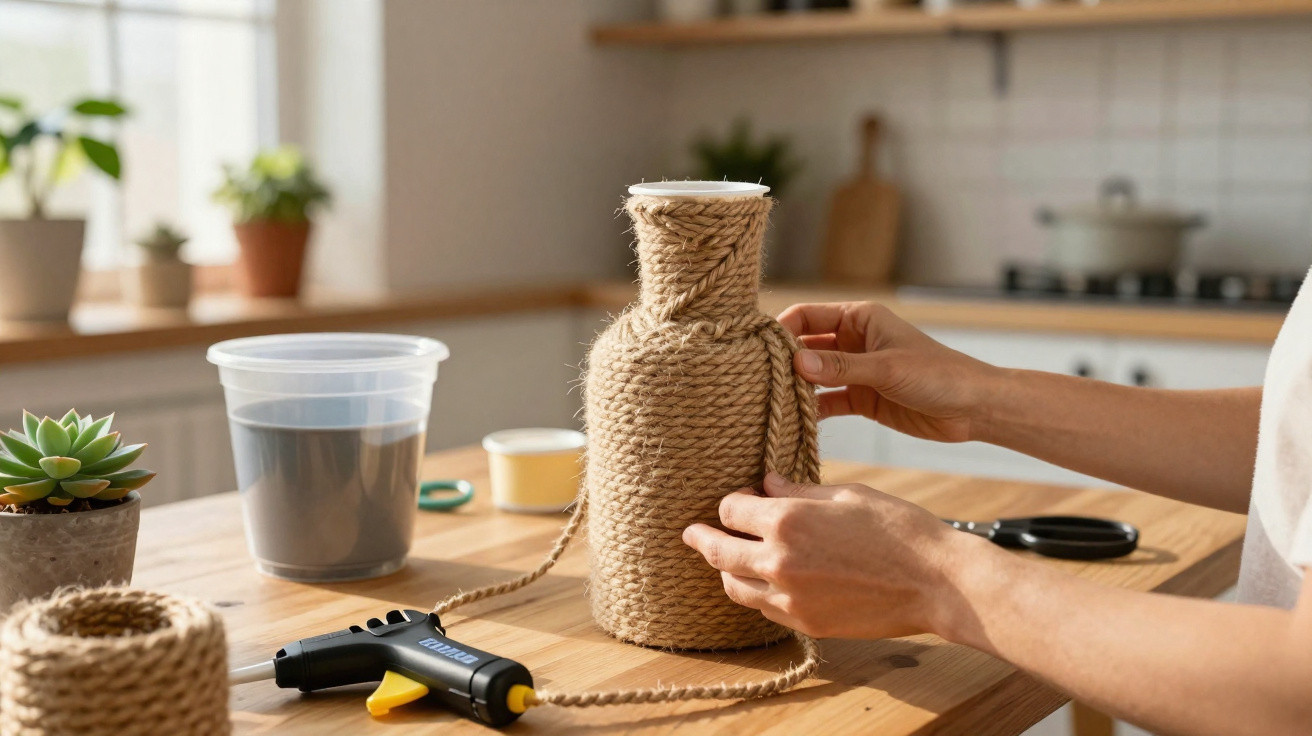
Almost everyone has an empty margarine tub waiting by the kitchen sink for the right destination. Before putting it in the bin or recycling, take a moment: using a few items already at home, this plastic container can become a striking ornament for shelves, tables and windowsills, without looking remotely like its former self.
Why a margarine tub is so effective for crafts
A margarine tub offers practical benefits that many other plastic containers lack. It is sturdy, lightweight and has walls thick enough to paint, while its wide opening makes decorating easy. Its gently tapered cylindrical shape is similar to plant pots and organisers that cost far more when bought ready-made from homeware shops.
The key is to remove every trace of its food-packaging appearance. Careful cleaning, a base coat of paint and an external texture will achieve this. Done properly, no one will be able to tell where the finished piece came from.
- Alcohol or mild washing-up liquid: essential for fully degreasing the surface before painting, as grease residue can cause the colour layer to lift
- Acrylic paint or spray paint: neutral shades such as off-white, beige, sand, muted green or terracotta conceal the plastic more effectively and suit a wider range of interiors
- Sisal or jute rope: wrapping it around the outside completely changes the tub's texture and creates a charming handmade finish
- Hot glue or multipurpose adhesive: used to attach rope, dried flowers, twigs or any other decorative feature to the outer surface
- Dried flowers, branches or a small plant: the final addition that turns the item into a complete ornament, without placing a soil-filled plant pot directly in the plastic
Steps to make a margarine tub stop looking like packaging
First, wash the tub thoroughly with hot water and washing-up liquid, removing the entire label. Next, wipe alcohol over the whole exterior with a cloth or cotton pad to remove all remaining grease. This stage cannot be skipped: if any grease remains, the paint will not adhere and will peel within days. Lightly rubbing the outside with fine sandpaper can also help the paint grip, particularly on smoother plastics.
Once the tub is dry and clean, apply a first coat of neutral-coloured acrylic paint. Tubs covered with lots of writing or colourful images may require two coats to cover everything evenly. Allow each coat to dry completely before deciding whether another application is needed.
Sisal rope texture: the finish that changes everything
Once the paint has dried, wrapping the outside of the tub in sisal or jute rope is the detail that makes the greatest difference to the final look. It is straightforward: run a line of hot glue around the base and secure the rope's end. Wind it around row by row, keeping every turn tight against the previous one and applying glue to small sections at a time. Continue to the preferred height or cover the whole exterior.
Using the tub as a planter without damaging the plastic
Never put soil directly into the decorated tub.
The best way to use a margarine tub as a planter is to place a smaller pot, already holding the plant and its growing medium, inside it. This keeps moisture from the soil contained in the inner pot, preventing it from coming into direct contact with the painted plastic. The margarine tub then acts as an external decorative cover and can be replaced or washed without disturbing the plant.
Succulents and cacti are the best options for this purpose because they need little watering and create minimal moisture. Dried flowers or decorative branches also look excellent, removing any concern about water altogether. In spaces such as living rooms and home offices, where appearance matters greatly, the dried-flower version is the most elegant and longest-lasting choice.
If rope is not to your taste, apply a second coat in a shade different from the base colour instead. Use a dry sponge to create a textured effect. This can mimic the look of ceramic or clay and works especially well in rustic or boho décor.
Other creative uses beyond a planter
A transformed margarine tub does not need to hold a plant to work as an ornament. Brush holders and pencil pots are obvious, highly practical choices for desks. In homes with children, a group of tubs in different heights and colours can decorate a study corner in a playful, affordable way. It can also be used to hold lipsticks and make-up accessories on a dressing table.
Keeping decorative details simple is what makes the result attractive. The most common mistake in creative recycling projects is overdoing it: too many ribbons, too much glitter and too many textures at once make the item resemble a school craft project rather than a genuine decorative object. One well-chosen colour, sisal rope and a dried flower are already enough to create something that suits any room.
A recycling precaution many people overlook
Once it has been painted and decorated with glue, paint and adhesives, a margarine tub must no longer be used to store food. The process turns it into a decorative item, and the products applied to its surface are not suitable for contact with food. Keep this simple rule in mind and enjoy the ornament without concern.
Creative recycling begins with perspective: looking at an empty tub and seeing the ornament it could become. If this idea inspired you, share it with anyone who also enjoys giving new life to items that would otherwise be thrown away.



Comments
No comments yet. Be the first to comment!
Leave a Comment