
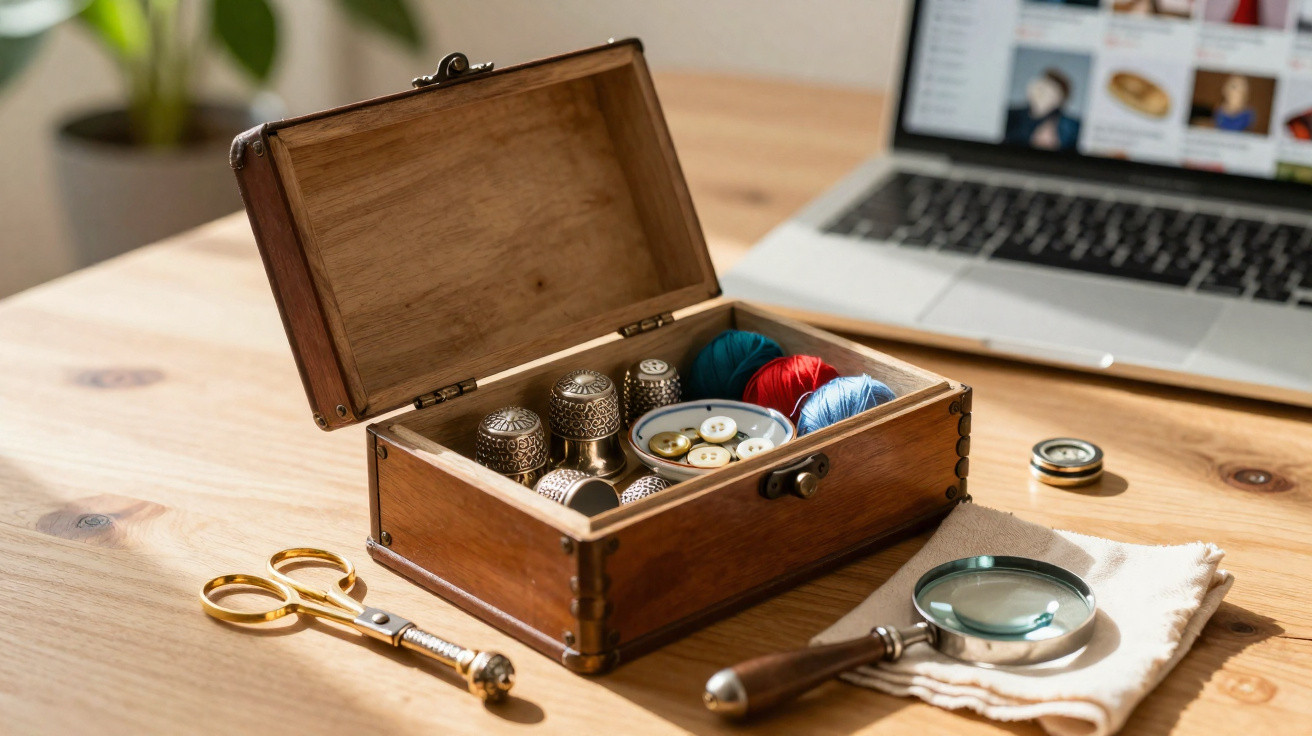
What was once dismissed as an everyday household item or “Grandma’s clutter” is increasingly becoming a sought-after collectible. Old sewing boxes, wooden chests filled with sewing accessories and complete needlework boxes belong to a niche where prices have risen noticeably in recent years. The boom in handicrafts, retro furniture and vintage fashion is having a direct effect on this small market segment.
Why old sewing boxes are suddenly worth money
The global market for vintage fashion and accessories is expanding rapidly and has already reached a value of tens of billions of euros. Many related areas are benefiting too: historic sewing accessories, decorative small furniture and complete needlework boxes. Items that spent decades in a cellar or loft are now attracting the attention of collectors, design enthusiasts and hobby dressmakers.
Several factors are pushing up prices:
- The decline of traditional crafts means finely made scissors and thimbles are now rarely produced to this standard.
- Premium materials including solid wood, silver, brass, walnut and rosewood.
- The popular mid-century look of the 1950s through to the 1970s.
- Demand from vintage shops, interior professionals and online collectors.
“The supposedly ‘odds-and-ends box’ has become a collecting category in its own right, where small details can determine whether an item fetches a three-figure sum.”
Elegant solid-wood needlework boxes, ornamental silver thimbles and delicately designed embroidery scissors in particular have made their way into auction catalogues and specialist online shops. Anyone inheriting such an item may not recognise its value at first glance.
How to identify a high-quality needlework chest
You do not need to be a cabinet maker to tell a well-made piece from mass-produced stock. A close inspection will often be enough.
Shape and construction of the sewing box
The widely seen “needlework chest” has fold-out compartments arranged in an accordion-style design. Typical features include:
- Several stacked boxes that fan out to the sides.
- A base with legs, sometimes folding.
- A wooden or metal carrying handle.
Models dating from the 1950s and 1960s often feature:
- Slim, angled legs known as compass legs.
- Warm, honey-coloured varnish.
- Cleanly defined and relatively simple shapes.
There are also compact boxes designed to sit on a table, as well as small chests with drawers. Pieces that resemble miniature furniture tend to achieve better prices in the homeware and décor market.
Materials, workmanship and mechanisms
Material is a key consideration. Solid wood almost always commands more than chipboard or plywood. Commonly used woods include:
- Beech – pale, fine-grained and widely used.
- Walnut – darker, more refined and marked by distinctive grain.
- Rosewood – highly decorative and found on higher-quality pieces.
- Oak – less common, but sturdy and heavy.
When opening the compartments, look closely at the details: do the joints move smoothly without creaking? Are the hinges weighty and robust, or thin and cheaply made? Dovetail joints are an indication of serious craftsmanship.
“Smooth mechanisms, firmly moving joints and neat wood joints are clear signs of quality – and therefore of stronger resale value.”
The real treasures are inside: sewing accessories with collector value
Many people underestimate the contents, concentrating solely on the box itself. Yet it is often the sewing accessories that hold the most surprising value.
Thimbles, scissors and more – small objects, wide price ranges
Solid-silver thimbles from the 19th or early 20th century often sell for between €50 and €300. The deciding factors are:
- Condition of preservation, with no deep dents and little wear.
- Decorative or ornamental detailing.
- Hallmarks or well-known silversmiths.
Embroidery and tailor’s scissors made from forged steel, especially those shaped as birds or storks, are popular with handicraft enthusiasts. A recognised maker’s name such as “Nogent” can increase the value substantially. Even modern models from this brand commonly sell for two-figure sums, providing a useful guide for older examples.
Other accessories may also be of interest:
- Tape measures with embossed brass cases.
- Needle books with graphics in good condition.
- Tin pin boxes carrying advertisements for historic brands.
- Mother-of-pearl or bone cases.
Price ranges for boxes and accessories
| Item | Typical range | Note |
|---|---|---|
| Needlework chest with legs (1960s) | €80–150 | Well-kept condition, fully functional |
| Decorative design version | €160–250 | Sought after in the interiors market |
| Cardboard or velvet box (c. 1930s) | €20–40 | More suitable for beginners |
| Woven basket | €40–60 | Rustic appearance, country-house style |
| Silver thimble | €50–300 | Depends on hallmark and decorative work |
| High-quality embroidery scissors | from around €30 | A maker’s mark increases value |
In individual cases, it can be worthwhile selling the box and its accessories separately. Collectors may pay considerably more for specific tools than they would if these were lost anonymously among the contents of a full chest.
How to check silver, hallmarks and brands
Many people are unsure whether an item is genuinely made of precious metal or merely looks silver-coloured. Two straightforward checks can help.
Magnet, hallmark and magnifying glass
A small household magnet is enough for an initial test: silver is not magnetic. If the magnet is attracted to the item, it is more likely to be steel or another alloy.
Next, look for tiny symbols, numbers or letters. Thimbles, scissors, cases and tape measures often bear hallmarks that reveal metal purity or the manufacturer. A basic magnifying glass makes these easier to identify.
Brand names on cutting tools, particularly those from traditional cutlery-making towns, improve the chances of achieving an above-average price. If uncertain, you can post photographs in collector forums or approach an auction specialist directly.
Preparing and selling: where old sewing boxes sell best
Before placing an advertisement online, a good piece needs a little attention – but handle it carefully.
Cleaning without reducing value
Avoid treating metal components with harsh polishes. They remove the patina and fine surface details that collectors particularly value. A softer approach is to use a soft cloth and a little white toothpaste. Rinse briefly with water afterwards and dry immediately and thoroughly.
For wood, use an equal-parts mixture of linseed oil and white spirit substitute. Apply it sparingly, allow it to soak in, then wipe away any excess oil. This freshens the surface without completely removing the old finish or its characteristic signs of age.
“The more original a collectible remains, the better. Over-restored sewing boxes quickly lose their character – and with it, their price.”
Choosing the right selling platform and timing
Major classified-advertising sites, online marketplaces for home accessories and digital car-boot-sale platforms are sufficient for sound but unexceptional pieces. They reach hobby sewers, retro enthusiasts and younger households looking for a distinctive furniture item.
Especially unusual needlework chests, silver thimbles with rare hallmarks or complete sets in their original box are suitable candidates for auction houses or specialist dealers. These outlets attract collectors with specific wants and the corresponding budget.
Good selling periods are before Christmas, when many people are looking for unusual gifts, and in spring, when renovations and redecorating projects begin. Setting a slightly higher initial price leaves room for negotiation. If there is no interest, it can be reduced gradually.
What is often overlooked when clearing out
Anyone clearing an old flat or a grandparent’s house will quickly come across sewing baskets, boxes and loose tins. Common pitfalls include:
- Silver items are mistaken for costume jewellery and thrown into general waste.
- Individual tools are given away separately, even though they are much more compelling as a set.
- Original packaging goes into the paper recycling bin, despite adding value.
A systematic approach helps: inspect everything first, sort it roughly, then research it or seek advice. Photographs of hallmarks, overall images of the boxes and close-ups of the mechanisms provide a sound basis for any appraisal.
Handicrafts, sustainability and why demand is likely to remain
The trend is moving away from disposable products and towards long-lasting, repairable possessions. Sewing boxes symbolise this shift: sewing or mending extends the life of clothing. Vintage furniture and accessories also fit effortlessly into modern interiors, from clean Scandinavian styling to colourful boho combinations.
At the same time, old sewing boxes tell stories. They recall family rituals and evenings spent sewing on buttons or repairing trousers. Many buyers are paying not only for the wood, metal and contents, but for precisely that feeling. Owners should therefore take a second look before sending an apparently dusty box to the tip.
Those who take the time to find hallmarks, check materials and assess condition realistically can benefit twice over: through the sale proceeds, and through the satisfaction of placing a piece of craft history in new hands that will appreciate it.

Comments
No comments yet. Be the first to comment!
Leave a Comment