
The best digital cameras available can open their shutters for roughly one four-thousandth of a second to take a photograph.
Capturing atomic activity, however, requires a shutter that operates vastly more quickly.
A trillionth-second shutter for dynamic disorder
In 2023, scientists presented a method for producing a shutter speed of just one trillionth of a second - 250 million times faster than those digital cameras. It can therefore record an especially significant feature of materials science: dynamic disorder.
In simple terms, dynamic disorder occurs when groups of atoms shift and move within a material in particular ways over a period of time, perhaps in response to a vibration or a change in temperature. Scientists do not yet fully understand the phenomenon, despite its importance to the properties and reactions of materials.
This exceptionally rapid shutter system offers far greater insight into dynamic disorder. Its creators call the invention the variable shutter atomic pair distribution function, shortened to vsPDF.
"It's only with this new vsPDF tool that we can really see this side of materials," said materials scientist Simon Billinge from Columbia University in New York.
"With this technique, we'll be able to watch a material and see which atoms are in the dance and which are sitting it out."
A higher shutter speed provides a more exact moment in time, making it useful for fast-moving subjects such as rapidly vibrating atoms. Photograph a sporting event with a slow shutter speed, for example, and the players will appear blurred in the image.
How the vsPDF neutron camera works
Rather than relying on conventional photographic methods, vsPDF uses neutrons to determine atoms’ positions and achieve its remarkably fast snapshots. Scientists can track how neutrons strike and travel through a material to measure nearby atoms; shifts in energy levels serve as the equivalent of changing the shutter speed.
The ability to vary shutter speed matters just as much as reaching one trillionth of a second. It is essential for separating dynamic disorder from the connected, yet distinct, phenomenon of static disorder - the ordinary background movement of atoms that simply jiggle in place and do not improve a material’s function.
"It gives us a whole new way to untangle the complexities of what is going on in complex materials, hidden effects that can supercharge their properties," said Billinge.
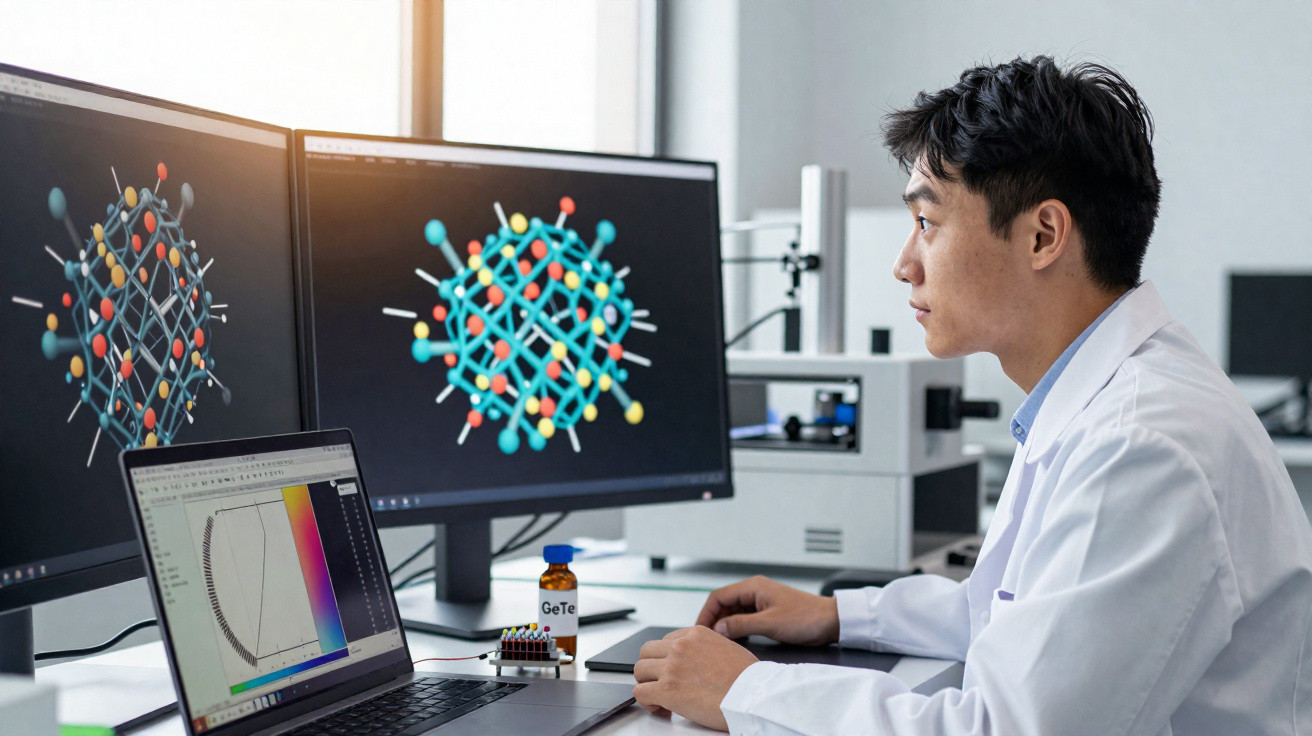
For this study, the researchers focused their neutron camera on germanium telluride (GeTe). Owing to its particular characteristics, the material is widely used to turn waste heat into electricity or to convert electricity into cooling.
Germanium telluride and thermoelectric materials
The camera showed that GeTe retained its crystalline structure, on average, at every temperature. At higher temperatures, though, it exhibited increased dynamic disorder: atoms transferred motion into thermal energy along a gradient aligned with the direction of the material’s spontaneous electric polarisation.
A clearer understanding of these physical structures expands knowledge of how thermoelectrics work, helping researchers develop improved materials and equipment, including the instruments that power Mars rovers when sunlight is unavailable.
Models built from observations made with the new camera could advance scientific understanding of these materials and processes. Considerable work remains, however, before vsPDF is ready to become a broadly used testing method.
"We anticipate that the vsPDF technique described here will become a standard tool for reconciling local and average structures in energy materials," the researchers explained in their paper.
The research was published in Nature Materials.
An earlier version of this article was published in March 2023.






Comments
No comments yet. Be the first to comment!
Leave a Comment