
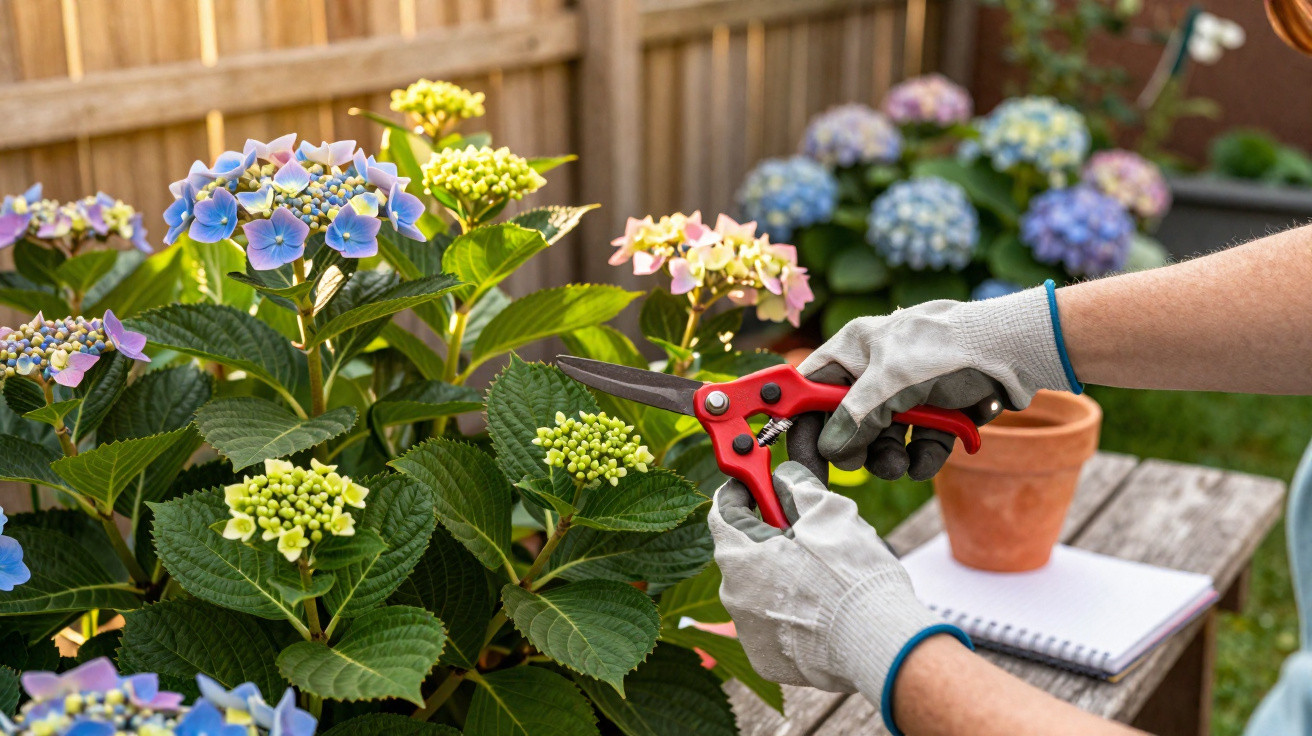
Many amateur gardeners will recognise the situation: a shrub that was bursting with colour a few years ago now looks tired and reluctant to flower. The encouraging news is that popular ornamental shrubs can be restored to impressive flowering displays with a little well-timed care in late winter and early spring – without specialist equipment or horticultural training.
Why hydrangeas often stop flowering well
Hydrangeas are among the most rewarding flowering shrubs for the garden. That is precisely why it can be frustrating when they suddenly begin to struggle. The cause is often not “poor soil” or “the wrong weather”, but mistakes in care during one particularly sensitive period: late winter.
“Between late February and early March, the number of flowers hydrangeas will produce in summer – and their eventual size – is decided.”
At this point, buds are starting to swell but have not yet opened. An unsuitable cut, or severe pruning in autumn, can easily remove an entire year’s flowers. At the same time, shrubs that are never thinned gradually become woody: stems get increasingly slender and the blooms become smaller.
When to prune hydrangeas
Depending on the region, the ideal pruning window runs from late February to early March. The calendar matters less than what the plant itself is showing:
- The harshest frosts have passed.
- Buds are noticeably swollen but remain closed.
- Stems have healthy brown wood with no frost cracks.
Gardeners should generally avoid pruning in autumn. Newly grown stems then enter winter without protection. They can easily be killed by frost, taking the whole set of flower buds with them.
Which wood do hydrangeas flower on?
Before reaching for the secateurs, it is worth checking which type you have. Hydrangeas do not all flower in the same way, and the correct pruning method depends entirely on this.
Large flower heads and lacecap flowers
Many traditional garden types, including those with substantial rounded flower heads or flat lacecap blooms, form their buds during the previous year. These include familiar varieties such as:
- Familiar mophead and garden forms (Hydrangea macrophylla)
- More delicate-looking varieties with finer blooms
- Oak-leaved forms and popular climbing types
If these shrubs are cut back too hard in spring, the wood carrying the forthcoming flowers is removed. The result is plenty of foliage but hardly any blooms.
Types that can safely take hard pruning
Other varieties are less demanding. Types with airy panicle flowers, along with those bearing enormous, almost snowball-like flower clusters, develop their buds on the current year’s growth. These can be pruned much more firmly without reducing flowering.
“Anyone who knows whether their shrub flowers on one-year-old or previous-year wood has practically already won when it comes to pruning.”
Three straightforward pruning rules for flowers year after year
1. Remove spent blooms carefully
For all shrubs that bloom on the previous year’s wood, the essential rule is to prune lightly. The main task is removing old flower heads:
- Cut dried flower heads just above a strong pair of buds.
- Identify the buds carefully: they sit close to the stem and look plump and healthy.
- Never cut so low that this pair of buds is lost.
This retains all of the current year’s flower potential and quickly gives the shrub a tidier appearance.
2. Cut out old and weak wood
It is also worth looking into the centre of the shrub. Very old, dark stems that are almost cracked can hold the plant back. This is where thinning pruning is useful:
- Each year, cut one to three of the oldest stems right down at the base.
- Remove very thin, weak twigs so that light can reach the middle.
- Deliberately keep upright, healthy young shoots.
Using this approach, the shrub is gradually rejuvenated. It can direct more energy into strong, free-flowering stems, producing visibly fuller blooms.
3. Prune panicle and large-flowered varieties harder
Varieties that flower on new growth can be cut back more substantially:
- Shorten stems by one third to one half.
- Always cut above an outward-facing bud so the shrub keeps an attractive shape.
- Even cutting back to around 20 centimetres is acceptable for exceptionally robust types.
“The fewer buds left on a strong stem, the fewer but larger flowers the plant will produce there.”
Those who prefer a greater number of slightly smaller blooms should leave more buds on each stem. This makes it possible to control the overall effect deliberately.
Care after pruning: soil, water and protection
Once pruning is complete, it is an ideal time to tidy the area around the shrub. A few minutes of work can often deliver a noticeable improvement throughout the season.
Clean and improve the soil
First, clear away any diseased or heavily mouldy leaves from the ground. Fungi and pests overwinter in this debris. Then give the plant a nutrient boost:
- Spread a layer of mature compost two to three centimetres thick around the root area.
- Alternatively, use a specialist slow-release fertiliser for flowering shrubs.
- Work it in gently without damaging the roots.
Finish by applying a mulch of bark pieces or shredded leaves. This keeps the soil moist for longer, shields it from temperature fluctuations and improves its structure.
Keep an eye on watering and frost
Hydrangeas thrive in fresh, slightly moist soil. Young plants in particular are sensitive to dry spells:
| Situation | Recommended action |
|---|---|
| Prolonged dry weather, light soil | Water infrequently but thoroughly so moisture penetrates deeply |
| Newly planted shrubs | Check regularly, especially during the first year, and water in dry conditions |
| Late frost forecast | Cover large buds in the evening with horticultural fleece or an old sheet |
Light frost damage to leaves may look unattractive, but it rarely destroys the whole plant. Young stems that freeze through are more serious: they die back and take future flowers with them.
Common mistakes and how to avoid them
The same issues occur in gardens year after year. A quick look at the usual mistakes can help prevent them in future:
- Hard pruning in autumn: removes the entire set of flower buds on many varieties.
- Waterlogged soil around the roots: causes rot and weak growth.
- Permanently dry positions: encourage small flowers that wilt quickly.
- No rejuvenation pruning: old shrubs flower only at the tips.
Gardeners who bear these points in mind and take targeted action in spring will rarely have to wait long for the next abundant display of flowers.
Practical examples from everyday gardening
If an old, heavily woody shrub has gone years without pruning, a two- to three-year plan is worthwhile. In the first year, remove a few old stems close to ground level; in the second year, take out several more of the remaining old stems. This keeps the shrub looking presentable while gradually encouraging fresh growth.
When planting a new shrub, consider its position from the outset: bright partial shade, a sheltered place against a house wall or beneath lightly spaced trees, and humus-rich soil will ensure that spring tasks have the greatest possible effect later on.
Why spring effort pays off several times over
Correctly pruned and well-cared-for hydrangeas repay a few hours of work with a dense canopy of flowers for many years. The shrubs provide food for insects, summer screening, and interesting winter structure when their dried flower heads are coated in hoar frost.
By using the secateurs thoughtfully in spring, enriching the soil and watching water levels and frost, gardeners create the basis for resilient, healthy plants. A shrub that seemed unwilling to flower can become a real garden focal point again, season after season.





Comments
No comments yet. Be the first to comment!
Leave a Comment