
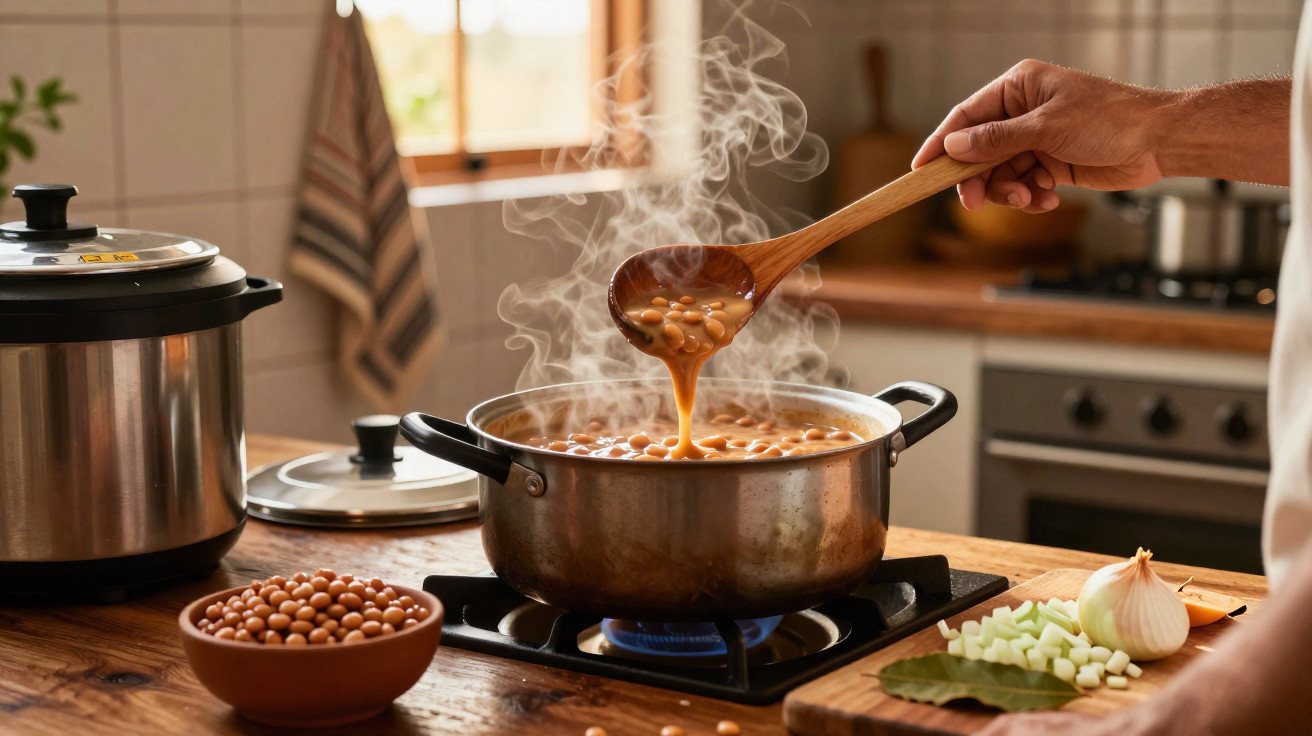
Learning how to cook beans properly is what separates a thin cooking liquor from a creamy, flavour-packed dish. Soaking, cooking, seasoning and pan time all directly affect how tender the beans become and how thick the liquid is.
A thick bean liquor starts before the pan
Soaking the beans hydrates them, shortens their cooking time and gives them a more even texture. Ideally, leave them to soak for 8 to 12 hours, then replace the water before cooking.
This step also helps the beans cook through, preventing them from feeling soft on the outside while remaining firm in the middle. Once soaked, they cook more evenly and create a fuller-bodied liquor.
- Soaking: hydrates the beans and promotes even cooking.
- The right amount of water: too much produces a thin liquor, while too little can leave the beans hard.
- Seasoning: garlic, onion and bay leaves add flavour without overwhelming the dish.
- ⏱ Time: cooking until the beans yield is essential for thickening the liquor.
In a pressure cooker, too much water thins the bean liquor
After soaking, transfer the beans to a pressure cooker with fresh water, using enough to cover them by around 3 to 5 cm. Add bay leaves if you like, then cook until tender.
Adding excessive water can leave the cooking liquor watery and lacking body. Too little water, on the other hand, may cause the beans to cook unevenly or stick to the base, so a balanced amount is important.
The right seasoning thickens beans without flour
A full-bodied bean liquor develops when some of the beans naturally break down. Once they are cooked, gently fry garlic and onion in a little oil, add a ladleful of beans and lightly mash them before stirring everything back together.
Mash some of the beans
The trick to creamy bean liquor
Mashing a ladleful of cooked beans into the fried seasoning releases the beans’ natural starch back into the pan, thickening the liquor.
Then simmer without pressure for a few minutes, stirring occasionally, until it reaches the texture you want.
This technique makes the beans creamy without adding flour, starch or other thickeners. It keeps the flavour more natural while the liquor gradually gains texture.
Mistakes that leave beans hard or watery
One common mistake is cooking old beans without soaking them. Very old beans take longer to soften and may stay firm even after spending a long time under pressure.
Another issue is adding too much salt at the start or including acidic ingredients before the beans have softened. Tomatoes, lemon and vinegar should only be added once the beans are tender.
Perfect beans need patience at the end
Creamy beans are not produced by the pressure cooker alone. Once the beans are soft, the final simmer with the seasoning is what concentrates the flavour and gives the liquor its body.
Ultimately, cooking beans well comes down to a series of simple stages: soaking, using the right amount of water, cooking them fully, adding fried seasoning and allowing a few minutes for the liquor to thicken. With these steps, the dish will be tender, full-bodied and taste like food prepared with care.
If this tip could improve someone’s beans at their next meal, share it with anyone who enjoys thick bean liquor and perfectly cooked beans.






Comments
No comments yet. Be the first to comment!
Leave a Comment