
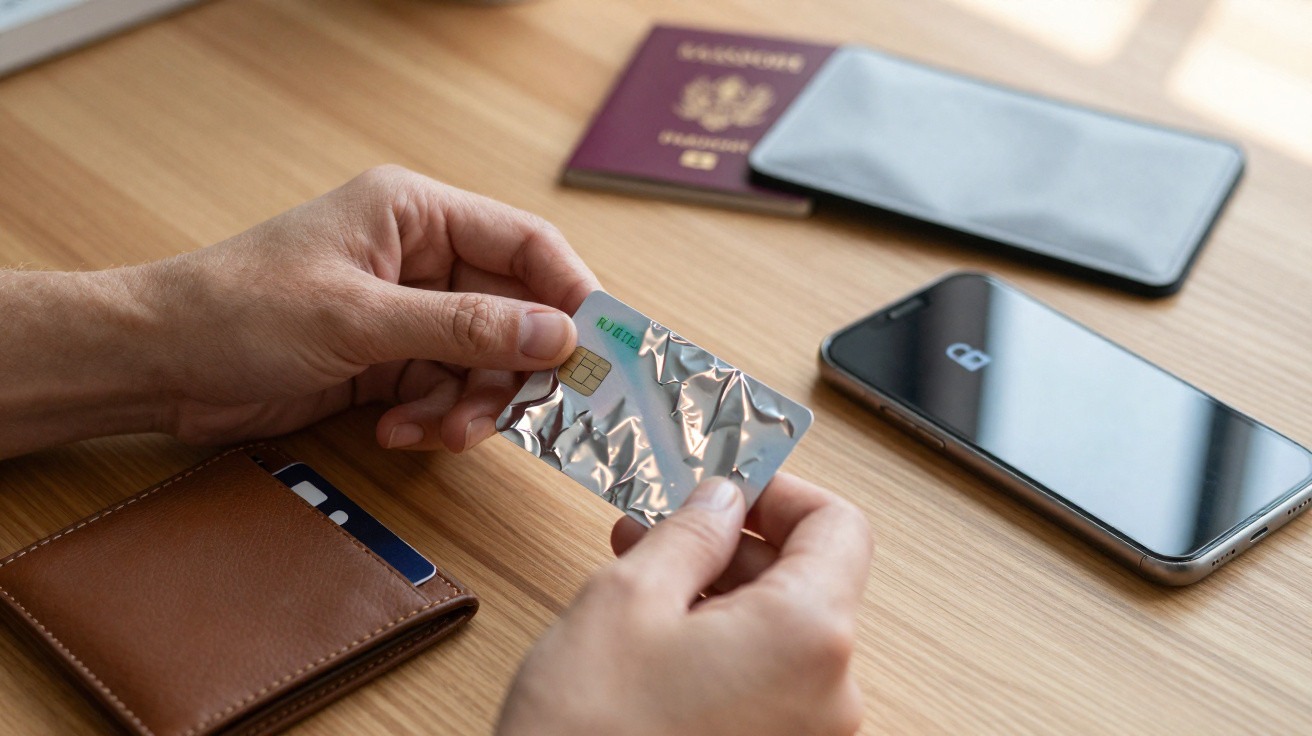
Wrapping an identity document in aluminium foil has become a widely discussed tip because modern documents may contain chips, RFID or NFC. The aim is to form a physical shield against contactless scanning, lowering the likelihood of unauthorised access to information held on electronic identity documents, cards and passports using similar technology.
What is the purpose of wrapping an identity document in aluminium foil?
An identity document in aluminium foil is a homemade way to make communication between the document's chip and outside readers more difficult. Aluminium can disrupt the radio-frequency waves used by technologies such as RFID and NFC, which appear in certain modern documents and cards.
In effect, the foil acts as a blocking layer. It does not alter the document's data or replace official security precautions, but it may reduce proximity scans when the identity document has a chip that supports this form of communication.
How does aluminium foil block RFID and NFC signals?
Aluminium foil creates a barrier to electromagnetic signals. If it fully covers the document, it makes it harder for an external reader to communicate with the chip, following a simplified version of the Faraday cage principle.
This protection works better when the identity document is thoroughly covered, without large gaps. Torn foil, excessive creasing or an exposed section of the card can make the shielding inconsistent.
Which documents may need this precaution?
This tip is most relevant for documents fitted with an electronic chip or contactless-reading technology. Not every identity document uses RFID or NFC, so wrapping a version without a chip in aluminium foil offers no equivalent practical benefit.
- Electronic identity documents with a chip.
- Biometric or electronic passports.
- Bank cards with contactless payments.
- Travel cards with contactless scanning.
- ID badges or access cards using RFID technology.
Does the method genuinely protect personal data?
An identity document in aluminium foil may lower the risk of contactless scans, but it does not address every security concern. The possibility of improper scanning exists in theory, particularly in crowded places, although experts often point out that physical theft, online scams and data leaks from registrations are also significant threats.
To protect documents more effectively, aluminium should be treated as an additional measure. Other steps remain necessary:
- Do not send a photograph of your identity document to unknown websites or people.
- Avoid leaving documents visible on counters, tables or in open bags.
- Use strong passwords for accounts connected to public services and banks.
- Check for suspicious activity on cards and financial apps.
- Choose RFID-blocking sleeves when they will be used regularly.
Is aluminium foil or an RFID-blocking sleeve worthwhile?
An identity document in aluminium foil can be helpful as a quick, inexpensive and easy improvised solution. However, foil tears, loses its shape and may become inconvenient to keep in a wallet after a few days.
For people who carry electronic documents, a passport or contactless cards every day, an RFID-blocking sleeve is generally more durable and discreet. Aluminium foil can help in occasional situations, but consistent protection relies on storing documents safely, preventing inappropriate sharing of data and remaining alert to scams beyond physical contact.






Comments
No comments yet. Be the first to comment!
Leave a Comment