
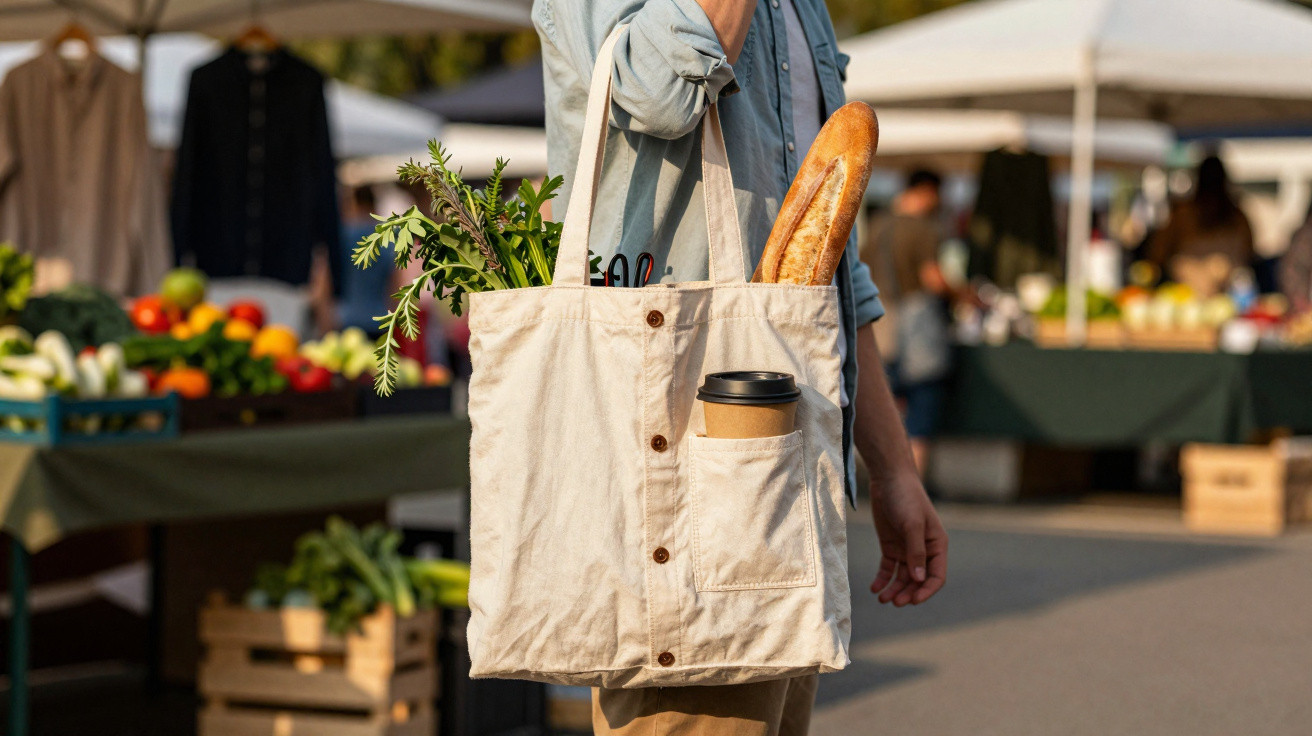
Rather than continually buying new reusable bags and throwing old clothes away, many households are choosing a smart alternative: with just a few simple steps, a worn men’s shirt can become a sturdy shopping companion. It saves money, cuts waste and finally frees up space in the wardrobe.
Why old shirts are especially valuable right now
Food, energy, rent – almost everything is becoming more expensive. At the same time, there is increasing pressure to waste less and protect resources. This is exactly where sewing projects like this come in: a garment already sitting at home is turned into a practical everyday accessory.
Many men’s shirts are made from tightly woven cotton poplin or fil-à-fil fabric. Both materials are hard-wearing, tear-resistant and designed to last for years. A collar may be yellowed for office wear, cuffs may show signs of rubbing, or a button may be missing – but none of this matters for a shopping bag.
“A shirt gathering dust in the wardrobe can become a strong shopping bag – at no extra cost.”
Turning shirts into bags does more than reduce textile waste. It also avoids the cost of buying a quality reusable bag, which can easily be €15 to €30. Families in particular, who regularly do larger shops, can notice the difference within only a few weeks.
From shirt to shopping bag: how to make it
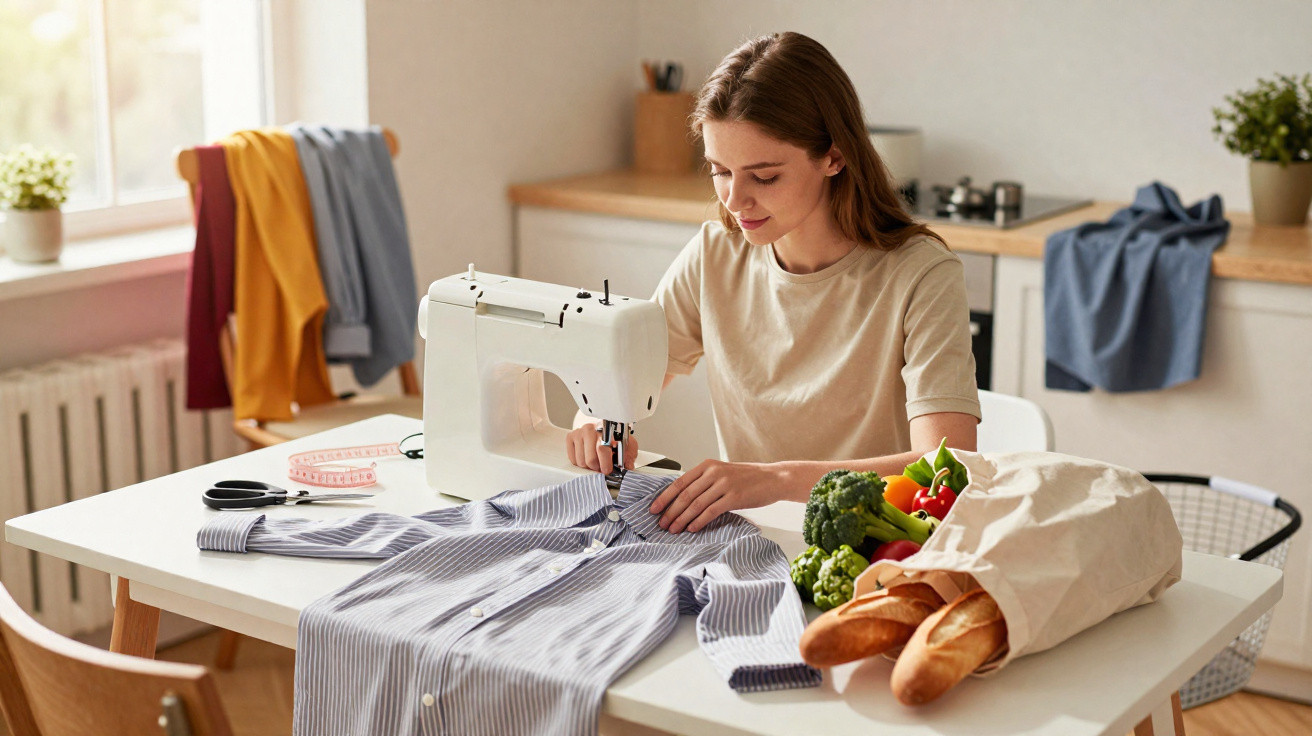
You do not need to be an experienced sewer for this project. Basic sewing-machine skills are entirely sufficient. Conveniently, the button placket, hem and usually the breast pocket are already sewn, saving time while adding strength.
Materials and preparation
- 1 men’s shirt, ideally in size L, XL or larger
- Fabric scissors
- A sewing machine or sturdy hand-sewing needle
- Thread matching or contrasting with the shirt colour
- Pins or sewing clips
- Tape measure or ruler
The shirt should be clean and preferably made from densely woven cotton. A little stretch is not an issue, but pure cotton or a cotton blend is the most comfortable to use and copes well with heavy loads.
Step-by-step guide to a shirt tote bag
Button the shirt all the way up to the top button and lay it flat on a table. The button placket will later form the front of the bag.
Cut off the sleeves directly along the armhole seam. Cutting closer to the seam creates a larger opening for the bag.
Remove the collar and cut the neckline into a slightly deeper rounded shape. This opening will become the top of the bag, replacing the usual rounded handle opening of a carrier bag.
Turn the shirt inside out, with the wrong side of the fabric facing outwards. Align the bottom edge precisely, smooth it flat and secure it with pins.
Sew once along the bottom edge using a straight stitch. For additional strength, add a second seam roughly five millimetres away. Finish the edges with a zigzag stitch or overlocker to prevent fraying.
Cut two lengthwise fabric strips, each about 10 centimetres wide, from the removed sleeves. Fold each strip lengthways towards the centre, fold it over again and topstitch it to create thick, durable handles.
Attach the handles to the top edge of the shirt: on the front, position one on each side of the button placket, then place them symmetrically on the back. Stitch forwards and backwards at least two to three times so nothing comes loose when the bag is full.
Turn the bag right side out, check the seams and, if needed, sew triangular corners at the base to create a flat bottom. This makes it easier to stand jars and cartons securely upright.
“An old shirt, an hour of time and a sewing machine are all you need to sew a sturdy shopping bag.”
How much a shirt bag can really carry in daily life
The dense weave of many office shirts means the fabric can support a respectable amount of weight. Flour, glass bottles, tins or crates of fruit will not usually push the bag to its limits, provided the seams have been sewn neatly.
It is useful to make several bags for different types of shopping:
- one shirt bag for heavy jars and bottles
- a second for fruit and vegetables
- a third for bread, baked goods and delicate items
By converting three old shirts, you will usually cover your entire need for reusable shopping bags – while saving €45 to €90, depending on the retail price.
Environmental impact: how much does the shirt trick really help?
In many countries, each person throws away well over ten kilograms of clothing per year on average. One shirt kept out of the rubbish may initially seem insignificant, but the effect quickly adds up in a household that regularly upcycles several items.
| Number of converted shirts | Reusable bags saved (approx.) | Potential saving |
|---|---|---|
| 1 | 1 to 2 | €15–30 |
| 3 | 3 to 5 | €45–90 |
| 5 | 5 to 8 | €75–150 |
There is another benefit: using robust bags made at home greatly reduces the need for single-use carrier bags. Plastic bags, thin paper bags and reusable bags bought on impulse at the supermarket checkout simply become unnecessary. That is easier on both the bin and the budget.
Practical extras: what the shirt bag has over other bags
One feature that many ready-made reusable bags lack is the shirt’s breast pocket. It remains on the outside when the shirt is converted and can prove extremely useful.
- A shopping list or smartphone stays within easy reach rather than getting lost in the bag.
- A trolley token has a dedicated place.
- House keys no longer disappear somewhere among vegetables and yoghurt pots.
The shirt design also has visual advantages: checks, stripes, textured fabrics and subtle patterns make every bag one of a kind. Converting several shirts also gives you a small collection of individual shopping companions that cannot be confused with those of other shoppers.
Tips for greater durability and comfort
Anyone who often shops on foot or by bicycle should pay particular attention to the handles. Wider straps dig in less when the bag is heavily loaded. Double-layered sleeve fabric or an extra strip cut from an old denim leg can make a remarkable difference.
For particularly heavy shopping, it is worth using a double base seam or sewing an extra piece of fabric across the inside of the base. This spreads the weight and helps the bag last longer.
As shirt bags can usually be machine-washed at 40 °C, they can be cleaned quickly after a market trip involving muddy potatoes or squashed tomatoes. If you are using delicate fabric, check the care label briefly before cutting into it.
Ideas for getting even more creative
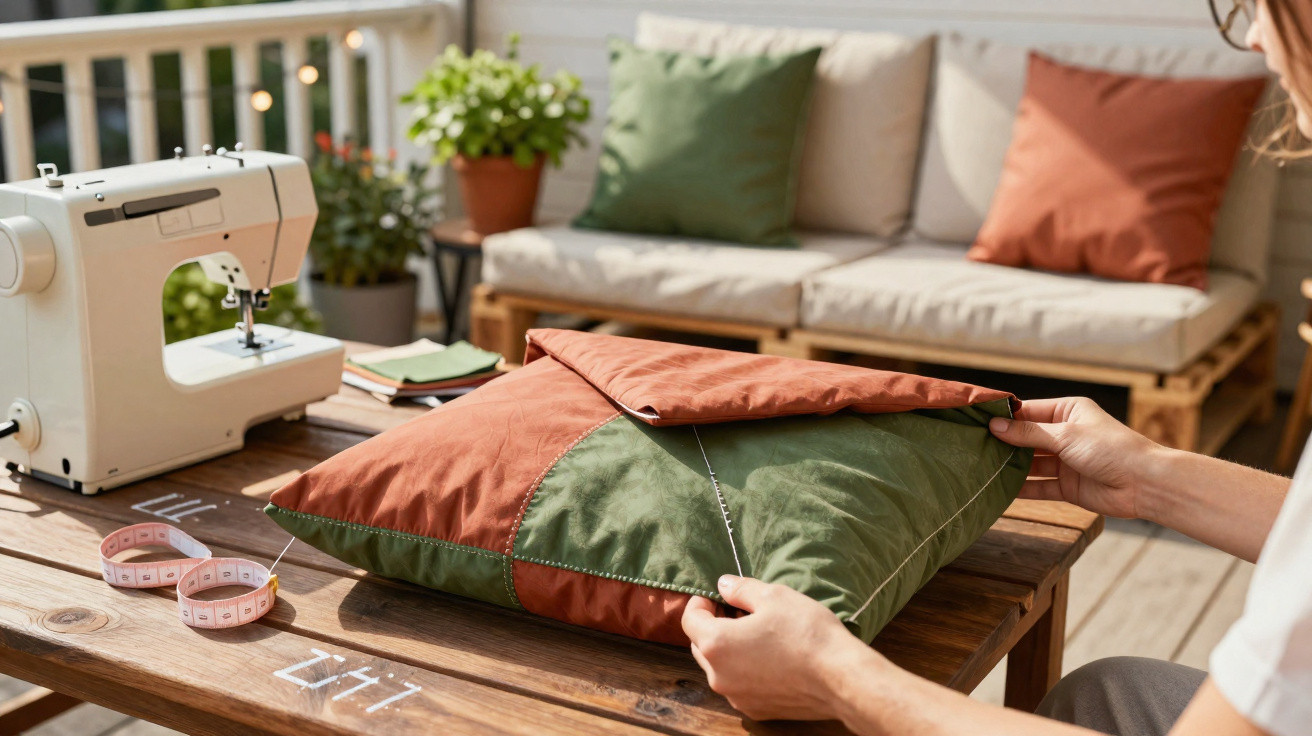
Anyone who enjoys making their first shopping bag can easily develop the basic idea further. The front of another shirt can become a small bread bag, while leftover pieces can be made into drawstring bags for vegetables. Even simple cushion covers can be produced quickly using the same technique.
Beginners can also use an old shirt as an opportunity to try out different stitches. Mistakes matter far less on a bag intended only for shopping than they would on a new garment.
If there are children in the household, turn the activity into a small project: they can choose the pattern, help with cutting out or turn the fabric right side out. It helps them understand the value of clothing and see that something apparently “broken” can still become useful.




Comments
No comments yet. Be the first to comment!
Leave a Comment