
Eyebrow trends change more quickly than the seasons: one moment they are ultra-full and bushy, the next extremely narrow or almost invisible after bleaching. Anyone who has over-plucked or dyed their brows during these phases may now be left with a sparse, fine line. The good news is that, with a little patience and four targeted everyday habits, your eyebrows can look fuller, more natural and more balanced again.
Why full eyebrows make such a difference to the face
Eyebrows are far more than a narrow band of hair above the eyes. They frame your gaze, affect facial symmetry and often determine whether a face appears soft, severe, tired or fresh. Very thin brows can make an expression look harsher, whereas a slightly fuller shape usually creates a more youthful, relaxed effect.
Current social-media trends often favour dramatic looks: feather-light shaved arches, heavily bleached eyebrows or retro-inspired thin lines. In everyday life, however, many people want a natural shape that works with their own facial expressions – without microblading, permanent make-up or expensive salon treatments.
“Anyone who wants to grow out their brows does not need a radical reset – but a consistent, gentle care routine.”
The following four steps can help you strengthen your eyebrows from this evening onwards, make them appear denser and compensate for a few mistakes from the past.
1. Take a break from plucking: give your eyebrows several weeks of rest
The most important step is also the most difficult: put the tweezers down. Repeated hair removal weakens the hair root. Over time, individual hairs become finer, regrow more slowly or stop returning altogether. If you constantly remove “just a couple more hairs”, you may gradually thin out your eyebrows without noticing.
Making a plucking break work in everyday life
- Wait at least four to six weeks: During this period, do not pluck within the main eyebrow shape.
- Remove only stray hairs: You can carefully remove isolated hairs that sit well away from the natural line.
- Avoid daily fine-tuning: The habit of pulling one or two hairs each morning can cause gaps in the long term.
- Try the mirror trick: Do not apply make-up in a magnifying mirror, as it encourages perfectionism.
Especially during the first few weeks, the shape can quickly look “untidy”. That may feel unfamiliar, but it is a positive sign: the hair follicles are becoming active again. Bridge this transition with a little make-up, rather than reaching for the tweezers.
2. Brush every day: a mini massage for fuller-looking eyebrows
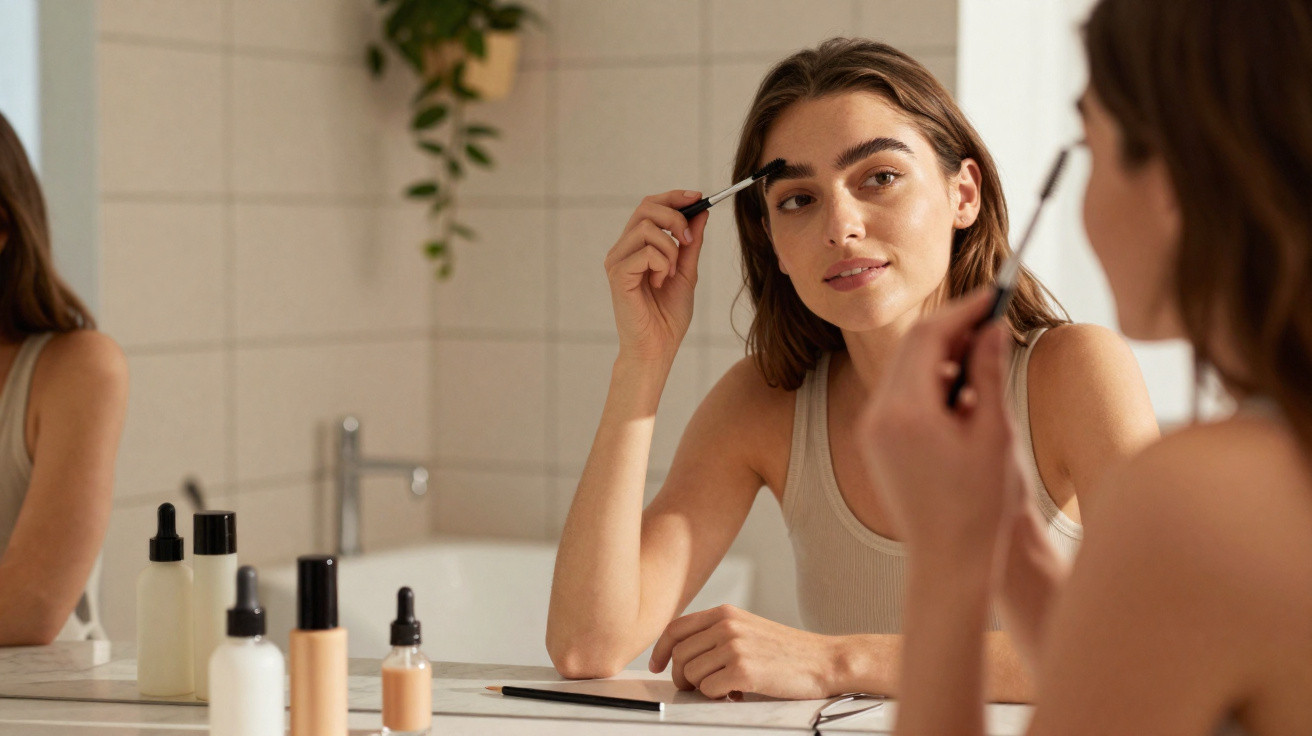
One frequently overlooked step is brushing your brows. A small spoolie brush or a clean old mascara wand not only tidies the hairs, but can also stimulate circulation.
The right eyebrow-brushing technique
Take a few seconds in both the morning and evening:
- Brush the brows gently upwards first – this visually lifts the eye area.
- Then sweep the hairs slightly outwards, following their natural direction of growth.
- Use minimal pressure so that no hairs are pulled out.
Brushing also distributes natural skin oils more evenly through the hairs. This makes eyebrows look a little fuller straight away and helps you see where genuine gaps are – which are usually smaller than expected.
“Regular brushing is like a fitness routine for your eyebrows: little effort, but a noticeable effect over the weeks.”
3. An evening care ritual: targeted ingredients for strong growth
Anyone who treats their eyebrows with the same care as their skin and hair will soon notice a difference. Simple make-up removal is not enough; the delicate hairs can benefit from dedicated care products.
Which products can actually help?
Three product categories have proved popular for eyebrow care:
- Peptide serums: These may stimulate the hair root and extend growth phases.
- Strengthening care formulas: Products designed for eyelashes often work for eyebrows too, provided the manufacturer permits this use.
- Plant oils: Castor oil is popular, while jojoba and argan oil can also condition the hair structure.
Consistent application is essential:
- Clean the eye area thoroughly so that make-up residue does not block the active ingredients.
- Apply a small amount of product directly along the eyebrow line using a brush or cotton bud.
- Massage the area for a few seconds with a fingertip to support absorption.
The first changes usually appear no sooner than four to six weeks. Eyebrow hairs grow more slowly than scalp hair, so it is better to continue for longer instead of repeatedly switching products.
4. The make-up trick: a hair-by-hair effect instead of a solid block
While waiting for fuller brows, you do not have to live with gaps for months. The right make-up method can create a natural-looking shape every day – without leaving your brows looking like a drawn-on block.
How to make eyebrows look optically fuller
The key is to use fine strokes that resemble real hairs:
- Fine eyebrow pencil or brow pen: Choose a shade no more than one tone darker than your natural hair colour.
- Short strokes: Draw in the direction of growth, rather than across the entire eyebrow.
- Keep the front area lighter: Use product sparingly at the beginning of the brow, otherwise your expression can look severe.
- Finish with tinted gel: This sets the hairs and slightly thickens them, creating the illusion of more volume.
“The best everyday make-up technique for full brows imitates real hairs – it does not cover them up.”
Make-up lets you experiment according to your mood: choose a slightly wider line one day and a softer one the next, without damaging your real hairs. If you are tempted by bleaching trends, test the effect with light-coloured gels or eyeshadow instead of using harsh oxidising products.
How long does eyebrow regrowth really take?
The required patience varies from person to person. Genetics, previous overuse of tweezers or wax, and hormonal factors all play a part. Some people notice clearly fuller brows after just two months, while for others the changes can take up to half a year.
| Starting point | Realistic expectation | Time frame |
|---|---|---|
| Slightly over-plucked eyebrows | Gaps close partly | 6–12 weeks |
| Plucked very thin for years | Improvement is possible, but not everywhere | 3–6 months |
| Genetically fine eyebrows | More visual density, while the structure remains delicate | Ongoing care needed |
If you have not noticed any change after several months, you can speak to a dermatologist. In rare cases, thyroid conditions, certain medicines or skin problems may be responsible for severely thinned eyebrows.
Mistakes that harm eyebrows – and better alternatives
Many familiar habits can unknowingly hold your brows back. Common pitfalls include:
- waxing appointments or threading too often in the same area
- harsh make-up removers that irritate the hair root
- rubbing vigorously when removing waterproof make-up
- experimenting with bleach or hair dye too close to the eyebrow line
A better approach is gentle cleansing with oil-based removers, selective plucking rather than radical reshaping, and visiting a professional salon with eyebrow experience if you want to change the colour.
Why consistent eyebrow care pays off in the long term
Those who stick to the four core steps for several weeks – taking a plucking break, brushing, caring for and applying make-up to their eyebrows – often find that their relationship with their brow shape changes. The focus moves away from the idea of a “perfect”, symmetrical line and towards an individual, natural expression.
Full but well-groomed eyebrows can make the face look more awake and fresher, even on days without foundation or eyeshadow. Many people can use less make-up as a result, because the eye area appears more defined on its own. This effect becomes even stronger alongside healthy habits such as enough sleep, a balanced diet and reducing stress.
Ultimately, nobody needs to follow every trend. By strengthening your natural eyebrow line and giving it time to recover, you regain a feature that stays true to your own facial features – regardless of what is currently popular on TikTok.





Comments
No comments yet. Be the first to comment!
Leave a Comment