
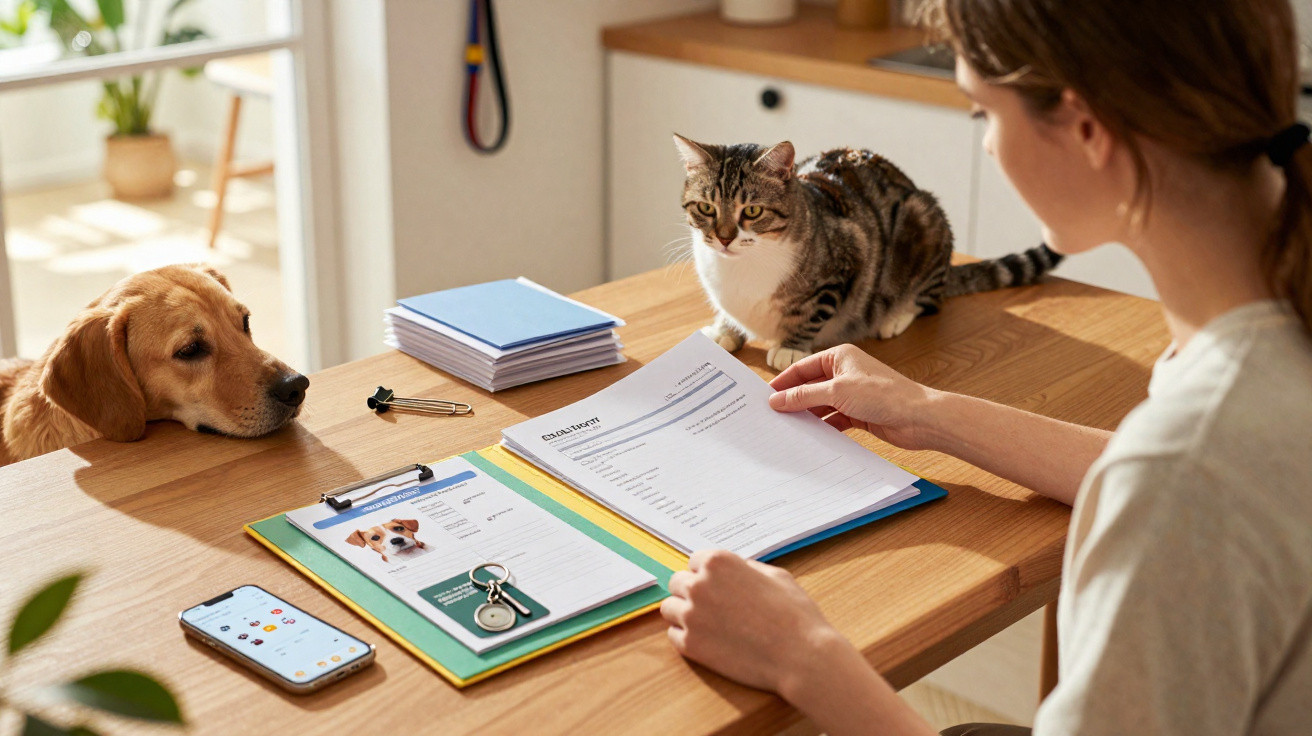
Whether you have a dog or a cat, your animal companion has a kind of “paper life story”. If it goes missing, vital decisions can suddenly become harder at the veterinary practice, rescue centre, while travelling or in a dispute with someone else. Many owners only realise in an emergency how much they rely on these records.
Why dog and cat records are far more than paperwork
Each document captures part of your pet’s health and behavioural history. For a vet, this is not merely a nice extra: it is the basis for their work. The more complete the picture, the more precisely treatment can be tailored.
- Vaccination and preventive-care record: This records more than vaccinations; it can also include worming treatments, flea and tick products, weight changes and any noted concerns.
- Test findings and examination reports: Blood test results, X-rays, ultrasound reports and laboratory findings reveal how a condition has developed over the years.
- Adoption or purchase agreement: This can help establish age, origin, and any health guarantees or known risks.
- Microchip and registration documents: These support proof of ownership and enable rescue centres and authorities to contact you if your pet is found.
- Feeding plans and behavioural programmes: These are especially important for allergies, long-term conditions, or animals with anxiety disorders and aggression issues.
If these records are unavailable when they matter most, the vet has to work “blind”. That can mean avoidable repeat tests, less targeted treatment and arguments in a dispute, for example over liability or appropriate care.
Keeping your pet’s documents under control spares them unnecessary stress, saves you money and gives you valuable time in an emergency.
Health consequences: when the medical history suddenly has a gap
Uncertain medication history: a risk of side effects
Without a clear record of the medicines your pet has already received, every new course of treatment becomes guesswork. Every detail matters here, particularly for dogs and cats with chronic illnesses.
- The vet cannot know which treatments have already been tried or whether they caused intolerances.
- Interactions with previous medicines are difficult to assess.
- Repeating certain active ingredients can place considerable strain on organs.
A typical example is a cat with kidney problems that has been given various medicines for years. If earlier laboratory results and treatment plans are missing, your vet must piece much of the case together again. This takes time - and the condition may worsen in the meantime.
Chronic conditions become harder to manage
Previous findings are equally valuable for long-term conditions such as heart problems, diabetes or arthritis. They show patterns: is the situation improving, worsening or remaining unchanged? Without these progress records, there are only snapshots. Treatment is then managed more “by sight” rather than being carefully adjusted.
The same applies to behavioural difficulties: has training for separation anxiety already been attempted? Which calming medicines worked, and which did not? Starting every option again costs time - during which aggressive or fearful responses may become more established.
Legal and practical risks in everyday life
When your pet runs away or is found
Microchip and registration documents are your lifeline if your dog or cat disappears. If you cannot show that the pet is registered to you, several problems may arise:
- Vets and rescue centres may not be able to identify you clearly as the owner.
- A found pet can lead to a dispute over ownership.
- In the worst case, the return process is delayed while your pet remains in a rescue centre.
Without these documents to hand, you risk lengthy clarification with authorities or insurers. In that period, it is often the animal that suffers, as important decisions are postponed.
Travel, dog training and boarding: proof makes all the difference
Certain vaccinations are compulsory for travel abroad, dog boarding, dog training schools and some cat boarding facilities - usually rabies, and often other protective vaccinations as well.
| Situation | Required evidence |
|---|---|
| Travel to another EU country | EU pet passport, valid rabies vaccination, microchip registration |
| Dog boarding / cat boarding | Vaccination status (for example distemper, parvovirus, cat flu), and sometimes parasite prevention |
| Dog training school / dog sports club | Vaccination record, often proof of third-party liability insurance |
Anyone who discovers at the motorway services that the vaccination record is missing will know the scenario: panic, a discussion with the boarding provider and, potentially, cancellation charges. Not to mention situations at the border, where authorities have very little patience with incomplete documents.
How to organise your pet’s records sensibly
A file rather than paper chaos: one dossier for each pet
The simplest measure is to set up a separate folder for every animal. Do not mix it with your tax return or your children’s certificates. This folder should contain:
- the vaccination booklet with every entry
- all laboratory results (blood, urine and stool)
- reports from specialists, hospital stays and operations
- the adoption or purchase agreement
- microchip confirmation and pet-register registration documents
- individual feeding plans, allergy lists and dietary requirements
- training plans or assessments from behavioural therapists
Ideally, arrange the records chronologically. This allows the vet to see quickly, when needed, what happened when and how your pet responded to treatment.
Digital backup: photographs, scans and apps
Anyone who has realised in the waiting room that the vaccination record is still on the kitchen table will appreciate a digital backup. A straightforward approach is to:
- photograph or scan every page of the vaccination record;
- save important findings as PDFs;
- back up the files in cloud storage or on a USB stick;
- use clear file names, such as
Dog_Max_Blood_Test_2025-03.
There are also apps that let you manage vaccinations, medication and appointments. If you use them consistently and update entries promptly, you can show the vet a great deal directly on your smartphone.
A digital copy may not replace every original document, but in an emergency it can make the crucial difference.
If records have already gone missing: salvaging what you can
Contact the veterinary practice, rescue centre or breeder
If important papers really have been lost, a structured approach is worthwhile:
- Call your regular vet: Many practices store test findings and vaccination details digitally and can print copies.
- Write to previous hospitals or specialist practices: They often retain X-rays and reports that can be requested later.
- Contact the rescue centre or breeder: They frequently still hold copies of adoption or purchase documents.
If a vaccination record is lost, the vet can issue a replacement passport after carefully checking the available information and can add known vaccinations. However, strict rules apply for travel to certain countries, particularly concerning rabies vaccination. If you want to be certain, plan well in advance and discuss the process with the practice.
Check and update the microchip and registration
When documents relating to a microchip have been lost, the pet register database can often help. Using the chip number and identification, you can update the details and request replacement evidence. If you do not know the chip number, any veterinary practice or rescue centre can scan it.
Greater day-to-day security for pets and owners
Many owners underestimate how closely health records, legal questions and everyday situations are connected. Anyone taking their dog to a training school without current vaccination evidence risks breaching the operator’s rules. Anyone unable to show a landlord proof of their cat’s origin and size can quickly find themselves having to explain matters.
Insurers, including pet health insurance and third-party liability cover, may also ask to see certain documents before approving a claim. If evidence of an earlier examination or diagnosis is missing, this can delay the process or weaken a claim.
At first, a carefully maintained document folder may seem overly meticulous. In practice, it shows that you are caring for your pet responsibly. For vets, a clear and complete file is a gift. The better the history is documented, the more individualised treatment can be - and the lower the risk that unnecessary tests or treatments place a burden on your four-legged companion.
Those starting out with a new dog or cat can take the same approach as paediatricians use for vaccination records and preventive examinations: complete, organised and easy to follow. The pet booklet, findings and plans ultimately form the account that your pet cannot provide for itself - which is exactly why these records should not first have to be searched for when every minute counts.






Comments
No comments yet. Be the first to comment!
Leave a Comment