
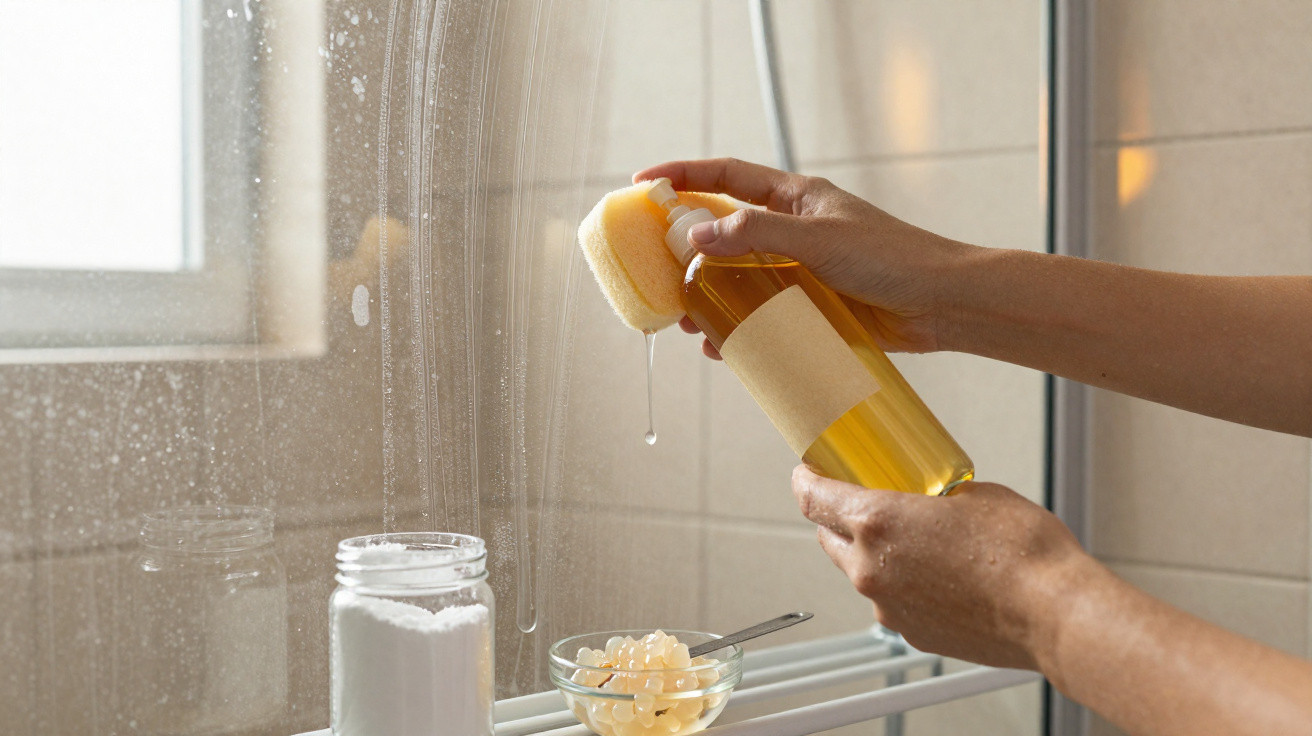
In countless household-cleaning videos, white powder is sprinkled over glass panels, fittings and grout. One scrub, a quick rinse, and the job is done – or so it appears on screen. In reality, a greyish film of limescale and soap residue usually remains after a hot shower, and it is more persistent than expected. This is precisely where a cleaning expert steps in, explaining why shower screens in particular need a different, far more practical everyday method.
Why baking soda became so popular in the shower
Baking soda is seen by many as a household wonder product. It is inexpensive, widely available and does not rely on harsh chemicals. It appears repeatedly in cleaning guides: for odours, grease, burnt-on food and even as a bathroom-grout cleaner. It can also make a difference on a glass shower screen.
The reason is that the powder works as a very mild abrasive. Its tiny grains lift the dull coating of soap residue and limescale without scratching the glass. Used correctly, it can certainly restore clarity to a shower screen that has become cloudy.
Many instructions suggest making a paste with the powder and a little water. Others recommend a stronger blend: one portion of powder with a splash of clear household vinegar. The mixture is then applied with a sponge or soft brush, rubbed in and rinsed away thoroughly. For tiled grout, the usual advice is to add some powder to warm water, scrub with an old toothbrush, rinse and dry.
“On paper, using baking soda on a shower screen seems quick, cheap and almost magical – but in everyday life, that impression changes.”
The catch with cleaning videos: what they often leave out about shower screens
A few minutes on social media can look effortless. A real bathroom is different: there are large glass surfaces, vertical panels, steam and very little time. This is exactly where the powder becomes troublesome.
Once a paste has been mixed, it first has to be spread evenly – including at heights of 2 metres. On smooth vertical surfaces, the mixture tends to slide down, drip into the shower tray, leave white streaks and effectively force you to repeat the process several times. A quick wipe-over is rarely enough.
Rinsing also takes effort. If even a small amount of paste remains, it dries into a dull white film. Rather than shiny glass, you are left looking at patchy streaks. Anyone who has tried to freshen up the shower in a hurry before visitors arrive will know the problem.
Mixtures of powder and vinegar are also popular. They fizz briefly and look impressive, but in practice they often work less effectively than expected. The reason is that acid and alkali partly neutralise one another chemically. In the end, a great deal of scrubbing delivers comparatively little effect.
Why baking soda is better suited to a “major clean”
The cleaning expert therefore advises using the powder selectively rather than all the time. It is particularly suitable for problem areas:
- heavily soiled grout with dark deposits
- corners where mould is beginning to form
- shower screens that have not been properly cleaned for months
For a weekly bathroom routine, it simply requires too much effort. Anyone wanting to restore clarity to the glass quickly after work needs a method that stays on the wall by itself and works without constant scrubbing.
Vinegar gel: a simple trick that makes shower-screen care easier
Household-advice websites therefore turn to an old favourite: clear household vinegar. It is excellent at dissolving limescale, but it usually fails on shower screens for one simple reason: it immediately runs straight down the surface.
After only a few seconds, all that remains are droplets. Many people then think: “It doesn’t work.” The answer is to turn liquid vinegar into a gel that will adhere to the surface. Agar-agar, a plant-based setting agent used in cooking, is suitable for this.
“When vinegar becomes a gel, the limescale remover clings to glass and grout like a mask – finally giving it time to work.”
How to make a simple vinegar gel yourself
The basic formula is straightforward:
- 500 millilitres of clear household vinegar
- 2 grams of agar-agar powder
Heat both ingredients briefly in a saucepan so that the setting agent dissolves. Then allow the mixture to cool until it forms a soft gel-like consistency. It can be applied to the shower screen and grout using a sponge, a brush or directly with your hands.
Its key advantage is that the gel stays in place for 15 to 20 minutes. During this time, the acid works directly on the limescale deposits. Instead of continuous scrubbing, the work becomes a brief application followed by a calm waiting period.
Fine-tuning: ways to adapt the gel
The mixture can be adjusted slightly if desired:
- A splash of mild washing-up liquid helps with greasy soap marks.
- A few drops of lemon juice add extra shine and a fresher scent.
After the contact time, a stream of warm water and a microfibre cloth are usually enough to remove both gel and limescale residue. One point remains important: do not use it on natural stone or very porous surfaces, as the acid may cause damage.
Which is more practical day to day: powder, gel or ready-made spray?
Between familiar household remedies and supermarket products, the question is: which option works best in everyday life? Experts essentially identify three choices:
| Method | Strengths | Weaknesses |
|---|---|---|
| Baking soda paste | strong effect on stubborn dirt, environmentally friendly, inexpensive | time-consuming, slides off vertical surfaces, may leave a white film |
| Vinegar gel with agar-agar | adheres well, works on limescale for a long time, rinses off easily, economical to use | requires a small cooking step, unsuitable for natural stone |
| Ready-made anti-limescale spray | ready to use immediately, quick, widely available | usually contains more chemicals, often has a strong smell, more expensive over time |
The expert recommends matching the method to the condition of the shower screen: anyone tackling years of hardened limescale deposits will struggle to avoid a more intensive session using powder and gel. If the screen is already in reasonable condition, however, regular use of gel or a mild spray will keep it clean far more easily.
Small routine, major effect: keeping the shower screen clear for longer
Many problems arise because water and soap residue are simply left sitting on the glass after showering. As everything dries slowly, the familiar milky film develops. Two simple steps can reduce this considerably:
- Use a rubber shower squeegee on the glass after every shower.
- Once a week, coat the screen with vinegar gel and leave it to work.
The squeegee removes most of the water, while the gel deals with whatever still manages to settle. Anyone who keeps up this routine for a few weeks will usually find that the need for intensive powder-based cleaning drops dramatically.
Background: why limescale clings so stubbornly
Depending on the area, tap water contains high levels of minerals such as calcium and magnesium. When the water is heated or dries slowly, these substances remain behind as solid white deposits. They combine with soap residue to form a rough layer to which fresh dirt can cling more easily.
Acids such as household vinegar dissolve these minerals. This is exactly why vinegar gel works so reliably on a shower screen: it remains on the surface long enough to break down the limescale layer gradually. Baking soda works more mechanically – the deposit is abraded rather than dissolved, which is why more vigorous rubbing is generally needed.
The most effective approach is to combine both wisely: powder for emergencies, gel for everyday use. This keeps the shower screen clear without every cleaning session turning into a half-day project.




Comments
No comments yet. Be the first to comment!
Leave a Comment